 العربية
  English
  Español
  Français
  Português
  Deutsch
  Italiano
  Русский
  中文
中文  日本語
日本語  हिन्दी
Summary
- Teflon® encapsulated O-rings combine a fluoropolymer jacket with an elastomer core to provide chemical resistance and sustained sealing force in environments where standard elastomers may degrade or lose stability.
- Their performance depends on controlled compression and stable dimensional conditions, making them most effective in static sealing systems exposed to aggressive media, temperature variation, or frequent cleaning cycles.
- Selecting the correct jacket material, core material, and construction helps ensure reliable sealing performance and predictable service life.
Introduction
Teflon® encapsulated o-rings provide reliable sealing in environments where chemical exposure, temperature variation, or cleanliness requirements challenge standard elastomer materials. By combining a chemically resistant fluoropolymer jacket with a resilient elastomer core, these seals offer a practical solution when compatibility and long-term stability are critical to system performance.
What Are Teflon® Encapsulated O-Rings?
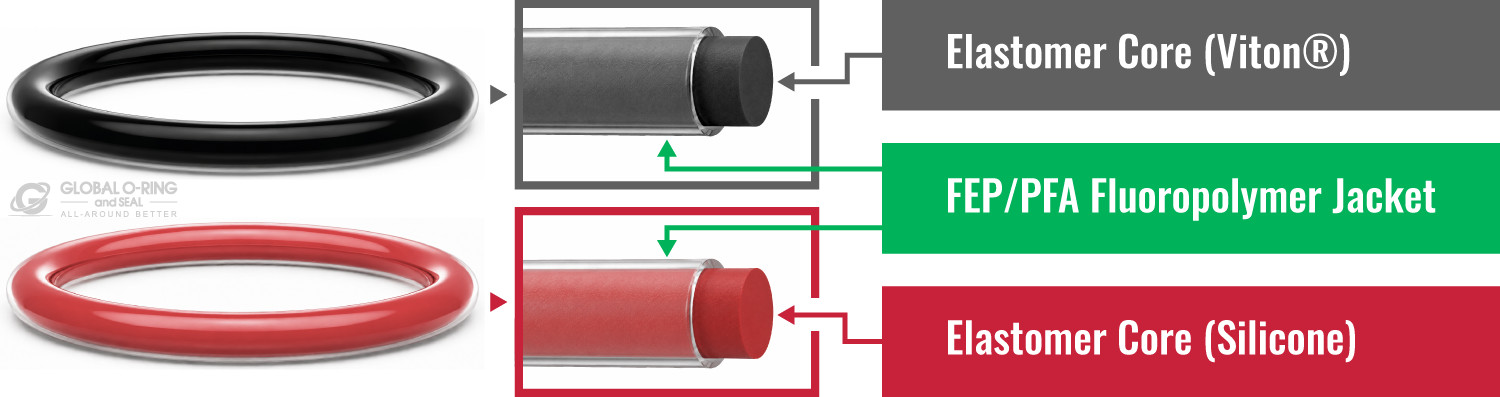
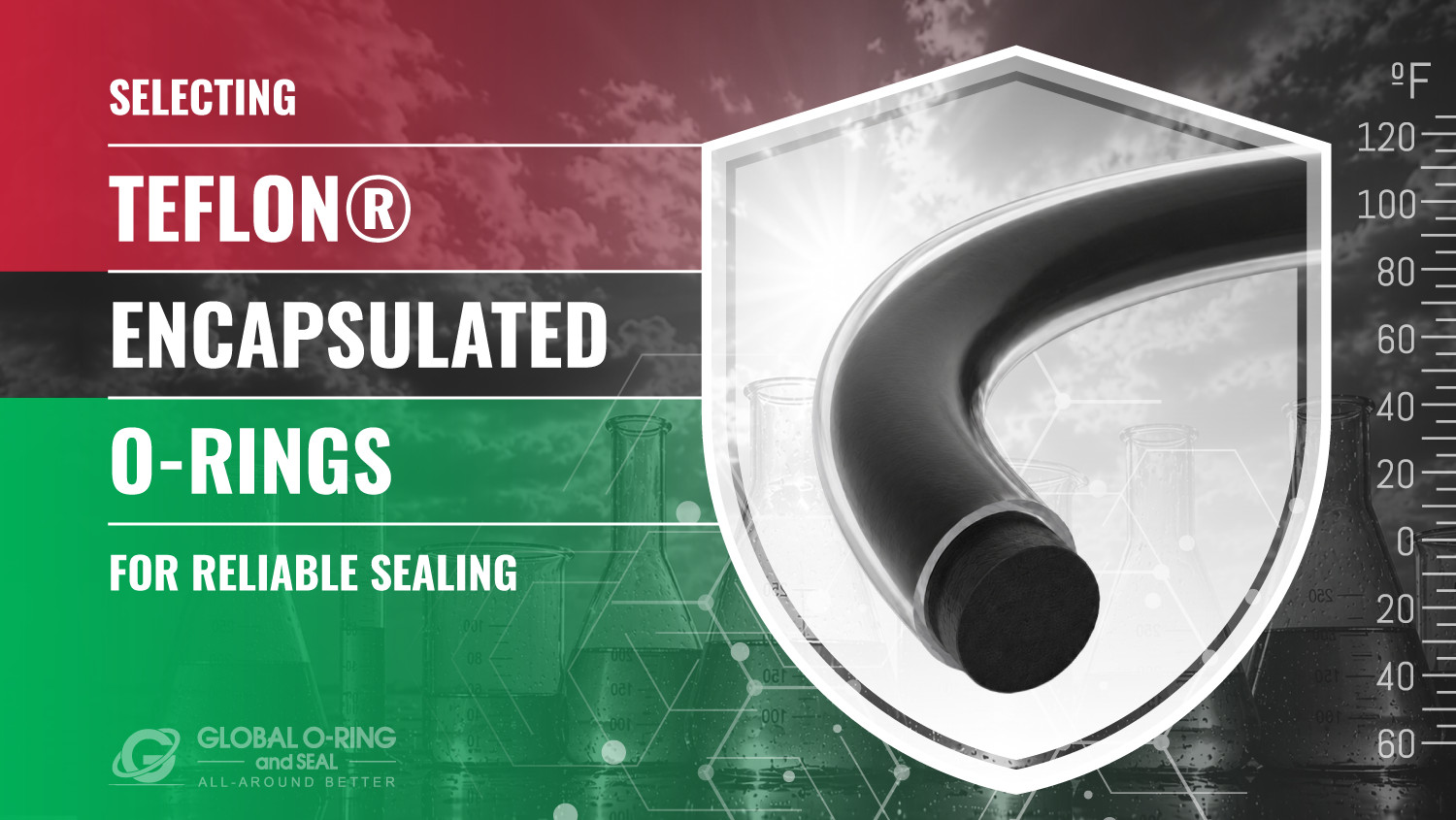
Teflon® encapsulated o-rings are composite sealing components that combine the chemical resistance of fluoropolymer materials with the resilience of an elastomer core. Instead of relying on a single material, these seals use a dual-layer construction that allows them to perform in environments where standard elastomers may degrade, swell, or lose sealing capability. This construction enables reliable sealing in applications involving aggressive chemicals, stringent cleanliness requirements, or wide temperature exposure.
Fluoropolymer Jacket and Elastomer Core
The outer jacket is typically manufactured from FEP or PFA. These materials create a chemically inert barrier that protects the internal elastomer from direct exposure to the surrounding process media.
The elastomer core, commonly silicone or Viton, provides the elasticity required to generate sealing force. When compressed within the gland, the core deforms and applies outward pressure against the sealing surfaces.
The core maintains the seal’s mechanical behavior, while the jacket provides environmental protection and chemical isolation. Together, these components create a sealing system that balances chemical resistance with the ability to sustain sealing force over time.
How Teflon® Encapsulated O-Rings Create a Reliable Seal
Teflon® encapsulated o-rings create a reliable seal by converting controlled compression into sustained contact force at the sealing interface. The elastomer core generates the sealing force, while the fluoropolymer jacket transfers that force to the surrounding hardware and protects the seal from the process environment. Reliable sealing depends on maintaining consistent compression and stable contact conditions throughout service.
Compression Creates the Initial Sealing Force
The sealing process begins when the encapsulated o-ring is compressed within the gland during assembly. Compression forces the elastomer core to deform, generating outward pressure against the mating surfaces. This contact pressure establishes the initial barrier that prevents fluid or gas leakage.
The Elastomer Core Sustains Contact Pressure
The elastomer core provides the resilience needed to sustain sealing force after installation. As operating conditions change, the core compensates for minor dimensional variation caused by temperature shifts, pressure changes, or material relaxation. This recovery behavior helps preserve continuous surface contact over time.
The Fluoropolymer Jacket Transfers Load and Protects the Seal
The fluoropolymer jacket transfers the sealing force generated by the core to the sealing surfaces while isolating the seal from the surrounding process media. This dual function allows the seal to maintain mechanical contact while resisting chemical attack.
By distributing compressive load across the sealing interface, the jacket helps create uniform contact conditions and reduces the likelihood of localized leakage.
Chemical and Environmental Resistance Characteristics
Teflon® encapsulated o-rings are selected for their ability to withstand aggressive chemical exposure and demanding environmental conditions. The fluoropolymer jacket forms a barrier between the process media and the internal elastomer core, helping preserve consistent sealing behavior when standard elastomers may degrade.
Key chemical and environmental characteristics include:
- Broad chemical resistance: Resists many acids, solvents, and cleaning agents.
- Low permeability: Limits gas and liquid penetration through the sealing surface.
- Resistance to chemical degradation: Maintains material stability in corrosive media.
- Temperature stability: Retains chemical properties during temperature cycling.
- Moisture and environmental resistance: Withstands humidity, oxidation, and frequent cleaning.
- Suitability for high-purity systems: Inert surfaces help reduce interaction with process media.
Mechanical Performance and Sealing Behavior
Teflon® encapsulated o-rings provide reliable sealing in stable environments but respond differently to mechanical stress than standard elastomers. The fluoropolymer jacket increases stiffness and limits elastic recovery, making consistent compression and stable dimensional conditions more important for predictable sealing performance.
Key mechanical and sealing characteristics include:
- Reduced elasticity: Lower flexibility than standard elastomers limits the ability to accommodate large dimensional changes.
- Limited recovery after compression: Reduced rebound increases sensitivity to over-compression or permanent deformation.
- Higher compression force requirements: Greater stiffness requires more force to achieve proper sealing contact.
- Dependence on stable dimensional and compression conditions: Performance relies on consistent gland geometry and controlled compression.
- Limited suitability for dynamic motion: Restricted flexibility reduces reliability in applications involving frequent movement or vibration.
- Dependence on stable compression: Predictable sealing performance relies on maintaining consistent contact conditions over time.
Where Teflon® Encapsulated O-Rings Provide the Greatest Performance Advantage
Teflon® encapsulated o-rings provide the greatest performance advantage in sealing environments where aggressive media, strict cleanliness requirements, or uncertain compatibility conditions are present.
Performance advantages are most evident in the following applications:
- Static sealing environments: Perform reliably where movement is limited and consistent compression can be maintained over extended service periods.
- Chemical processing systems: Support dependable sealing in equipment handling corrosive fluids, solvents, or reactive process media.
- Food and pharmaceutical equipment: Provide chemically inert sealing surfaces suitable for systems requiring cleanliness, product compatibility, and resistance to cleaning agents.
- Corrosive or mixed-media exposure: Maintain sealing integrity in systems exposed to multiple chemicals or changing fluid compositions.
- Systems requiring chemical resistance with elastomer-like sealing behavior: Combine the chemical stability of fluoropolymers with the resilience needed to sustain sealing force under compression.
- Situations where elastomer compatibility is uncertain: Offer a reliable sealing option when fluid compatibility data is limited or operating conditions may change.
Selecting the Right Teflon® Encapsulated O-Ring
Selecting the right Teflon® encapsulated o-ring requires matching the jacket material, core material, and internal construction to the system’s operating conditions. Each component influences how the seal responds to temperature, compression, and environmental exposure. Evaluating these factors together helps ensure reliable sealing performance and consistent service life.
FEP vs PFA Encapsulation
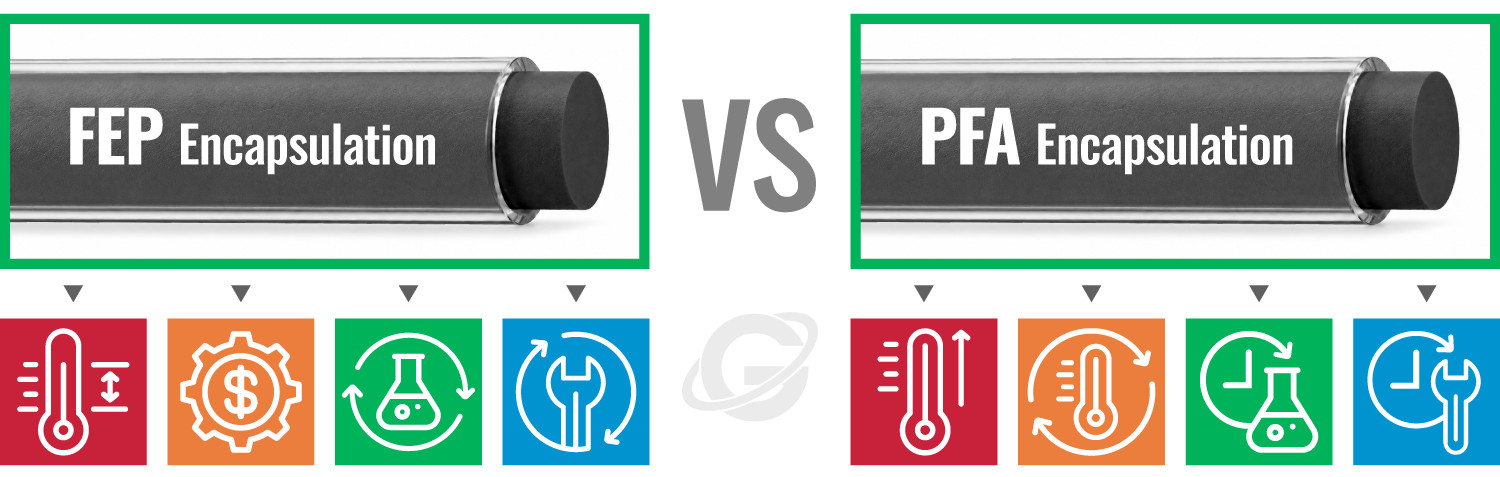
The choice between FEP and PFA jackets primarily depends on temperature exposure and long-term chemical stability requirements. Both materials provide broad chemical resistance, but their performance characteristics differ under sustained thermal and environmental stress.
FEP encapsulation is typically selected when:
- Operating temperatures remain within standard processing ranges
- Cost sensitivity is a consideration
- Chemical exposure is consistent and predictable
- Shorter service intervals are acceptable
PFA encapsulation is typically selected when:
- Higher temperature exposure is expected
- Long-term chemical stability is critical
- Thermal cycling or sustained heat is present
- An extended service life is required
Viton vs Silicone Core Materials
The elastomer core determines how the seal generates and maintains sealing force under compression. Selecting the appropriate core material depends on temperature conditions, compression behavior, and compatibility with the process environment.
Silicone cores are typically selected when:
- Low-temperature flexibility is required
- Consistent elasticity across temperature variation is important
- Compression force requirements must remain moderate
- Cleanliness and stability across temperature ranges are priorities
Viton cores are typically selected when:
- Higher temperature resistance is required
- Improved resistance to compression set is beneficial
- Exposure to oils, fuels, or aggressive media is possible
- Long-term dimensional stability is important
Hollow vs Solid Core Construction
The internal construction of the core influences how the seal responds to compression and dimensional variation. Hollow and solid cores provide different levels of flexibility and resistance to deformation.
Hollow-core designs are typically selected when:
- A lower compression force is required during installation
- Hardware tolerances vary slightly
- Reduced sealing force is acceptable
- An easier installation is desired
Solid-core designs are typically selected when:
- A higher sealing force is required
- Dimensional conditions remain stable
- Resistance to deformation under load is important
- Long-term sealing reliability is the primary objective
Conclusion
Teflon® encapsulated o-rings provide a reliable sealing option for applications where chemical resistance and environmental stability are more important than mechanical flexibility. Their dual-material construction allows them to maintain sealing integrity in challenging environments while supporting consistent performance under controlled compression.
Selecting the right configuration ensures the seal matches the system’s demands. When material capability and operating conditions are properly aligned, sealing reliability becomes more predictable, and long-term system performance is easier to maintain.
Frequently Asked Questions About Teflon® Encapsulated O-Rings
Why would a system require a Teflon® encapsulated o-ring instead of a standard elastomer o-ring?
A Teflon® encapsulated o-ring provides a solution when chemical compatibility or environmental stability exceeds the limits of conventional elastomers. The fluoropolymer jacket protects the seal from chemical attack while the elastomer core maintains sealing force under compression. This combination allows equipment to operate reliably in environments where standard elastomers may swell, soften, or lose sealing integrity.
What problem occurs when fluid compatibility is uncertain or variable?
Uncertain chemical compatibility can lead to rapid seal degradation or unexpected leakage if the elastomer material is incompatible with the process media. Selecting a Teflon® encapsulated o-ring introduces a chemically inert sealing surface that reduces the likelihood of material interaction. This approach helps stabilize sealing performance when fluid composition may change or compatibility data is limited.
Why are Teflon® encapsulated o-rings commonly used in static sealing systems?
Static sealing systems require consistent contact pressure over long service periods without frequent movement or dimensional change. Teflon® encapsulated o-rings perform reliably in these conditions because their construction supports stable compression and sustained sealing force. When dimensional conditions remain predictable, the seal can maintain continuous contact and minimize the risk of leakage.
Why is proper configuration selection important for Teflon® encapsulated o-rings?
Incorrect selection of jacket material, core material, or construction can result in inadequate sealing force or reduced service life. Evaluating operating temperature, chemical exposure, and compression requirements allows the seal configuration to match system demands. Proper alignment between seal design and operating conditions improves reliability and reduces the likelihood of premature failure.
When should a hollow-core Teflon® encapsulated o-ring be selected instead of a solid-core design?
High installation force or tight assembly tolerances can make solid-core seals difficult to compress or install properly. Selecting a hollow-core design reduces compression force requirements and allows the seal to conform more easily to dimensional variation. This configuration supports reliable installation and consistent sealing performance in systems with limited assembly tolerance.