 中文
中文  English
  Español
  Français
  Português
  Deutsch
  Italiano
  Русский
  日本語
日本語  العربية
  हिन्दी
Summary
- Bonded seals combine a metal washer and an elastomer insert to deliver reliable, high-pressure sealing around bolts, screws, and threaded fittings in various applications.
- Their simple, one-piece design improves sealing consistency, prevents over-compression, and integrates seamlessly with standard hardware for easy installation and dependable performance.
- Global O-Ring offers self-centering bonded seals in inch and metric sizes, with custom options available to meet unique sealing requirements.
What are Bonded Seals
Bonded seals (Dowty Seals, Composite Washer Seals, Gasket Seals) are specialized sealing washers designed to prevent fluid or gas leaks around bolts, screws, and threaded fittings. Each seal consists of a flat metal washer with a rubber sealing element permanently bonded to its inner diameter. This dual-material construction combines the strength and load distribution of metal with the flexibility and sealing performance of elastomer.
How Bonded Seals Work
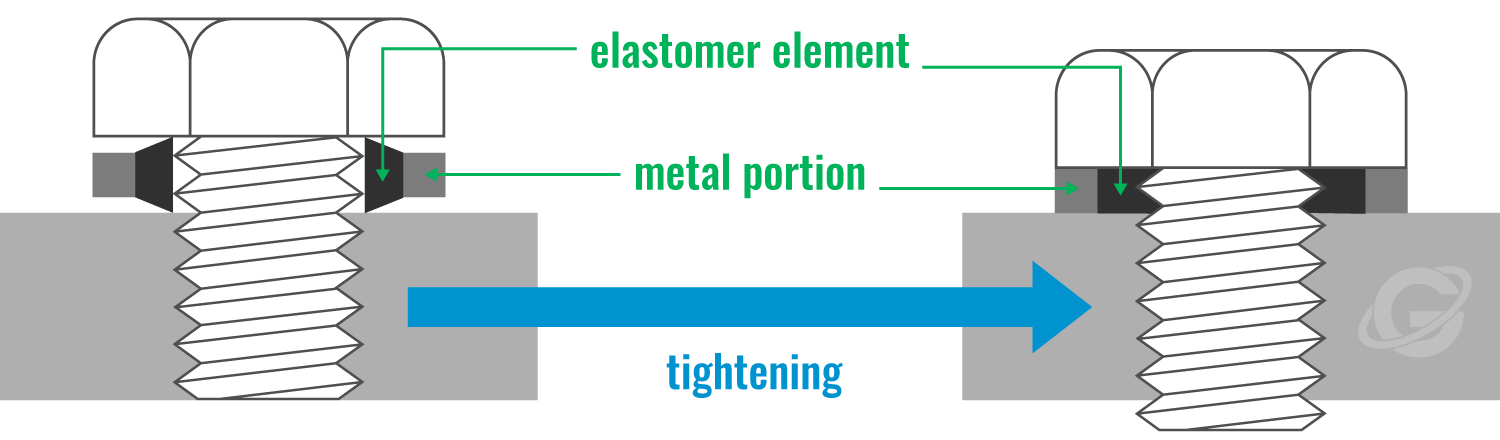
The fundamental principle of a bonded seal’s operation lies in the controlled compression of its elastomer component. When a fastener, such as a bolt or screw, is tightened, it exerts pressure on the bonded seal beneath its head or nut. This tightening action directly compresses the elastomer element against the two mating surfaces to be sealed. As it is compressed, the elastomer deforms to fill any microscopic gaps, irregularities, or imperfections on these surfaces, thereby establishing a leak-tight barrier.
The metal washer portion of the bonded seal encircles and supports the rubber ring throughout the compression phase. This metal component acts as both a retainer and a reinforcement, preventing the elastomer from being excessively compressed, which could cause damage or premature failure. Furthermore, the metal washer effectively limits the outward extrusion of the elastomer under the high pressures exerted during tightening and subsequent operation. This design protects the elastomer and ensures the sealing material remains in place to maintain integrity.
The interaction between the metal washer and the rubber elastomer creates a composite structure that significantly enhances the seal’s pressure resistance. This bonded construction allows the seal to withstand much higher fluid or gas pressures compared to a standalone o-ring or washer. The metal washer distributes the load evenly and prevents the elastomer from extruding under pressure. This inherent strength and stability make bonded seals a preferred choice for critical sealing applications where reliability and leak prevention are paramount.
Key Benefits of Bonded Seals
Bonded seals offer several significant advantages as sealing washers, including their simple design, broad hardware compatibility, improved sealing consistency, and the capability to prevent over-compression. These benefits make bonded seals a popular choice among engineers and maintenance professionals seeking a dependable, easy-to-use sealing solution for threaded connections.
Simple Design
One of the most appealing advantages of bonded seals is their straightforward construction. Their compact, integrated design eliminates the need for multiple sealing elements or complex grooves. Because the seal’s design has a rubber insert bonded in place, there’s no risk of it falling out or shifting during assembly. The result is a user-friendly seal that’s easy to handle, install, and rely on.
Broad Hardware Compatibility
Bonded seals work with standard hardware, making them highly versatile. They are usable with common bolts, plugs, and threaded fittings, and no special flanges, machined grooves, or proprietary components are required. This compatibility reduces design constraints and simplifies retrofitting or replacement.
Improved Sealing Consistency
Because the elastomer is bonded directly to the metal washer, bonded seals ensure uniform alignment and consistent sealing performance. Gaskets or standalone o-rings can shift or become misaligned during installation, whereas bonded seals stay centered and stable under compression. This reliable positioning helps deliver even surface contact around the entire sealing interface, reducing the likelihood of leaks caused by uneven load distribution or improper placement and resulting in a seal that performs more consistently.
Prevention of Over-Compression
A common failure mode for standalone elastomer seals is over-compression, in which excessive torque causes the rubber to deform excessively or extrude beyond its sealing surface. Bonded seals solve this problem by integrating a rigid metal washer that limits compression. During installation, the washer absorbs and distributes the tightening force, protecting the rubber element from being crushed or pushed out of place.
Common Applications of Bonded Seals
Because of their key benefits, bonded seals are used across many industries where fluids or gases need to be reliably sealed at bolt or threaded connections.
Typical applications include:
- Hydraulic equipment often relies on bonded seals to prevent leaks in pumps, cylinders, and fittings operating under high-pressure fluid conditions.
- Automotive systems use bonded seals in engines, fuel lines, brake components, and drain plugs to maintain secure, leak-free connections.
- Plumbing and HVAC systems depend on bonded seals to effectively seal water, oil, and refrigerant lines in both residential and commercial installations.
- Industrial machinery incorporates bonded seals to contain fluids in gearboxes, compressors, and flanged joints throughout factory equipment.
- Aerospace and defense applications require bonded seals for reliable performance in fluid systems subject to vibration, pressure fluctuations, and extreme operating conditions.
In all these environments, bonded seals offer a compact, cost-effective alternative to complex gaskets or custom-machined grooves, ensuring dependable performance in any application requiring bolts or fittings.
Standard Sizes and Custom Configurations
One convenient aspect of bonded seals is that they come in a broad range of standard sizes to match common thread specifications used worldwide. Global O-Ring and Seal offers bonded seal washers for both metric and imperial (inch/BSP) thread sizes. Standard size charts are available so that engineers can easily select seals that precisely match the diameter of the screw or port they need to seal.
Using a standard size ensures the bonded seal will seat correctly and perform as intended, without requiring special modifications. There are cases where a unique size or configuration might be needed. For these special requirements, Global O-Ring offers custom bonded seals. Custom seals can be made to particular dimensions, shapes, or material combinations to meet unusual design needs.
Self-Centering vs Standard Bonded Seals
Standard bonded seals and self-centering bonded seals operate on the same basic principle, but the self-centering type includes a design enhancement that simplifies installation and improves reliability.
Standard Bonded Seals
The standard style is a plain bonded washer consisting of a flat metal ring with a bonded rubber insert. The seal installer must manually place it concentric with the bolt or fitting during assembly. Care is needed to ensure it stays centered; if a standard bonded seal slips off-center while tightening the joint, part of the seal may not be properly compressed, potentially creating a leak path.
Self-Centering Bonded Seals
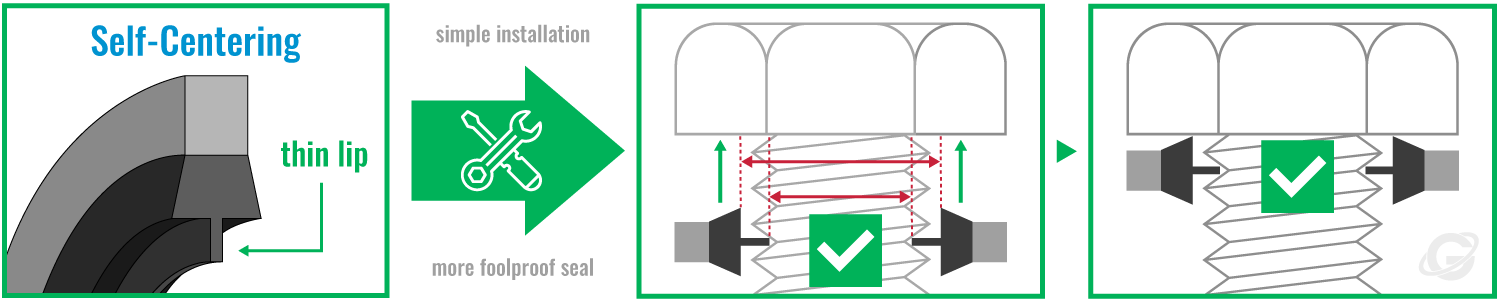
Self-centering bonded seals eliminate leaks due to offset by incorporating a built-in centering feature. A self-centering bonded seal has a thin lip or extended inner rubber layer that protrudes slightly into the bolt hole. When you push it onto a screw or stud, this rubber inner ring fits snugly around the threads and holds the seal centered in place. This design ensures even pressure around the seal during tightening, improving sealing performance.
An added benefit is that the seal can be pre-installed on the bolt or plug, making assembly quicker and reducing the chance of human error or misplacement. The centering lip is very thin and offers little resistance, so it doesn’t interfere with tightening the fastener. Overall, self-centering bonded seals simplify installation and provide a more foolproof seal, especially in production environments.
Why Choose Global O-Ring for Bonded Seals
When it comes to sealing performance, reliability starts with the right supplier. At Global O-Ring and Seal, we combine deep product knowledge with a commitment to delivering high-quality bonded seals for industrial and high-pressure applications.
Our bonded seals are engineered for consistency and designed with performance in mind. We offer a comprehensive range of inch and metric sizes, backed by construction standards that support a wide variety of operating conditions. Whether you need standard bonded seals or custom-engineered variations, our team is ready to help you select the right solution for your application.
Q&A: Bonded Seals in Real-World Applications
Why do leaks occur around bolts and threaded fittings?
Leaks often occur when there is insufficient sealing between the fastener and mating surface. Small surface imperfections and pressure fluctuations can create leak paths. Bonded seals introduce an elastomer element that compresses under load to fill these gaps, while the metal washer provides structural support. This results in a secure, leak-tight seal that maintains system integrity and improves reliability under demanding conditions.
What causes sealing failure under high-pressure conditions?
At high pressures, standalone elastomer seals or washers can extrude, deform, or lose sealing capability. Bonded seals prevent this by incorporating a metal washer that supports the elastomer and limits extrusion. The washer distributes the load evenly, allowing the seal to maintain its shape and sealing force. This improves pressure resistance and extends service life in high-pressure applications.
Why do seals fail due to over-compression during installation?
Over-tightening fasteners can compress elastomer seals beyond their limits, causing permanent deformation, cracking, or extrusion. Bonded seals prevent over-compression by using a rigid metal washer as a built-in compression stop. The washer absorbs excess load and protects the elastomer. This ensures consistent compression and reduces the risk of seal failure during installation.
How can improper alignment during installation lead to leaks?
If a seal is not properly centered during installation, uneven compression can create gaps that allow leakage. Self-centering bonded seals solve this with an integrated elastomer lip that aligns the seal with the fastener. This ensures uniform compression around the sealing surface, reducing installation errors and improving sealing reliability.
Why are o-rings less effective in some threaded applications?
O-Rings can shift, twist, or become misaligned during installation, especially in applications without dedicated grooves. Bonded seals combine a sealing element and washer into a single component that remains properly positioned during assembly. This results in easier installation, fewer alignment issues, and more consistent sealing performance in threaded connections.