 हिन्दी
  English
  Español
  Français
  Português
  Deutsch
  Italiano
  Русский
  中文
中文  日本語
日本語  العربية
Summary
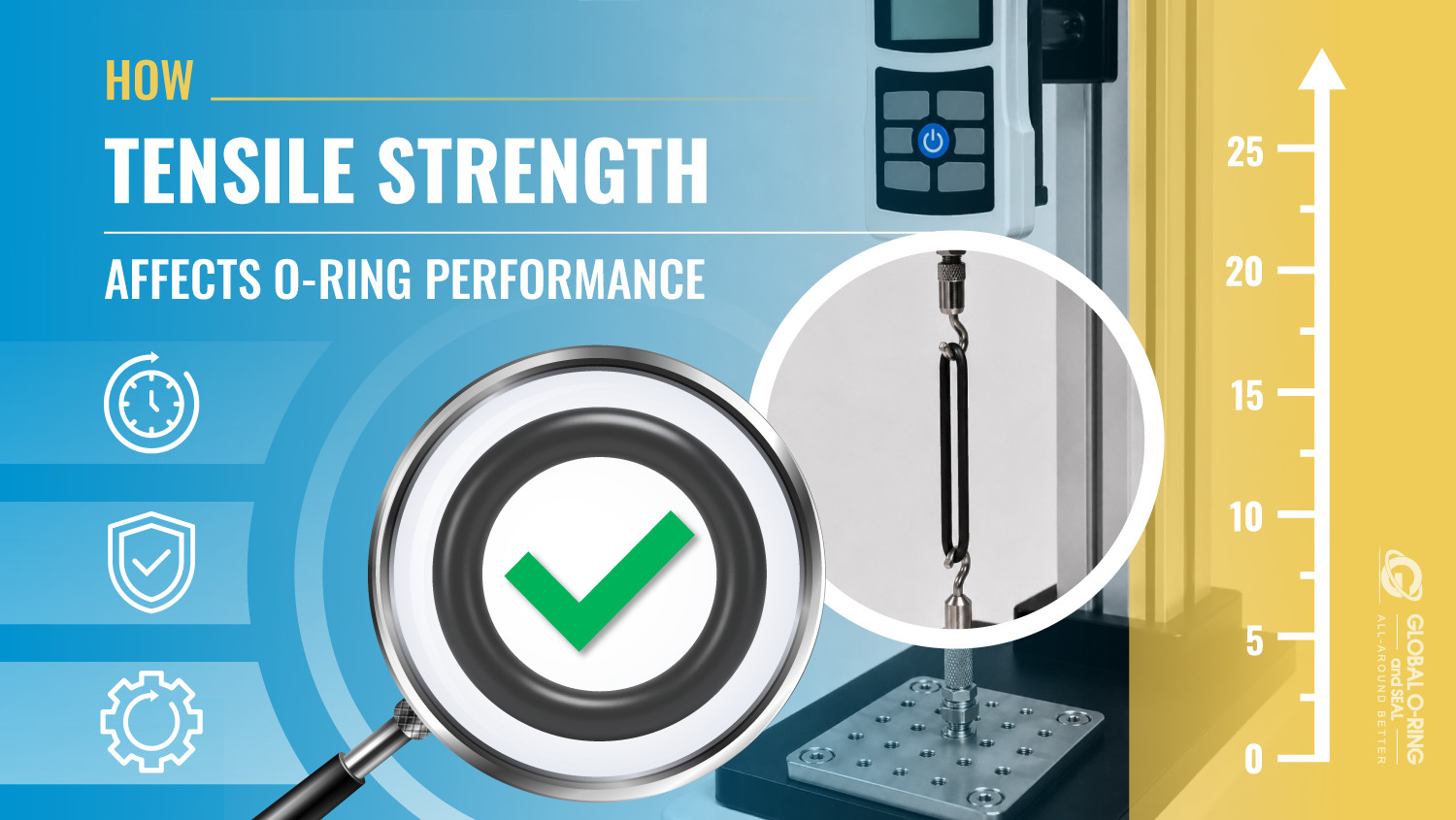
- Tensile strength defines how well an o-ring resists tearing, deformation, and mechanical damage under load, supporting durability and helping maintain structural integrity throughout repeated stress and service cycles.
- In dynamic and pressure-loaded systems, adequate tensile strength helps materials withstand repeated motion and fatigue, reducing progressive damage and supporting stable sealing performance under changing operating conditions.
- Interpreting tensile strength values alongside operating demands allows engineers to align material capability with system requirements, improving reliability, extending service life, and reducing the likelihood of premature seal failure.
Introduction
Tensile strength is a fundamental mechanical property that influences how elastomers respond to stress, deformation, and repeated loading. In sealing applications, this property helps determine whether an o-ring can withstand the mechanical demands encountered during installation and service. While tensile strength is often listed as a single value on a material datasheet, its practical importance lies in its role in supporting durability, reliability, and consistent sealing behavior under real operating conditions.
Understanding Tensile Strength in Elastomer Materials
What Tensile Strength Measures
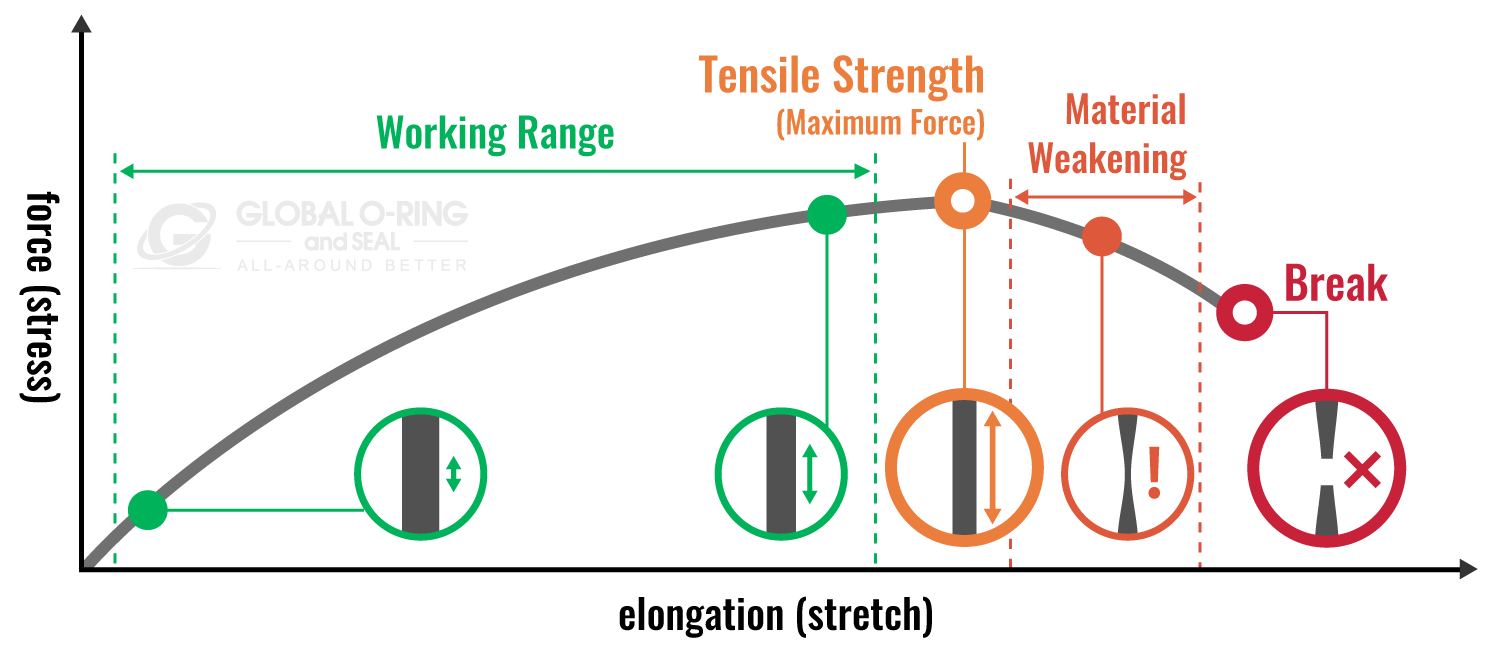
Tensile strength describes the maximum force an elastomer can withstand before it breaks. In sealing applications, it reflects the material’s ability to resist tearing, stretching, and mechanical damage while maintaining structural integrity. Tensile strength functions as a practical indicator of how well an o-ring can tolerate mechanical stress during installation and service.
Factors That Influence Tensile Strength
Material formulation plays a direct role in determining tensile strength. The internal structure of the elastomer determines how strongly the material resists separation under load.
Environmental exposure can also affect tensile performance over time. Elevated temperatures, chemical contact, and long-term aging gradually alter the material’s structure, reducing its resistance to mechanical stress and increasing the risk of damage during service. Changes in tensile strength over time directly influence how reliably a seal maintains its structural integrity under mechanical load.
How Tensile Strength Influences O-Ring Durability
Mechanical Strength Supports Long-Term Reliability
O-Ring durability depends on the material’s ability to maintain structural integrity while exposed to mechanical stress over time. Tensile strength plays a direct role in this process by defining the level of force the material can withstand before permanent damage occurs.
Repeated stress drives long-term durability. Over time, gradual degradation reduces the seal’s ability to maintain consistent contact with the sealing surfaces, increasing the likelihood of leakage or failure.
Resistance to Mechanical Damage Extends Service Life
Higher tensile strength improves the material’s resistance to mechanical damage during normal operation. Stronger elastomers are less likely to develop small cracks or surface defects when exposed to pressure fluctuations, vibration, or dimensional movement within the system. By maintaining material integrity under these conditions, the seal can continue to perform reliably throughout its intended service interval.
Structural Stability Helps Maintain Consistent Sealing Performance
Durability also depends on the material’s ability to retain its physical structure under load. Adequate tensile strength helps the o-ring maintain its shape and mechanical integrity as system forces change during operation. This structural stability supports consistent sealing contact, which is essential for maintaining reliable sealing performance.
The Role of Tensile Strength in Dynamic Sealing Applications
Repeated Motion Introduces Mechanical Fatigue
Dynamic sealing applications expose elastomers to continuous movement and repeated deformation. Unlike static seals, which primarily maintain compression, dynamic seals must repeatedly stretch, compress, and recover as components move relative to one another.
Over time, repeated deformation places mechanical strain on the material. This cyclic loading can cause small defects to form and gradually grow within the elastomer structure. As these defects accumulate, the material becomes more susceptible to tearing and fatigue-related failure.
Tensile strength influences how well the material resists this progressive damage. Materials with adequate strength can withstand repeated deformation without losing structural integrity.
Adequate Tensile Strength Helps Maintain Sealing Reliability in Dynamic Systems
Dynamic sealing performance depends on the material’s ability to maintain consistent mechanical behavior under motion, pressure variations, and vibration. In these environments, the seal must repeatedly recover its shape and maintain stable contact with the sealing surfaces.
Adequate tensile strength helps the o-ring retain its structural integrity as system forces change throughout each operating cycle. When the material maintains its strength under repeated loading, the sealing interface remains stable and predictable.
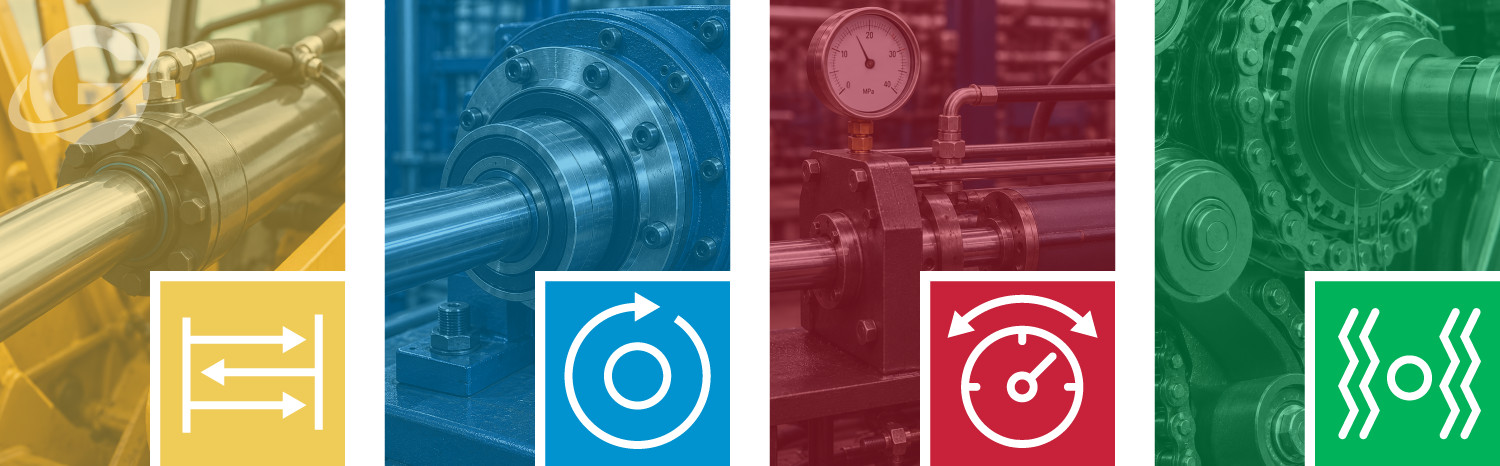
Common dynamic sealing environments include:
- Reciprocating motion
- Rotary motion
- Pressure cycling
- Vibration-prone equipment
In these systems, tensile strength supports reliable sealing performance by helping the material withstand repeated motion without progressive weakening.
Interpreting Tensile Strength Values in Material Selection
Tensile Strength Values Provide a Reference Point for Mechanical Capability
Tensile strength values listed on material datasheets provide a useful reference for evaluating mechanical capability. These values indicate how much force a material can withstand before failure under controlled test conditions. While the number itself does not predict performance in every application, it establishes a baseline for comparing and identifying materials capable of withstanding expected mechanical loads.
Tensile Strength Must Be Evaluated Alongside Other Material Properties
Tensile strength should not be used as the sole criterion for selection. Mechanical performance depends on the combined behavior of multiple properties, each contributing to the material’s response to stress, deformation, and environmental exposure.
Important properties to evaluate alongside tensile strength include:
- Elongation: indicates the material’s ability to stretch without breaking
- Hardness: influences resistance to deformation and extrusion
- Compression set: reflects the material’s ability to maintain sealing force over time
- Tear resistance: measures resistance to localized mechanical damage
- Temperature capability: defines the operating range for reliable performance
Evaluating these properties together provides a more complete understanding of the material’s capabilities and helps ensure the selected material aligns with the mechanical and environmental demands of the application.
Higher Tensile Strength Does Not Always Mean Better Performance
It is a common assumption that higher tensile strength automatically improves performance. In practice, the optimal tensile strength depends on the specific application and operating conditions. Materials with very high strength may also exhibit increased stiffness or reduced flexibility, which can affect sealing behavior in certain environments.
Effective selection requires balancing mechanical strength with other performance characteristics. Selecting a material with strength significantly beyond what the application requires can introduce unnecessary cost or reduce overall performance. Conversely, selecting a material with insufficient strength increases the likelihood of mechanical damage and premature failure.
Material Selection Aligns Mechanical Properties with Operating Conditions
Effective selection involves matching material properties to the mechanical and environmental demands of the system. Tensile strength provides a practical indicator of how well a material can tolerate mechanical stress, but the final decision must consider the full range of operating conditions.
Key factors to consider during selection include:
- Expected mechanical loads
- Frequency of motion or deformation
- Operating temperature range
- Chemical exposure
- Required service life
When tensile strength values are evaluated under these conditions, selection decisions become more predictable and performance outcomes more reliable.
Designing for Reliable Performance with Appropriate Tensile Strength
Matching Material Strength to Mechanical Demands
Mechanical demands vary widely across applications. Systems exposed to higher pressure, frequent motion, or dimensional variation place greater stress on sealing components. Selecting a material with tensile strength suited to these conditions helps reduce the likelihood of tearing, deformation, or progressive weakening under load. This alignment between material capability and operating conditions supports consistent sealing behavior.
Maintaining Structural Integrity Under Changing Operating Conditions
Structural integrity is essential for preventing gradual performance decline. Even small reductions in material strength can affect the seal’s ability to withstand repeated stress. Over time, this loss of integrity increases the risk of leakage, reduced sealing force, or unexpected failure. Designing with sufficient tensile strength helps ensure the seal remains resilient as operating conditions evolve.
Coordinating Material Capability with System Reliability Goals
Systems designed with appropriate material strength typically experience more predictable performance over time. Consistent mechanical behavior supports stable sealing contact, reduces the likelihood of sudden failures, and helps maintain reliable operation across service intervals. Aligning tensile strength with system demands helps establish a balanced design that supports durability, reliability, and long-term performance.
Conclusion
Tensile strength plays a central role in maintaining the mechanical integrity of sealing components subjected to stress, motion, and changing operating conditions. Materials with appropriate strength are better equipped to resist damage accumulation, sustain repeated deformation, and maintain stable sealing behavior throughout their service life.
Reliable sealing performance depends on aligning material capability with the mechanical demands of the system. When tensile strength is matched to operating conditions, sealing components are more likely to perform consistently, reduce failure risk, and support dependable operation over time.
Q&A: Tensile Strength and O-Ring Performance
Why does an o-ring fail after repeated motion, even when operating conditions remain within design limits?
Using a material with sufficient tensile strength improves resistance to mechanical fatigue under cyclic loading. Higher strength helps the elastomer withstand repeated deformation without progressive weakening. This allows the seal to maintain reliable performance in dynamic systems over longer service intervals.
Why did a sealing system begin leaking after extended service without a clear change in operating conditions?
Verifying that tensile strength remains appropriate for the system’s long-term mechanical demands helps prevent gradual performance decline. Materials with adequate strength resist damage accumulation and maintain consistent sealing contact. This supports stable sealing behavior and reduces the likelihood of unexpected leakage over time.
Why did two materials with similar hardness perform differently in the same application?
Evaluating tensile strength alongside hardness provides a more complete understanding of mechanical capability. Materials with higher tensile strength are better able to resist tearing and deformation under load. This helps ensure consistent sealing performance even when hardness values appear comparable.
Why does increasing system pressure sometimes lead to premature o-ring damage?
Selecting a material with tensile strength suited to higher mechanical stress improves resistance to deformation and tearing under load. When material strength aligns with operating pressure, the seal maintains structural stability and continues to perform reliably under demanding conditions.
Why does choosing the highest tensile strength material not always improve performance?
Balancing tensile strength with flexibility and other material properties ensures the seal responds appropriately to operating conditions. Selecting strength levels suited to the application prevents excessive stiffness or unnecessary cost while maintaining reliable sealing behavior.