 हिन्दी
  English
  Español
  Français
  Português
  Deutsch
  Italiano
  Русский
  中文
中文  日本語
日本語  العربية
Summary
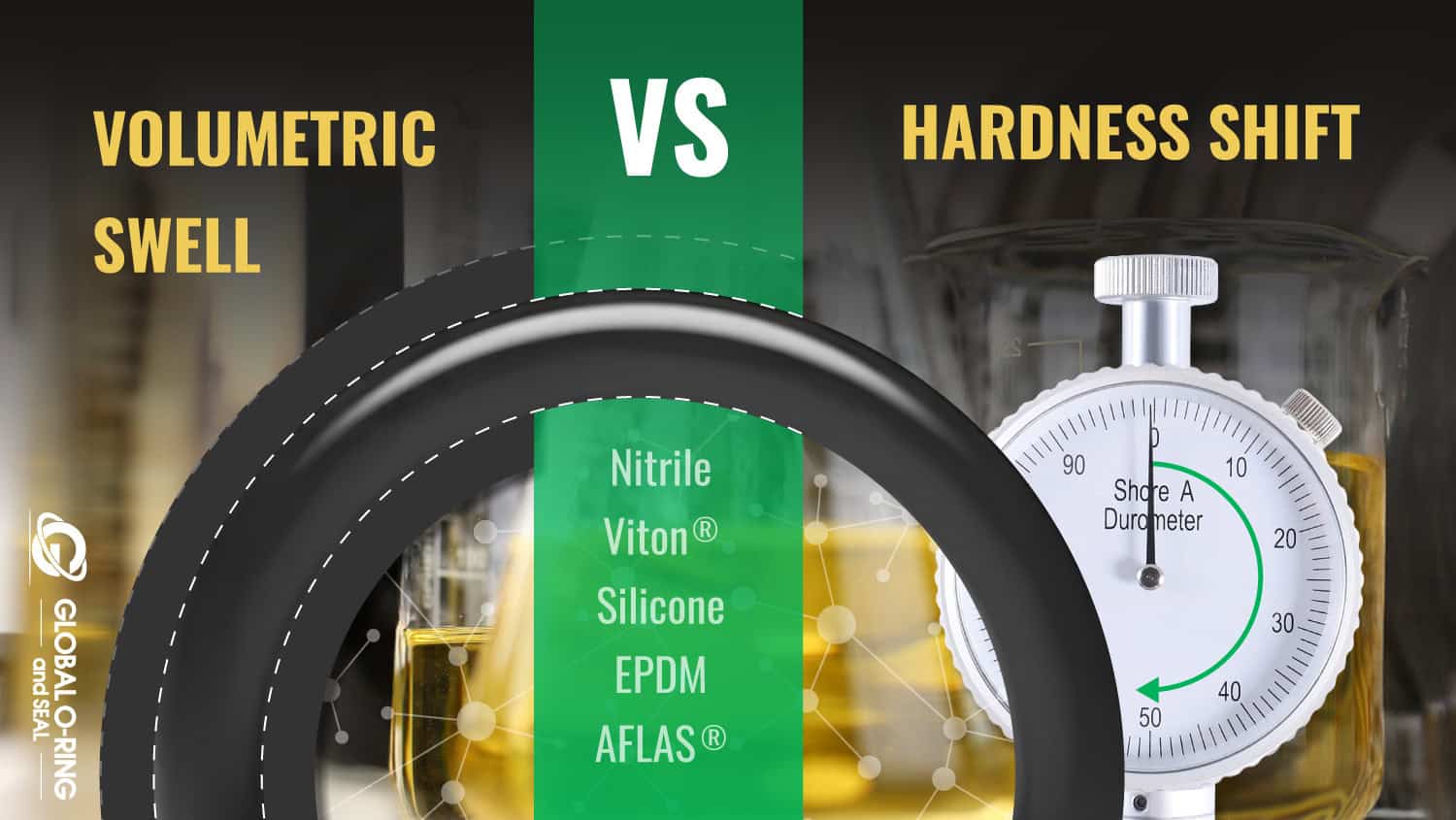
- Volumetric swell and hardness shift are key indicators of elastomer performance. Both must stay within limits to maintain reliable sealing in chemically exposed environments.
- Changes in durometer and volume affect compression, extrusion, and wear. Understanding their combined impact helps predict seal behavior under pressure, motion, and long-term stress.
- Use ASTM D2000 data and compatibility charts to assess material performance and validate selected compounds through real-world simulation for lasting reliability in critical applications.
Why Swell and Hardness Matter in Seal Performance
When an elastomer seal is exposed to fluids over time, two material-level changes largely determine its long-term reliability: volumetric swell and hardness shift. These parameters capture how the seal’s size and stiffness evolve due to chemical exposure. Excessive swell or a significant change in hardness can severely compromise sealing performance, which is why these properties are key metrics in chemical compatibility evaluation.
Understanding Volumetric Swell: What It Is and Why It Happens
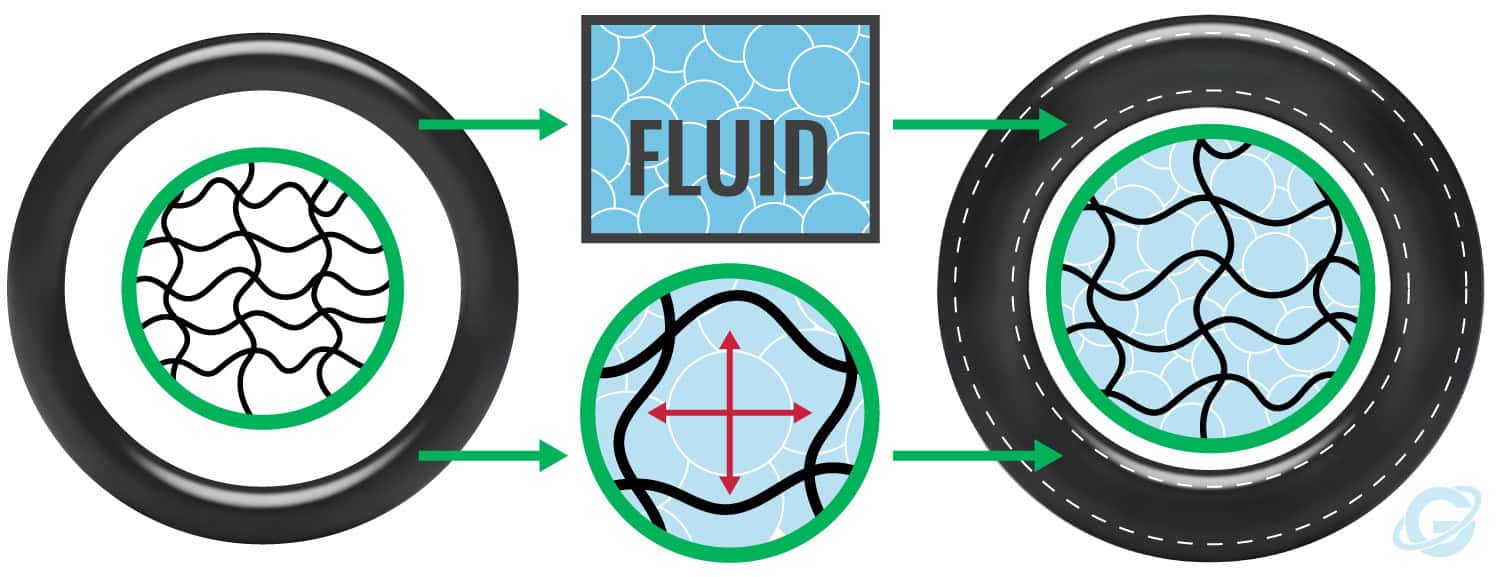
Volumetric swell in elastomers refers to the increase in the rubber’s volume after immersion in a fluid. The rubber absorbs the liquid and expands as fluid molecules penetrate the polymer network and push the polymer chains apart. The degree of swelling depends on polymer-fluid compatibility.
By definition, volume swell is measured as a percent change from the original volume (per ASTM D471 test procedures). While swelling usually implies uptake of fluid, elastomers can undergo volume shrinkage if a fluid extracts ingredients from the rubber. Both swell and shrink are encompassed by “volume change” metrics.
Volumetric swell is a critical compatibility indicator because it directly alters the seal’s geometry. Exceeding the acceptable limits for the seal’s design typically indicates the material isn’t a good choice for the chemical environment.
Understanding Hardness Shift: Chemical Effects on Durometer
Alongside swell, hardness shift is the other key change that elastomers experience in fluid service. Hardness shift is the change in the rubber’s durometer after fluid exposure. This change is typically measured per ASTM D471 by durometer tests before and after immersion. Any major shift in durometer indicates a significant alteration of the polymer’s structure or plasticizer content.
Hardness relates to the seal’s ability to maintain contact pressure and conform to surfaces. Tracking hardness shift is crucial. In compatibility testing, many specifications set allowable limits on hardness changes to ensure the seal doesn’t become too brittle or too weak.
Changes in durometer typically result from chemical interactions that either soften or stiffen the elastomer. Common mechanisms include:
- Plasticization: Fluids can act as internal lubricants, reducing intermolecular forces between polymer chains and softening the material.
- Crosslink Disruption: Aggressive chemicals or heat may break crosslinks or polymer backbones, weakening the network and lowering hardness.
- Extraction of Additives: Some fluids leach out plasticizers, oils, or other ingredients, leaving behind a stiffer, drier matrix that increases durometer.
- Oxidative or Chemical Crosslinking: Certain environments can further cure the rubber, raising hardness and increasing brittleness over time.
Swell and Hardness Effects on Seal Function
Volumetric swell and hardness shift alter the fundamental way a seal functions: how it seals, how it deals with long-term compression, and how it handles motion and pressure. A good sealing material needs to keep these changes within a manageable range. The following table outlines how changes in swell and hardness affect key sealing behavior.
| Sealing Function | Results of Swell or Hardness Changes |
|---|---|
| Compression and Sealing Force |
|
| Compression Set and Recovery |
|
| Modulus and Gland Loading |
|
| Dynamic Friction and Wear |
|
| Gland Integrity and Extrusion |
|
How Major Elastomers Behave Across Fluids
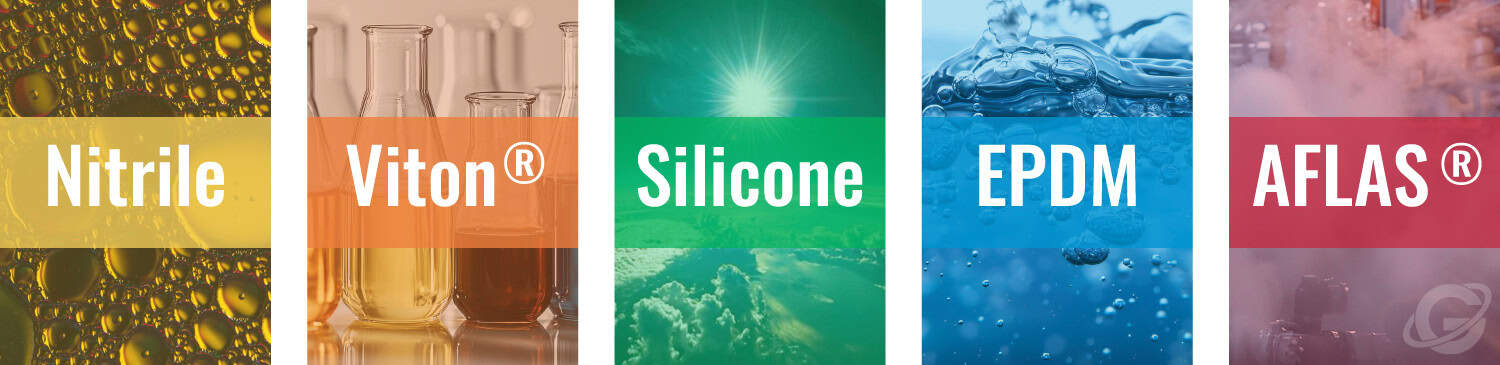
Every elastomer family has characteristic response profiles to different fluids. The following sections explain how standard sealing elastomers typically behave with respect to swelling and hardness shift.
- Nitrile: NBR shows low swell and minor softening in hydrocarbon service. It fails in polar solvents and oxidizers, where it either swells excessively and softens or hardens and cracks.
- Viton®: FKM resists swelling and hardness shift in oils, fuels, and most solvents. It hardens in high-temperature steam, strong bases, or amines. Polar solvents can cause swelling and softening.
- Silicone: Silicone remains flexible across extreme temperatures and resists ozone and UV, but swells and softens in oils, fuels, and solvents. It’s best for static applications in dry or mild environments.
- EPDM: EPDM resists swelling and retains elasticity in water, steam, and glycol-based fluids. It fails in oils and fuels, where it can swell by more than 100% and become weak.
- AFLAS®: AFLAS® excels in hot, chemically aggressive environments, showing minimal swell or durometer change. It can swell and soften in aromatics, chlorinated solvents, or ketones.
Interpreting Chemical Compatibility Data Correctly
Chemical compatibility decisions require more than a glance at swell percentages. Reliable evaluation means examining multiple material property changes, especially volumetric swell and hardness shifts, under conditions that match your application. Two tools help guide this: ASTM D2000 test reports and chemical compatibility charts.
ASTM D2000 Test Reports
ASTM D2000 compound specifications often include immersion testing data that detail how a rubber changes after exposure to a specific fluid at a set temperature and time.
Key data points include:
- Volume Change (%): A swell of <10% is generally excellent; >20% may be unacceptable in dynamic or precision-sealing applications.
- Hardness Change (Shore A): A shift within ±5 is usually minor; larger changes can indicate plasticization (softening) or oxidative hardening.
- Tensile & Elongation Loss: Used to assess structural degradation, which is essential for seals exposed to mechanical stress.
- Compression Set in Fluid: Indicates the material’s ability to recover after long-term compression in the presence of fluid.
Engineers should assess the full test profile, not just one metric. For example, a compound with only 3% swell but a -15 durometer shift could be more problematic than one with 10% swell and stable hardness.
Chemical Compatibility Chart: How to Use It Effectively
Global O-Ring and Seal’s Chemical Compatibility Tool simplifies selection by assigning compatibility ratings for each elastomer–fluid pair. These ratings are built on real compound-level test data and hands-on application knowledge.
To use the chart effectively:
- Check the Fluid Match: Select the specific chemical or blend, not just the category.
- Interpret Ratings by Application Type: “Fair” might be acceptable for a static seal with low exposure time, while “Good” is typically required for dynamic or high-pressure use.
- Understand the Basis: Ratings reflect overall performance, not just swell. They also consider hardness retention, tensile strength, and other indicators of degradation.
Selecting Materials Based on Swell and Hardness Behavior
Choosing the right seal material for a given application is about anticipating how the elastomer will react in the service environment and deciding if those reactions are tolerable. Here are some practical considerations to guide material selection, using the insights about swell and hardness:
- When Volumetric Swell Limits Drive Selection: If your seal is in a tight enclosure with minimal extra clearance, you’ll want a material with minimal swell in the expected fluids.
- When Hardness Stability Is More Critical: For dynamic seals, look for compounds advertised as having good “volume swell and hardness change resistance” in your fluid.
- Balancing Swell vs. Hardness Trade-offs: The choice depends on the application’s tolerance. Consider what failure mode is more dangerous in your system: leaks from shrinkage/hardening, or deformation/extrusion from swelling/softening.
- Use Compatibility Data and Tools: Take advantage of chemical compatibility resources to narrow choices. Always cross-reference these findings with manufacturer datasheets or test reports if available.
- Design for durability and validate in context: Incorporate safeguards based on expected changes, and validate the choice under simulated service conditions to ensure shifts remain within acceptable limits.
Swell and hardness data, along with pressure, temperature, and chemical exposure, should guide elastomer selection. When the application demands tight dimensional stability, pick a low-swell material. When the application is high-pressure or dynamic, ensure the material stays sufficiently firm and doesn’t embrittle. Often, you need a material that balances both. By understanding how each candidate reacts to the expected media, you can prevent seal failure.
Q&A
What is volumetric swell in elastomers, and why does it matter?
Volumetric swell is the percent increase in an elastomer’s volume after fluid exposure. Excessive swell can distort seal dimensions, leading to leaks or extrusion.
How does chemical exposure affect rubber hardness?
Chemical exposure can soften elastomers through plasticization or harden them by extracting plasticizers or causing crosslinking. Both lead to sealing performance issues.
Why should engineers consider both swell and hardness when selecting seal materials?
Swell and hardness shifts together determine seal effectiveness. Evaluating only one metric can miss degradation risks, such as loss of preload or extrusion failure.
What is ASTM D471 or D2000 testing used for in seal selection?
ASTM D471 and D2000 test elastomers for fluid resistance, reporting volume change, hardness shift, and compression set to help assess long-term seal durability.
How can I choose the right o-ring material for chemical exposure?
Use compatibility charts, review ASTM test data for swell and hardness change, and validate materials under actual service conditions to ensure long-term sealing reliability.