 Português
  English
  Español
  Français
  Deutsch
  Italiano
  Русский
  中文
中文  日本語
日本語  العربية
  हिन्दी





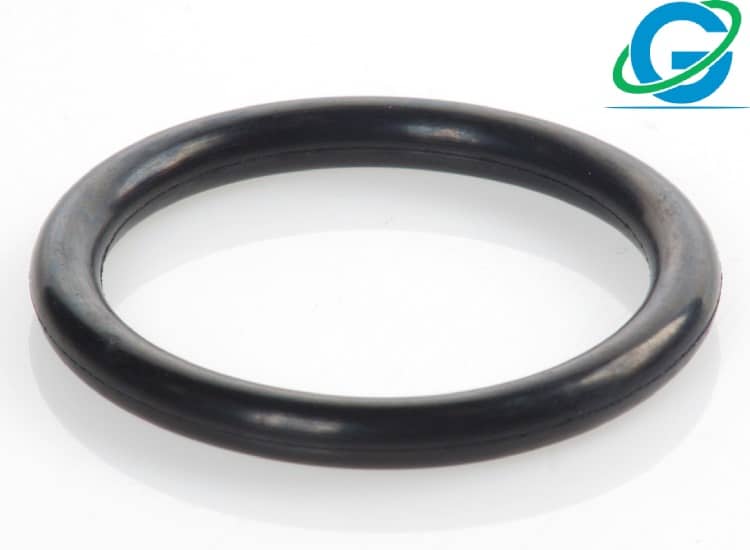 Ethylene Propylene Rubber (EPR) is a Copolymer of ethylene and propylene. Furthermore, EPDM is a terpolymer of ethylene and propylene with a small amount of a third monomer (usually a diene) to permit vulcanization with sulfur. EPDM o-rings are useful for a number of industries from automobile assembly to water purification systems.
Generally, EPDM o-rings are known to possess excellent resistance to ozone, sunlight, and weathering and have very good flexibility at low temperatures, good chemical resistance (many dilute acids and alkalis as well as polar solvents), and good electrical insulation properties. EPDM o-rings may also come in a metal detectable variation while retaining the same qualities as the general EPDM o-ring compound. EPDM o-rings are typically back in color, with a long-lasting shelf life.
Standard EPDM o-ring compounds are usually sulfur-cured. Sulfur-cured compounds offer better flexible properties but are more prone to hardening and have an inferior compression set in high temperatures.
Peroxoide-cured EPDM o-ring compounds have better heat resistance and a lower compression set. They are suitable for long-term usage, especially for hose systems in the construction industry, but they are more expensive and difficult to produce than sulfur-cured EPDM o-ring compounds. For more information on EPDM cure systems, click here.
|
|
|
|
|
|
|
|---|---|---|---|---|---|
| E70-B104 | 70 |
Black |
-67 to +302 |
 |
NSF 61 |
| E70-B105 | 70 |
Black |
-67 to +257 |
|
FDA Compliant, NSF 61 |
| E70-B108 | 70 |
Black |
-67 to +302 |
|
UL 157 |
| E70-B502 | 70 |
White |
-67 to +257 |
|
Medical Grade, PTFE 1% Internal Lubricant, FDA Compliant |
| E70-A101 | 70 |
Black |
-67 to +257 |
|
General purpose |
| E80-B901 | 80 |
Purple |
-40 to +212 |
|
General Purpose |
| E90-B101 | 90 |
Black |
-22 to +302 |
|
R744 Refrigerant Compatible |
"*" indica campos obrigatórios

Global O-Ring and Seal, LLC is a master distributor of O-Rings, Backup Rings, X-Rings, Cord Stock, and related seals, servicing industrial distributors worldwide. We stock all major compounds including Buna (Nitrile), Viton (FKM), EPDM, Silicone, Teflon, Aflas, etc. We carry a full range of AS568 standard sizes, as well as metric sizes and O-Ring cord stock.
Learn More