 Italiano
  English
  Español
  Français
  Português
  Deutsch
  Русский
  中文
中文  日本語
日本語  العربية
  हिन्दी
Summary
- Reliable connector sealing begins with defined sealing interfaces, proper alignment, and stable geometry, allowing o-rings to maintain consistent engagement and protect connections from leakage and contaminant ingress.
- Controlled compression and consistent contact stress form the mechanical foundation of connector sealing performance, ensuring the o-ring maintains continuous surface contact and predictable sealing behavior throughout normal service conditions.
- Long-term connector reliability depends on a coordinated design discipline, in which geometry, compression, and dimensional control work together to maintain stable sealing performance across repeated assembly cycles and operating environments.
The Role of O-Rings in Connector Sealing Systems
In many applications, connectors serve as sealing interfaces that must protect the connection from external exposure while maintaining system integrity. O-Rings serve as the sealing element, helping connectors resist leakage and contaminant ingress. When integrated into the connector design, they create a barrier that helps protect against moisture, dust, and other external conditions that could compromise performance.
Connector sealing reliability depends on the sealing interface’s ability to perform consistently each time the connection is assembled and placed into service. Because connectors are often used in systems where reliability is critical, the o-ring becomes integral to connector performance rather than a secondary protective feature. Its role is to support dependable sealing behavior throughout normal operation and routine service conditions.
Sealing Interfaces in Connector Design
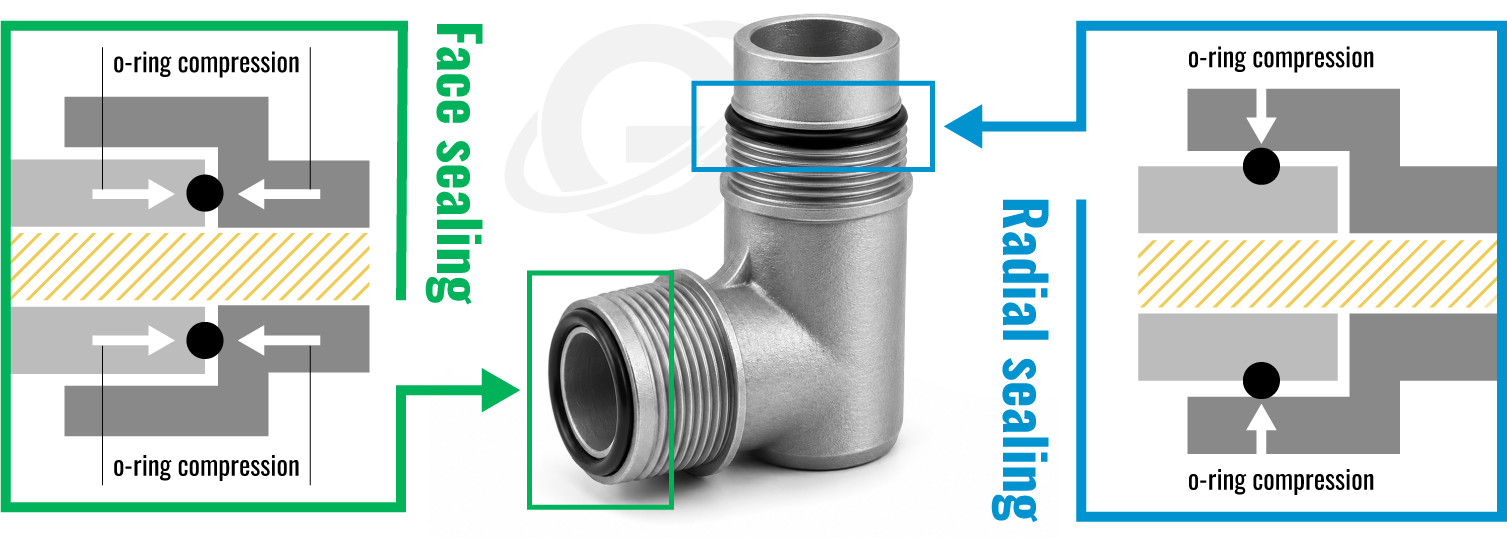
Connector sealing performance begins with the location and configuration of the sealing interface. In connector assemblies, sealing interfaces are typically designed to maintain alignment and stability while operating within compact mechanical constraints.
Two primary sealing interface configurations are commonly used in connector design, each defined by how the o-ring engages the surrounding hardware:
- Face sealing: The o-ring is compressed between two opposing surfaces that come together during assembly. This configuration is commonly used where connectors must create a reliable environmental seal across a flat interface.
- Radial sealing: The o-ring is positioned between cylindrical surfaces, sealing along the inside or outside diameter of the connector components. This configuration is commonly used where connectors rely on concentric alignment to establish a consistent sealing boundary.
Interface alignment plays a central role in sealing stability. Connector components are typically designed to guide the sealing surfaces into position during assembly, ensuring that the o-ring engages the intended sealing surfaces without shifting or distortion. Maintaining proper alignment helps preserve the integrity of the sealing interface and supports consistent performance across repeated assembly cycles.
Mechanical constraints within connector designs also influence sealing interface behavior. Connectors often operate in limited installation space, requiring sealing components to function reliably within tight dimensional boundaries. These constraints make the sealing interface geometry a critical factor in determining how effectively the connector maintains sealing integrity during normal operation.
Compression and Contact Stress: The Foundation of Reliable Sealing
Controlled Compression Creates the Sealing Force
Reliable connector sealing begins with controlled compression of the o-ring within the sealing interface. When connector components are assembled, the o-ring is intentionally compressed between the mating surfaces. This deformation allows the elastomer to conform to the surrounding hardware, closing microscopic gaps along the interface and forming a continuous sealing boundary.
Insufficient or Excessive Compression Reduces Sealing Reliability
Compression must be maintained within a defined range to support consistent sealing performance throughout service conditions.
When compression is too low, the sealing force may not be strong enough to maintain contact across the interface, increasing the likelihood of leakage or environmental ingress.
Over-compression introduces a different set of risks. It can accelerate wear, increase friction during assembly, and cause permanent deformation of the elastomer. These effects reduce the ability of the o-ring to maintain sealing force over time.
Contact Stress Maintains the Sealing Interface
Contact stress is the force exerted by the compressed o-ring against the surrounding hardware. This stress keeps the sealing surfaces in continuous contact and preserves the integrity of the sealing boundary.
Even minor gaps or irregularities along the interface can allow leakage. By maintaining consistent surface engagement, contact stress enables the o-ring to sustain sealing performance across repeated assembly cycles and normal operating conditions.
Dimensional Control Supports Consistent Compression
Dimensional consistency is necessary to maintain predictable compression and contact stress within connector assemblies. Variations in component dimensions can alter the compression on the o-ring, directly affecting the sealing force at the interface. Even small deviations can lead to inconsistent sealing behavior across production runs or under varying service conditions.
Controlling dimensional tolerances helps ensure that each connector assembly produces repeatable compression conditions and consistent sealing performance.
Environmental and Mechanical Factors That Influence Connector Seal Reliability
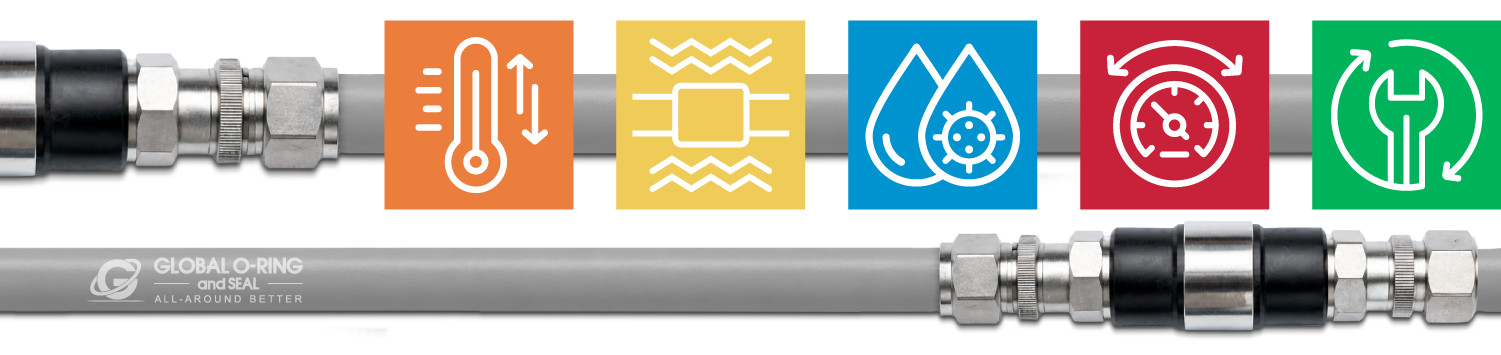
Connector sealing performance is shaped not only by design and assembly, but also by the conditions the connector experiences during operation. Environmental exposure and mechanical loading can influence how the sealing interface behaves over time, affecting the ability of the o-ring to maintain consistent contact and sealing integrity throughout service.
Common environmental and mechanical factors that influence connector sealing performance include:
- Temperature Cycling: Repeated heating and cooling cause elastomer materials to expand and contract, altering the stresses acting on the sealing interface and influencing long-term sealing stability.
- Vibration and Mechanical Movement: Equipment operation and system dynamics introduce repeated motion that can affect how the o-ring remains positioned within the connector and how consistently the sealing surfaces stay engaged.
- Moisture and Contaminants: Water, dust, and other external contaminants can challenge the sealing boundary and increase the risk of leakage or environmental ingress if the sealing interface is disrupted.
- Pressure Fluctuations: Changes in internal or external pressure can alter the forces acting on the sealing interface and influence how the o-ring responds during operation.
- Repeated Connection and Disconnection Cycles: Routine maintenance or service activities introduce repeated mechanical interaction between sealing surfaces, gradually influencing sealing behavior over time.
Designing Connector Sealing Systems for Long-Term Reliability
Reliable connector sealing results from coordinating sealing interface geometry, controlled compression, and consistent dimensional conditions so the o-ring can maintain stable contact throughout service. Each variable influences how the sealing interface behaves, but long-term reliability depends on how they interact within the connector assembly.
Coordinated Design Variables Support Reliable Connector Sealing
Connector sealing reliability depends on managing multiple design variables simultaneously rather than optimizing any single factor in isolation.
- Sealing interface geometry defines where the o-ring engages the surrounding hardware.
- Controlled compression establishes the sealing force required to prevent leakage.
- Dimensional consistency ensures that each connector assembly produces predictable sealing conditions.
When these variables are coordinated effectively, the sealing interface behaves consistently across repeated assembly cycles and production runs. The connector can maintain stable sealing performance without requiring frequent adjustment or corrective maintenance. This coordinated approach reduces variability and supports dependable system operation.
Regulatory and Compliance Requirements Guide Connector Sealing Design
Connector sealing systems are often required to meet defined performance standards related to environmental protection, safety, and long-term durability. These requirements establish measurable expectations for sealing integrity and help determine how the sealing interface must perform over the service life.
- Ingress Protection (IP) ratings: Define the level of protection required against water and particulate ingress.
- UL 157 requirements: Address sealing and performance requirements for gaskets and sealing materials used in electrical enclosures and equipment.
- FDA compliance: Ensure that sealing materials do not compromise product safety or system hygiene.
- Ultra-clean sealing requirements: Place strict limits on particulate contamination, extractables, and surface cleanliness to protect sensitive equipment and processes.
These requirements frequently shape material selection and sealing configuration decisions early in the design process. The sealing system must demonstrate consistent performance under defined test conditions, not just under nominal operating conditions. As a result, connector sealing design often begins with an understanding of the performance standards the system must meet.
Design Discipline Sustains Long-Term Sealing Performance
Long-term connector sealing performance depends on maintaining stable sealing conditions throughout the connector’s service life. Predictable geometry, controlled compression, and consistent assembly conditions enable the sealing interface to perform reliably under normal operating conditions.
Design discipline plays a central role in sustaining this performance. When dimensional tolerances are controlled, sealing interfaces are properly aligned, and compression conditions are clearly defined, the connector can maintain consistent sealing behavior across repeated use.
Conclusion
Reliable connector sealing requires a sealing system that maintains stable contact conditions through consistent geometry, controlled compression, and predictable assembly behavior. When these factors are managed together, the sealing interface can perform reliably across repeated service cycles and changing operating conditions.
Long-term connector reliability ultimately reflects the discipline applied during design. When sealing conditions are clearly defined and consistently controlled, the connector can maintain dependable sealing performance throughout its intended service life.
Frequently Asked Questions
Why do connectors leak even when an o-ring is installed correctly?
Leakage often occurs when compression is not maintained within the proper range. Ensuring controlled compression and stable sealing geometry allows the o-ring to maintain continuous contact across the interface, restoring consistent sealing performance and reducing the likelihood of leakage.
What causes inconsistent sealing performance across identical connectors?
Variability in dimensional conditions can lead to inconsistent compression and sealing behavior. Controlling tolerances and maintaining predictable assembly conditions helps each connector produce repeatable compression, resulting in more consistent sealing performance across production runs.
How can connectors maintain sealing reliability after repeated connection and disconnection cycles?
Repeated mating cycles gradually influence sealing behavior and surface contact conditions. Using consistent geometry and predictable compression enables the sealing interface to maintain stable contact during routine service, helping connectors maintain dependable sealing performance over repeated use.
When should specialized o-ring materials be used in connector applications?
Specialized materials are typically required when standard compounds cannot meet defined performance or compliance requirements. Selecting materials that support regulatory expectations and operating conditions helps connectors maintain reliable sealing behavior while meeting applicable standards.
What design factors have the greatest impact on long-term connector sealing reliability?
Long-term reliability depends on coordinating sealing interface geometry, controlled compression, and dimensional consistency. Managing these variables together creates stable sealing conditions that support predictable performance throughout the connector’s service life.