 Português
  English
  Español
  Français
  Deutsch
  Italiano
  Русский
  中文
中文  日本語
日本語  العربية
  हिन्दी
Summary
- Optimal Seal Substitution upgrades oil seals to include enhanced features such as springs, dust lips, and reinforced cases, improving durability, reliability, and compatibility without altering the original fit.
- Distributors benefit from reduced SKUs, improved inventory efficiency, better availability, and increased customer satisfaction by offering higher-performing, versatile sealing solutions through optimal substitutions.
- Global O-Ring’s online store presents optimal substitutions alongside exact matches, helping customers confidently upgrade to better-performing seals with clear, application-driven recommendations.
Optimal Substitutions vs. Direct Replacements
Industrial distributors are increasingly adopting Optimal Seal Substitutions, a strategic approach to oil seal selection that enhances performance through the use of upgraded designs. These functional equivalents offer improved durability, reliability, and broader application compatibility, surpassing traditional cross-references. This method optimizes inventory, improves customer service, and reduces costs while ensuring peak machinery reliability.
Key Components of Oil Seal Design
To appreciate how one seal can improve upon another, it’s essential to understand the construction of oil seals. Lip design and case design define each oil seal style.
Lip Design
The lip design is the primary sealing element in any oil seal. It directly influences the seal’s ability to contain fluids and prevent external contaminants from entering. When evaluating substitutions, it is crucial to understand the distinction between single- and double-lip designs, as well as whether the seal incorporates a spring or not.
A single lip provides primary sealing only, retaining fluid within the system. A double lip incorporates a secondary dust lip that helps block contaminants, offering additional protection to the primary sealing lip and extending seal life.
A lip with a spring maintains consistent radial pressure against the shaft, ensuring reliable sealing performance. A lip without a spring relies on the natural elasticity of the elastomer to maintain shaft contact.
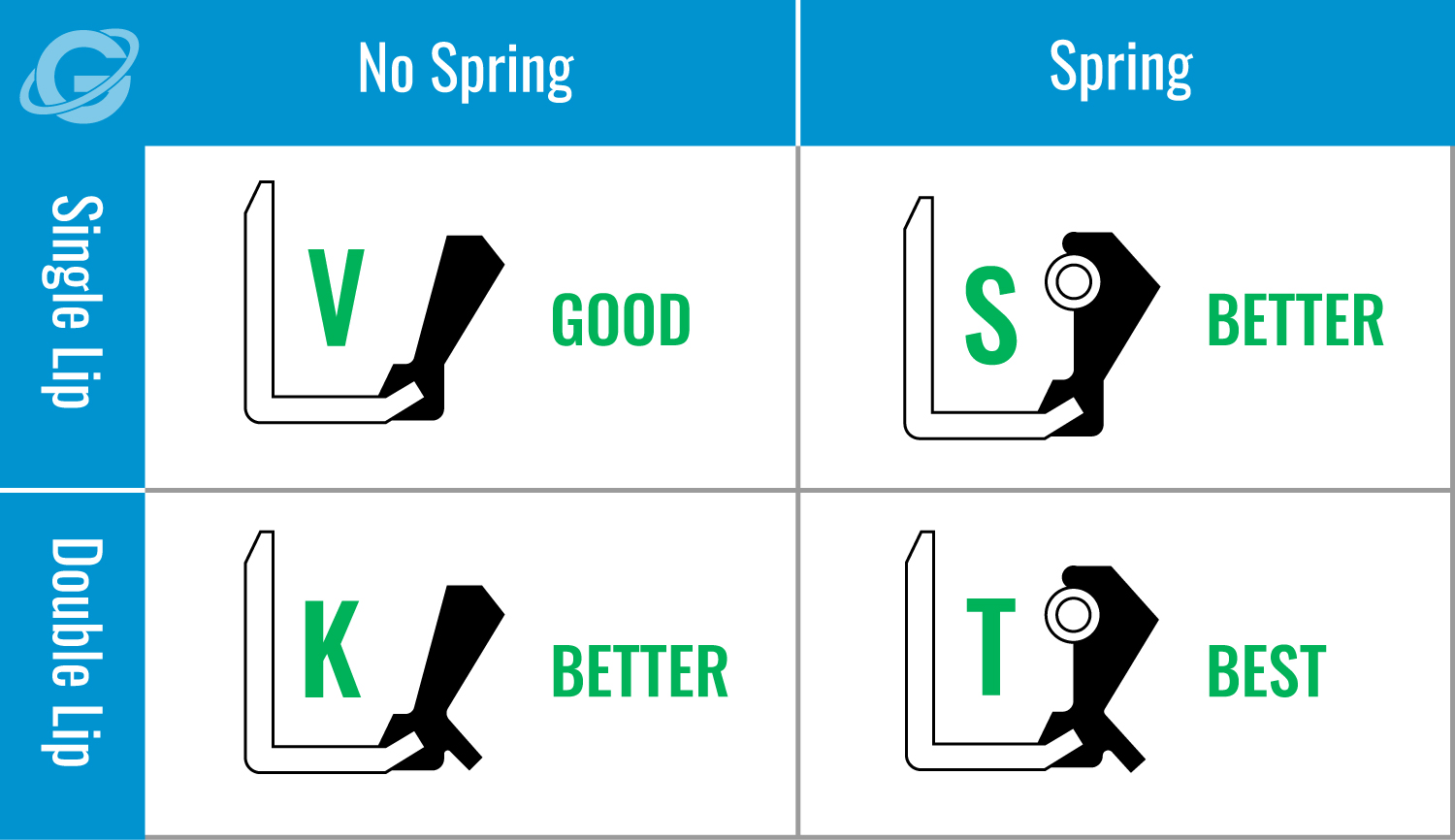
Each successive lip type represents added features for more demanding conditions. For instance, moving from a simple V to a T lip means adding both a spring and a dust lip for improved performance in higher-speed or more contaminated environments.
Case Design
The case design forms the structure of an oil seal, directly affecting how the seal fits within the housing, its sealing performance against the bore, and its effectiveness in protecting against media exposure and corrosion. When evaluating substitutions, understanding the distinctions between metal, rubber-coated, and reinforced cases is critical for ensuring proper fit, long-term durability, and optimized sealing performance.
A metal OD case provides a precise fit but offers no protection against bore imperfections or internal media. A rubber inner-coated case protects the inside of the metal case from exposure to aggressive media. A fully rubber-coated OD case enhances sealing against bore imperfections and also shields the entire case from internal media, offering the greatest protection and improved serviceability.
For additional durability in metal case styles, reinforced cases feature an internal plate that strengthens the seal structure, preventing distortion during installation or operation. Some seals with an internal rubber coating feature a rubber-covered nose to enhance sealing at the lead-in face, further preventing leak paths in more demanding applications.
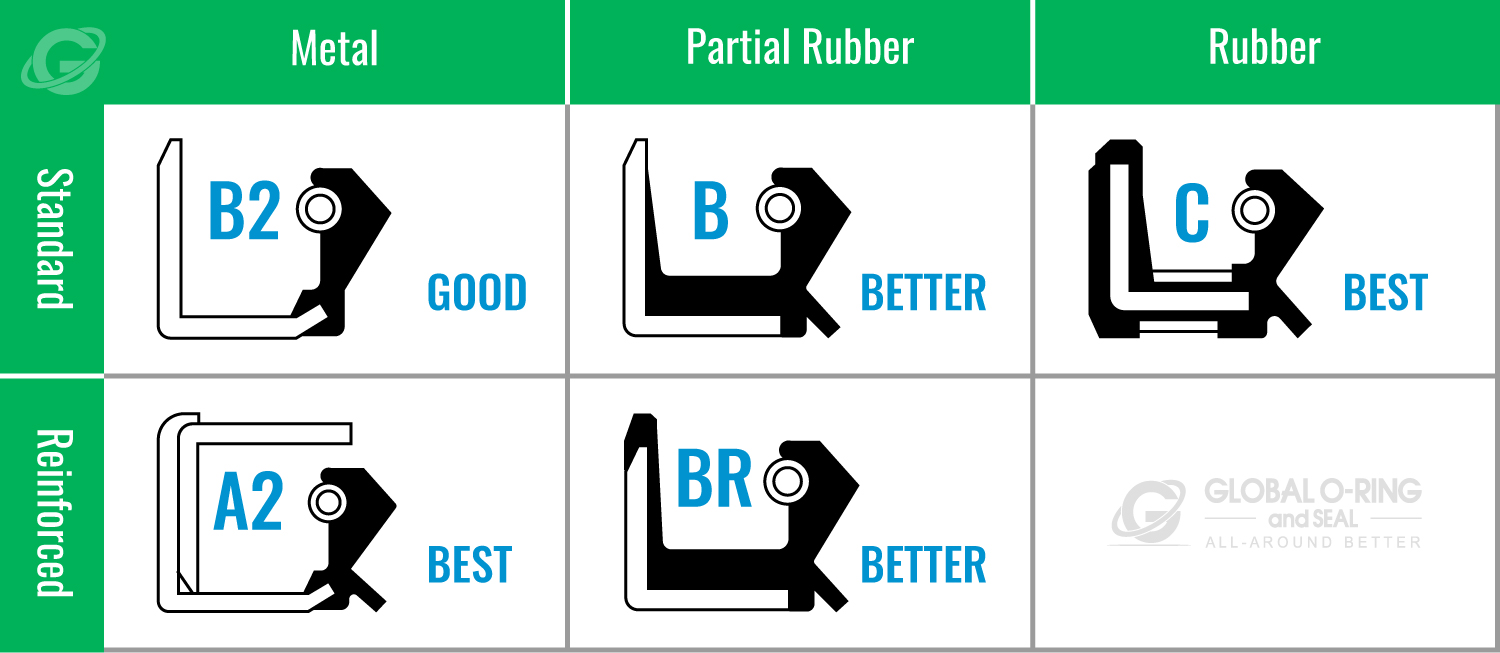
Upgrading case types, like from B2 metal to A2 reinforced, increases structural strength. Similarly, switching from a metal to a rubber-coated OD enhances sealing in imperfect bores and provides additional corrosion protection. These enhancements boost performance and service life without changing core seal dimensions.
What Are Optimal Seal Substitutions
Optimal Seal Substitution is the practice of selecting a replacement seal that not only fits in place of the original but also improves upon it in design and performance. In our defined context, a functional equivalent seal must meet three key criteria:
- Size Compatibility: The substitute must match the original seal’s dimensions (shaft, bore, and width) to ensure a seamless physical fit.
- Material Consistency: The new seal uses the same material as the original or a material with superior performance characteristics. Selecting the appropriate material is crucial for ensuring compatibility with the sealed media and the operating temperature range.
- Enhanced Design Features: The substitute incorporates one or more design improvements that the original lacked. Such features augment the seal’s ability to perform across a broader range of operating conditions or in more demanding applications than the original could.
The Tiered Upgrade Strategy
Oil seal substitutions are a tiered upgrade path. Many seal manufacturers produce families of seals that share dimensions but differ in lip or case features, essentially offering “Good, Better, Best” options for a given size. Frequently, the seal that came with a machine from the factory was a “Good” solution, chosen for cost-effectiveness while meeting the minimum specs. However, for replacement, distributors can consider moving up to a “Better” or “Best” option that fits the same envelope.
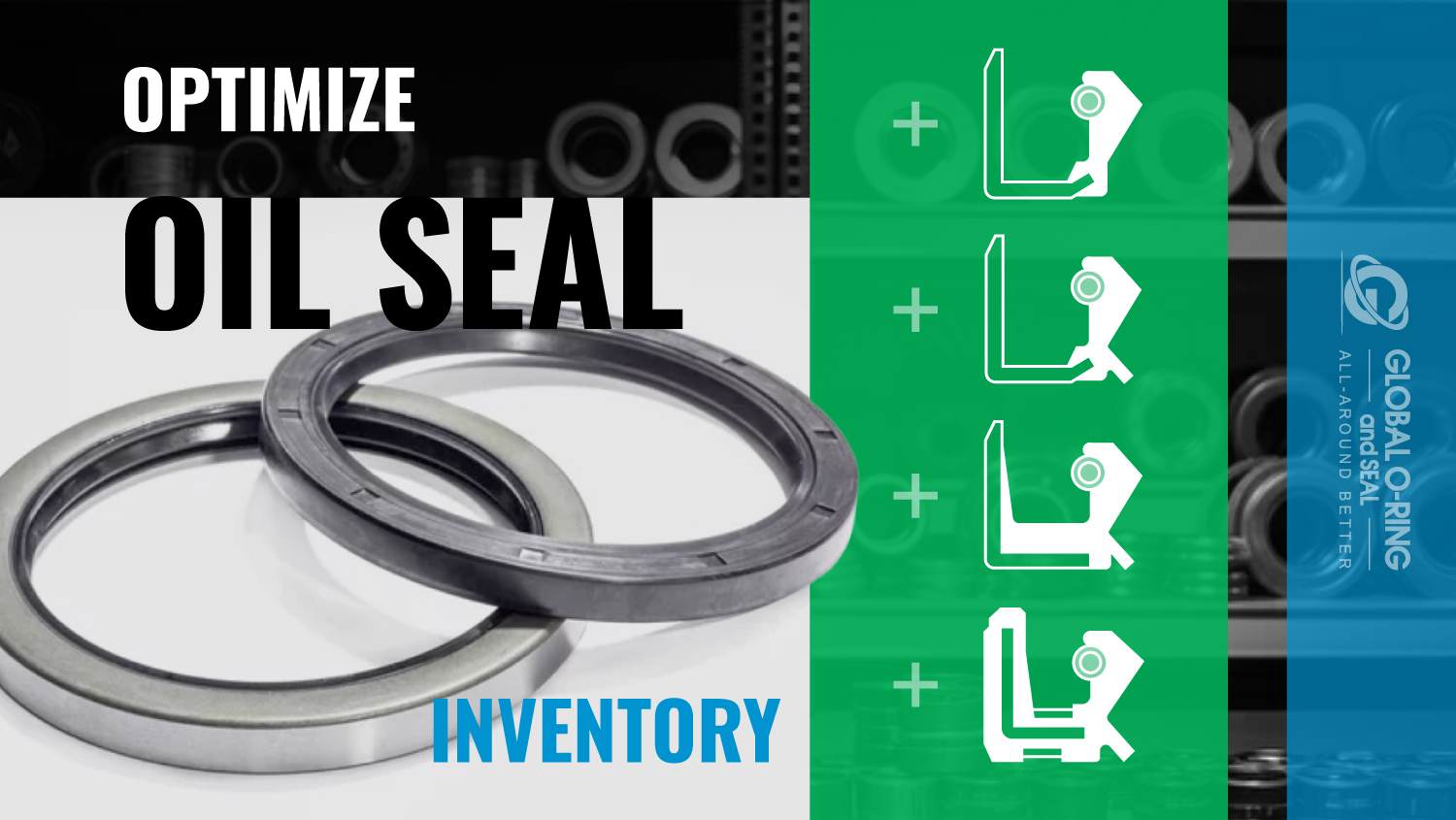
A common VB2 shaft seal, with a V-lip (single lip, no spring), and a B2 metal case can be optimally substituted. The KB2, with a K-lip (secondary dust lip), improves contaminant exclusion. The TB2, with a T-lip (secondary lip and garter spring), handless oil, misalignment, and pressure. The TC, the “Best,” features a T-lip design and a fully rubber-covered C-case, making it ideal for challenging environments.
In this example, the difference among the listed substitutes (KB2, TB2, TC) is in build and capability. By “tiering up” one or two levels, the distributor provides a seal that lasts longer and protects machinery better, often at a marginal increase in cost.
The benefit of the tiered model is flexibility. If the exact style is not in stock, you can confidently upgrade to a better style, knowing it will fit and likely perform better. Distributors often choose to stock the higher-tier seals predominantly and price them competitively, since these can replace the lower-tier items in a pinch. Over time, many customers come to appreciate the better performance, and the upgraded seal becomes their new standard.
When you search Global O-Ring and Seal’s online store for a specific oil seal, you are presented not only with the exact item but also with style substitutions that are functionally equivalent but offer additional features. This Good-Better-Best presentation encourages moving to a high-grade seal whenever feasible.
Benefits for Distributors
Adopting the Optimal Seal Substitution strategy offers compelling advantages to distributors. By focusing on functional equivalents that consolidate and improve, distributors can significantly streamline their operations.
Inventory Consolidation and SKU Reduction
Instead of stocking every conceivable variant of a seal, distributors can identify versatile high-performance seals that cover multiple substitution scenarios. For example, a distributor might consolidate multiple SKUs down to primarily one, which can serve as a replacement for all of them. This consolidation of seal varieties simplifies inventory management and reduces the complexity of keeping many duplicate sizes in only slightly different styles.
Better Availability & Customer Service
With a leaner, more optimized stock of seals, distributors can focus on maintaining an adequate supply of the best-performing items, resulting in improved fill rates and shorter lead times for customers. By stocking the “Better” and “Best” options, a distributor is more likely to have a suitable replacement on the shelf even if the customer’s exact OEM-style seal is out of stock or obsolete. Such efficient stock management and refined selection of high-performance seals enhance service delivery and help minimize machinery downtime for the end user.
Simplified Product Selection
Optimal substitutions also streamline the selection and sales process. Inside sales teams and customers alike spend less time wading through dozens of near-identical options. In essence, it guides buyers towards the choice that is most likely to succeed in their application. The result is fewer errors in ordering and less hassle in identifying the “right” seal.
A Forward-Looking Approach Beyond Traditional Equivalents

Optimal Seal Substitution is fundamentally a forward-looking philosophy in maintenance and inventory management. Traditional aftermarket substitution often centered on cost or immediate availability. While cost and availability remain essential, the Optimal Substitution approach introduces long-term performance.
There are several reasons why this approach surpasses the old way of doing things:
- Proactive vs. Reactive: Traditional replacement is reactive; optimal substitution is proactive. The former fixes a failure with a copy, expecting the same lifespan. The latter upgrades the system to prevent future issues, avoiding recurrent problems.
- Holistic Value Over Unit Price: While basic seals may seem cheaper, considering total costs (downtime, labor, leak damage), upgraded seals offer greater value. A forward-looking distributor educates customers on this, shifting focus from “How cheap can we get a seal?” to “How can we improve equipment reliability affordably?”
- Quality and Reputation: Promoting superior parts transforms distributors into quality-focused partners, not just sellers. In a market prioritizing reliability and efficiency, distributors offering solutions that “surpass traditional equivalence” gain a competitive edge.
- Not All Equivalents Are Equal: Catalog “equivalents” can be misleading; they may use lower-grade materials or omit key features. Optimal Seal Substitutions are pre-vetted to meet or exceed all critical OEM specs, removing guesswork and risk.
In summary, the Optimal Seal Substitution strategy represents a shift from a short-term one-for-one mindset to a long-term, performance-optimizing mindset. For industrial distributors, this means more reliable products in the field and a more efficient, modern business model internally. For customers, it means fewer surprises and superior machine uptime.
Conclusion
Optimal Seal Substitutions transforms how distributors manage seals and serve customers. By prioritizing functional equivalents that improve upon originals, distributors can reduce inventory while delivering superior quality and reliability. This strategy offers substantial benefits: streamlined inventory, enhanced customer service, and cost savings.
Adopting Optimal Seal Substitution prepares distributors for the demands of modern machinery. This proactive approach solves problems by going beyond basic replacements, enabling distributors to become trusted problem solvers and advisors, thereby fostering long-term industrial partnerships.