 日本語
日本語  English
  Español
  Français
  Português
  Deutsch
  Italiano
  Русский
  中文
中文  العربية
  हिन्दी
Summary
- Bonded seals combine a metal washer and an elastomer sealing element to create a controlled compression interface that helps maintain reliable sealing performance in high-pressure threaded connections.
- Their rigid backing distributes load evenly and limits over-compression, helping preserve seal integrity, resist extrusion, and maintain consistent sealing force as system pressure increases.
- In threaded assemblies subjected to pressure cycling, vibration, or repeated maintenance, bonded seals provide predictable compression and stable positioning, thereby supporting long-term sealing reliability and reducing the risk of leakage.
Introduction
Threaded connections are widely used to contain pressurized fluids and gases in hydraulic, pneumatic, and fluid handling systems. As pressure increases, sealing reliability depends not only on material selection but also on how compression and load are controlled within the connection.
Bonded seals address these demands by combining structural support with elastic sealing capability. Their integrated design helps regulate compression and maintain stable sealing performance in high-pressure threaded assemblies.
Why High Pressure Makes Thread Sealing More Difficult
High pressure increases the mechanical load acting on threaded connections and sealing surfaces. As internal pressure rises, the force pushing against the seal also increases, placing greater demand on the sealing interface to maintain consistent contact and prevent leakage.
Threaded connections present additional challenges because they rely on mechanical engagement rather than continuous sealing surfaces. The geometry of threads introduces natural leakage paths, and sealing performance depends heavily on how compression and load are distributed across the connection. Small variations in surface condition, alignment, or tightening force become more significant as pressure increases.
Pressure cycling and vibration further influence sealing reliability. Repeated changes in load can gradually reduce sealing force or shift components within the connection. Maintaining a stable seal under these conditions requires consistent compression, uniform load distribution, and mechanical support for the sealing element.
Bonded Seals (Dowty Seals, Composite Washer Seals, Gasket Seals)
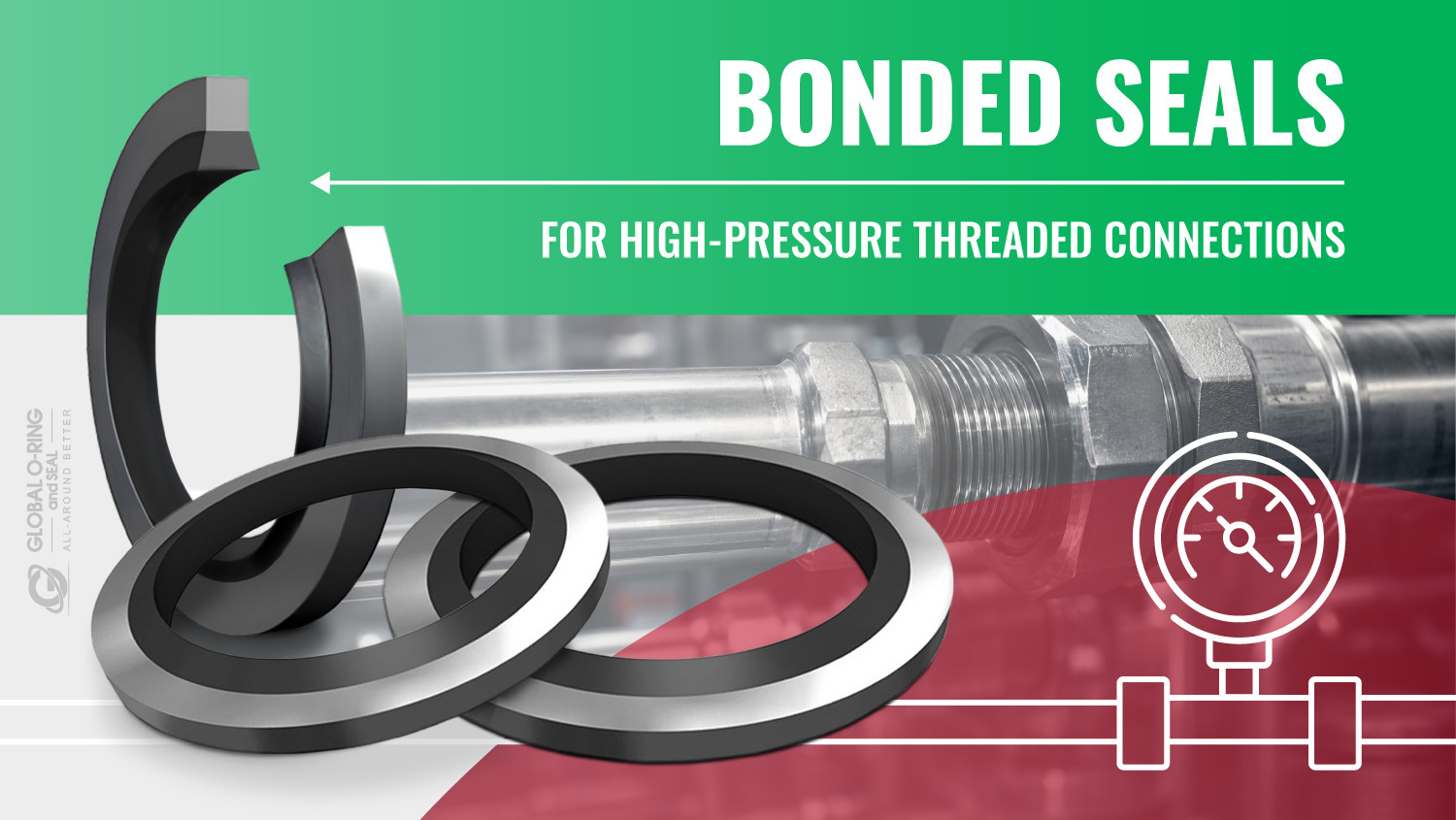
Bonded seals are sealing components designed to create reliable, leak-resistant connections in threaded assemblies. They combine the structural support of a metal washer with the sealing capability of an elastomer element, forming a single, integrated sealing solution.
Bonded seals are widely used in hydraulic, pneumatic, and fluid handling systems where threaded fittings must contain pressurized media while maintaining mechanical integrity.
Components of a Bonded Seal
A bonded seal consists of two primary elements that work together to control compression and maintain sealing performance:
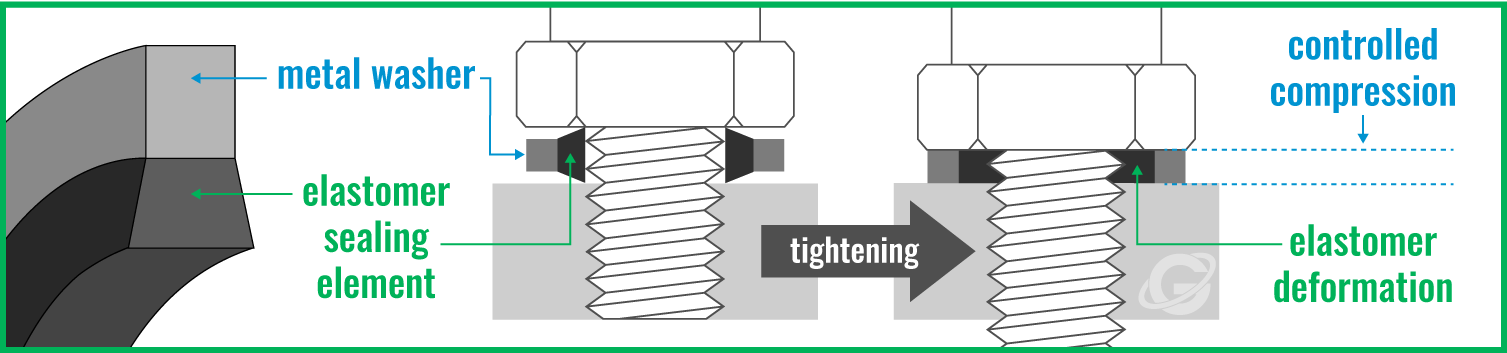
- Metal Washer: The metal washer provides structural rigidity and distributes tightening force across the sealing surface. It also limits compression of the elastomer element, helping prevent damage from excessive torque or mechanical loading.
- Elastomer Sealing Element: The elastomer ring is bonded to the inner diameter of the washer, forming the sealing interface. When compressed, the elastomer conforms to surface irregularities, creating a tight seal against the mating hardware.
How a Bonded Seal Creates a Seal
A bonded seal forms a seal through controlled compression between the elastomer element and the mating surface. As the threaded connection is tightened, the metal washer contacts the hardware, establishing a mechanical stop that helps regulate the compression of the sealing element.
This controlled compression allows the elastomer to deform enough to fill surface imperfections without becoming over-compressed or displaced. The washer distributes the applied load evenly, helping maintain consistent contact pressure across the sealing interface.
Because the elastomer remains properly supported, the seal can maintain stability under pressure, vibration, and repeated tightening cycles.
Typical Installation Locations
Bonded seals are typically installed where threaded connections must contain pressurized fluids or gases while maintaining mechanical stability. Common installation locations include:
- Under bolt heads in hydraulic assemblies
- Under threaded fittings and adapters
- In hydraulic and pneumatic ports
- In fluid transfer and pressure containment systems
How Bonded Seals Maintain Reliable Sealing Under High Pressure
Bonded seals maintain reliable sealing under high pressure by combining controlled compression with mechanical support. The metal washer and elastomer sealing element work together to regulate sealing force, distribute load, and protect the sealing interface from deformation. This interaction helps the seal remain stable as system pressure increases.
Key performance characteristics that support reliable sealing under high pressure include:
- Compression Control: The metal washer serves as a mechanical stop to regulate the elastomer sealing element’s compression. By limiting deformation, the washer helps preserve elasticity and long-term sealing performance.
- Uniform Load Distribution: The rigid washer spreads the tightening force evenly across the sealing surface. Even load distribution reduces localized stress and helps prevent leakage under elevated pressure.
- Extrusion Resistance: Structural support from the washer helps prevent the elastomer from being forced into small clearances between mating surfaces, preserving seal geometry under high pressure.
- Seal Retention and Stability: The bonded design keeps the elastomer sealing element securely positioned during installation and operation, reducing the likelihood of movement or displacement under varying loads.
- Performance Under Pressure Cycling: Repeated pressure changes can gradually affect the sealing force in threaded connections. Controlled compression and mechanical support help the seal maintain its sealing capability as system conditions fluctuate.
Where Bonded Seals Provide the Greatest Performance Advantages
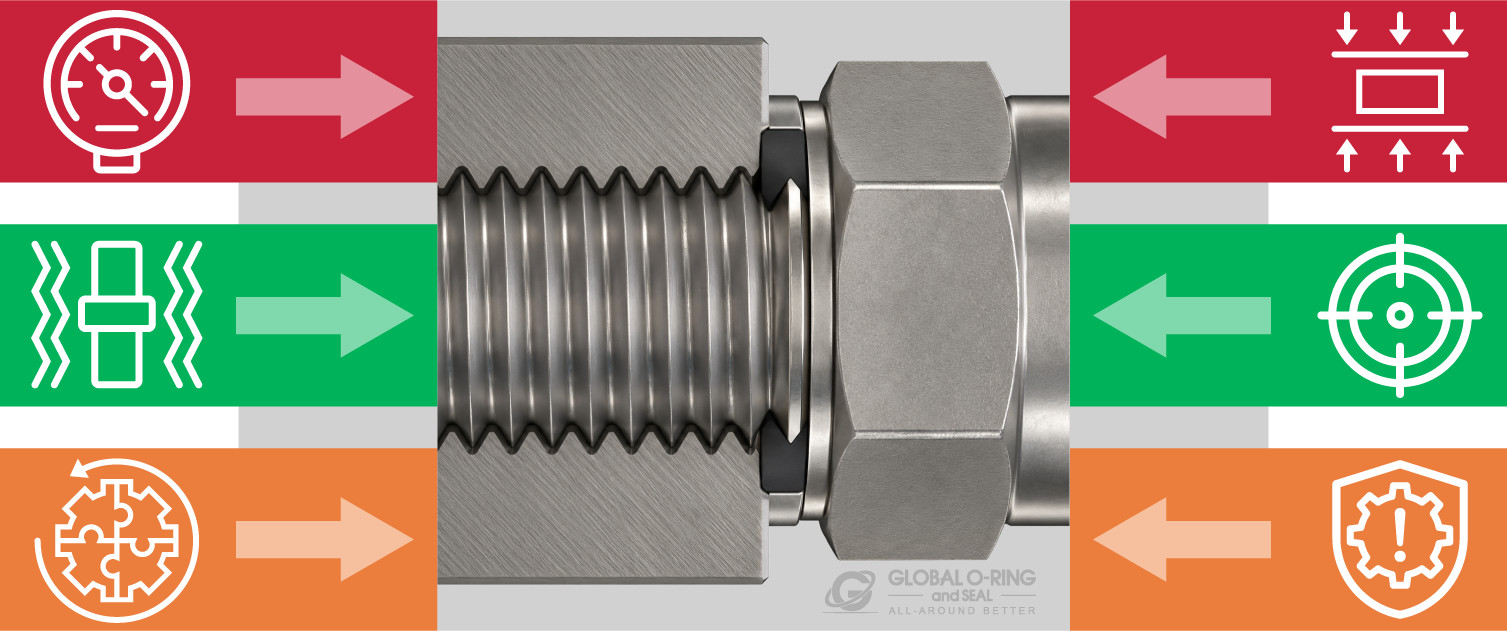
Bonded seals provide the greatest performance advantage in threaded connections where reliable sealing depends on controlled compression, stable positioning, and resistance to mechanical stress. Their combined metal-and-elastomer construction enables them to maintain sealing performance under conditions that challenge conventional sealing methods, particularly where pressure, vibration, or repeated assembly cycles are present.
Common conditions where bonded seals deliver the most reliable performance include:
- High-Pressure Threaded Connections: Elevated pressure increases the load acting on the sealing interface. The rigid washer helps regulate compression and maintain sealing force under sustained pressure.
- Systems Subject to Pressure Cycling: Repeated pressure changes can gradually reduce sealing effectiveness. Controlled compression helps maintain stability as system conditions fluctuate.
- Equipment Exposed to Vibration or Mechanical Movement: Vibration can loosen threaded connections or shift sealing elements. The bonded design helps maintain seal position and consistent sealing performance.
- Applications Requiring Repeatable Assembly and Maintenance: Systems that are frequently disassembled and reassembled benefit from predictable compression and consistent sealing behavior.
- Connections Where Over-Tightening Is a Risk: Excessive torque can damage conventional sealing elements. The metal washer helps limit compression and protect the elastomer from mechanical damage.
- Flat-Face Sealing Interfaces in Threaded Assemblies: Bonded seals perform best where sealing occurs between flat mating surfaces within a threaded connection.
Conclusion
Reliable sealing in high-pressure threaded connections depends on maintaining stable compression and uniform load distribution across the sealing interface. As pressure and mechanical stress increase, controlling these factors becomes essential to preventing leakage and preserving system performance.
Bonded seals provide a dependable solution by combining the rigidity of a metal washer with the flexibility of an elastomer sealing element. This balanced design helps maintain sealing stability in demanding threaded connections that require consistent performance.
Frequently Asked Questions
Why do threaded connections leak under high pressure?
Threaded connections can leak under high pressure when compression becomes uneven or when the sealing force decreases. Using bonded seals helps regulate compression and distribute load, improving sealing reliability and reducing the risk of leakage.
How can over-tightening affect sealing performance in threaded assemblies?
Over-tightening can damage sealing elements by compressing them beyond their elastic range. Bonded seals limit compression through their rigid washer design, helping protect the sealing element and maintain consistent sealing performance.
What sealing solution works best for high-pressure threaded fittings?
High-pressure threaded fittings require stable compression and mechanical support to prevent leakage. Bonded seals provide both functions, helping maintain sealing force and improve reliability in demanding pressure conditions.
How can vibration cause leaks in threaded connections?
Vibration can loosen connections or shift sealing elements, reducing contact pressure at the sealing interface. Bonded seals help stabilize the sealing element and maintain position, supporting consistent sealing performance under vibration.
When should bonded seals be used instead of conventional sealing washers?
Conventional sealing washers may not provide sufficient compression control in demanding conditions. Bonded seals offer regulated compression and improved load distribution, helping maintain sealing reliability in high-pressure threaded connections.