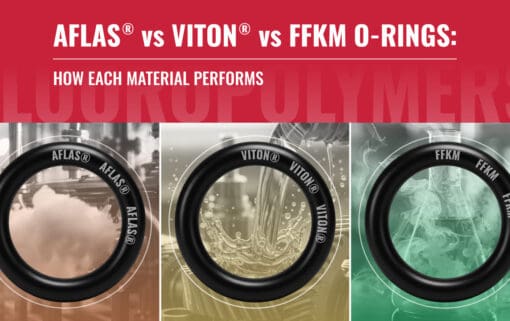
AFLAS® vs Viton® vs FFKM O-Ring Performance
Summary Introduction AFLAS® (FEPM/TFE-P), Viton® (FKM), and FFKM are often grouped together under the “fluoropolymer o-ring” label. Despite this shared classification, each material responds differently to environmental exposure. Real-world performance depends on how an elastomer ages under sustained operating conditions. Steam, alkaline media, solvents, and elevated temperatures introduce distinct degradation mechanisms that influence elasticity, hardness, […]
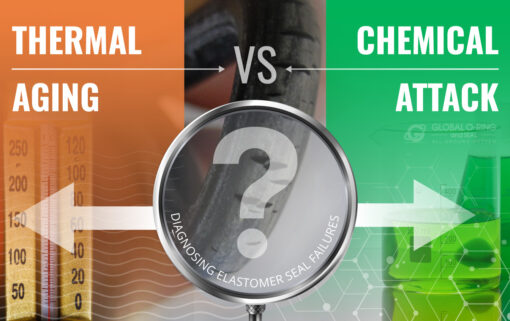
Thermal Aging vs Chemical Attack: Diagnosing Elastomer Seal Failures
Summary Thermal Aging vs. Chemical Attack in Elastomer Seals Elastomer seals fail for many reasons, but thermal aging and chemical attack are among the most common. Thermal aging degrades elastomers over time by altering the polymer’s internal structure and physical properties, while chemical attack damages seals through material incompatibility, leading to swelling, shrinkage, or loss […]
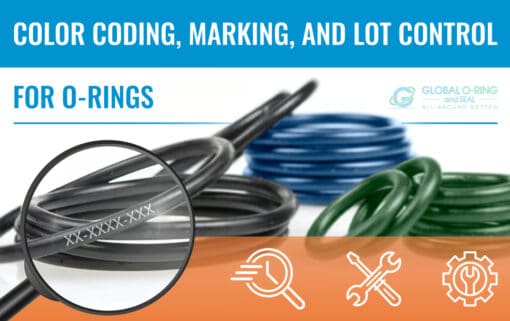
Color Coding, Marking, and Lot Control for O-Rings
Summary Why Color Coding, Marking, and Lot Control Matter in O-Ring Applications Color coding, part marking, and lot control play a major role in preventing part mix-ups, supporting quality systems and audits, and reducing downtime and rework. By using color codes or markings to distinguish parts, manufacturers and maintenance teams can prevent part mix-ups and […]
Regulatory & Compliance Requirements for Seals by Industry
Summary Introduction Designing reliable sealing solutions requires careful consideration of industry regulations and standards. Many industries require seals to meet specific certifications or standards. By understanding these requirements early in the design phase, engineers can select the appropriate o-rings and elastomer materials certified for their application, avoiding costly redesigns or regulatory issues later. Food, Beverage […]
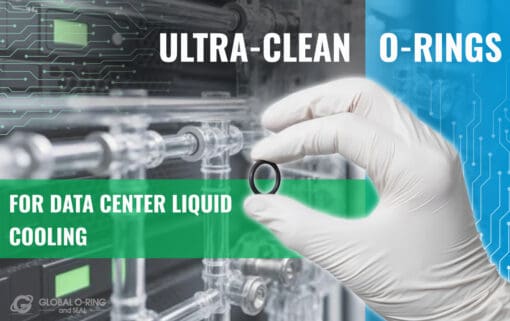
Ultra-Clean O-Rings for Data Center Liquid Cooling
Summary Why Data Centers Are Shifting to Liquid Cooling Systems The data center landscape is shifting rapidly as AI, machine learning, and high-performance computing (HPC) drive rack power densities beyond the limits of traditional air-based cooling. As a result, liquid cooling is becoming a practical and increasingly necessary solution for modern data centers seeking efficiency, […]
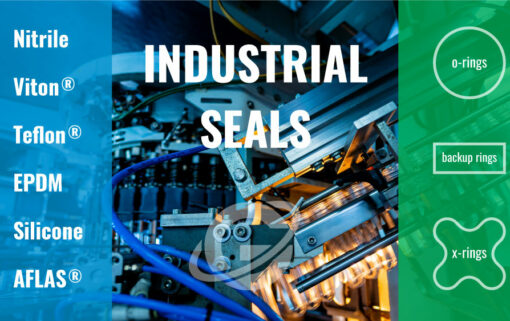
Sceaux industriels : protéger et maintenir
Résumé Introduction aux sceaux industriels Dans les machines complexes qui alimentent nos industries et alimentent le progrès, le sceau industriel est le champion méconnu de l'efficacité et de la sécurité, formant une barrière invisible mais imprenable qui maintient l'intégrité des systèmes de machines. Les joints industriels se présentent sous diverses formes, notamment des joints toriques, des bagues d'appui, des joints en X, etc., chacun étant conçu […]
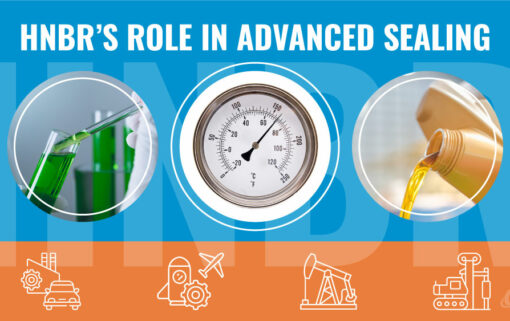
Le rôle du HNBR dans l'étanchéité avancée
Résumé Introduction Dans le monde dynamique et en constante évolution des applications industrielles, la recherche de matériaux alliant durabilité, résilience et polyvalence a conduit à des avancées scientifiques significatives. L’une de ces avancées est le développement du caoutchouc nitrile butadiène hydrogéné (HNBR), un matériau qui a révolutionné la façon dont les industries abordent l’étanchéité et la longévité dans des environnements difficiles. Ce blog […]
Des origines anciennes à l'avenir des phoques
Résumé Introduction aux solutions d'étanchéité L'histoire de la technologie de l'étanchéité est un récit étroitement lié à l'avancement de la civilisation humaine. Des sceaux rudimentaires des sociétés anciennes aux systèmes de scellement complexes et intelligents de l’ère moderne, l’évolution de ces composants cruciaux reflète notre parcours de progrès et d’innovation. Souvent négligé et pourtant […]
Français
English
Español
Português
Deutsch
Italiano
Русский
中文
日本語
العربية
हिन्दी