 English
  Español
  Français
  Português
  Deutsch
  Italiano
  Русский
  中文
中文  日本語
日本語  العربية
  हिन्दी





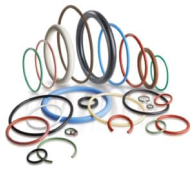
The Highest Quality O-Rings Available When You Need Them
With one of the largest inventories of o-rings, cord stock, and related seals (square rings, x-rings, backup rings, and more) in North America, we’re committed to providing the right product at the right price to every customer.
The Highest Quality O-Rings Available When You Need Them
With one of the largest inventories of o-rings, cord stock, and related seals (square rings, x-rings, backup rings, and more) in North America, we’re committed to providing the right product at the right price to every customer.
Replace o-rings the right way with application-matched kits. We carry HNBR for AC service, FKM for modern fuel systems, EPDM for brake hydraulics, and nitrile workhorses for engine and oil-pan jobs — in standard AS568 inch and metric sizes. Same-day shipping on stocked kits.
If you’re here, you probably know your AC is leaking, your fuel injectors are weeping, or you’re tearing into an engine job and you need the right o-rings to put it back together. The wrong material on a sealing surface will leak in days or fail in months. The right material lasts the life of the repair. This page is here to help you pick the right kit, fast — and ship it the same day.
Match the system you’re repairing to the kit material. If your job spans more than one system, grab more than one kit — it’s usually cheaper than picking individual seals.
Three-question shortcut: what system, what fluid touches the seal, and what kit material handles that fluid.
| If you’re repairing… | The seal touches… | Use this kit material | Jump to |
|---|---|---|---|
| AC system (compressor, condenser, evaporator, lines) | R-134a or R-1234yf refrigerant + PAG/POE oil | HNBR (preferred) or FKM | AC kits ↓ |
| Fuel injectors / fuel rail | Gasoline, ethanol blend (E10/E15/E85), diesel | FKM (Viton-class) | Fuel kits ↓ |
| Engine, oil pan, valve cover, transmission | Motor oil, ATF | NBR (nitrile) or HNBR | Engine kits ↓ |
| Brake / hydraulic system | DOT 3, DOT 4, or DOT 5.1 brake fluid | EPDM | Brake kits ↓ |
| Brake (older system) | DOT 5 silicone brake fluid | Silicone (VMQ) | Brake kits ↓ |
| Cooling system / radiator / coolant lines | Ethylene glycol coolant | EPDM | Cooling kits ↓ |
Quick rule of thumb: never use a generic nitrile (NBR) o-ring in an AC system or in modern ethanol-blend fuel. Refrigerants attack standard nitrile; ethanol swells it. HNBR (for AC) and FKM (for fuel) cost a few cents more and last years longer.
Automotive AC systems are tighter than most DIY-ers expect. Refrigerant pressure runs 25–30 psi on the low side and 200–300 psi on the high side, the system is full of oil-refrigerant mix, and the seal has to handle temperature swings from outdoor heat down to evaporator-cold. A worn or wrong-material o-ring weeps for weeks before you spot the symptoms (warm air, frosting hose connector, oil residue at fittings).
Modern fuel injectors live in the harshest seal environment under the hood: high-pressure pulsing fuel, hot fuel rails, and gasoline that’s been blended with up to 15% ethanol (or 85% on E85 vehicles). Older nitrile o-rings swell, leak, and eventually crack in ethanol blends. FKM (Viton-class fluorocarbon) is the modern standard.
Oil pan plugs, valve-cover bolts, timing-cover bolts, transmission service points — the engine bay is full of o-ring sealing surfaces you only think about when one of them starts dripping on your driveway. NBR (nitrile) is the workhorse material for oil contact; HNBR steps up the temperature and oil-additive tolerance for jobs near the exhaust manifold or in modern direct-injection engines.
Brake fluid is the harshest fluid on a passenger vehicle — glycol-based DOT 3, 4, and 5.1 chemically attack most elastomers. EPDM is the standard for brake service; silicone (VMQ) is required for DOT 5 silicone brake fluid only. Never mix the two systems.
Coolant is rough on the wrong elastomer. NBR fails fast in ethylene glycol; FKM is overkill on price. EPDM is the right answer — it handles coolant, hot water, and steam, with the temperature range to ride out summer commutes and winter cold-starts.
If you have the old o-ring and a caliper, you can size your replacement in under a minute. O-rings are measured by three numbers: inside diameter (ID), outside diameter (OD), and cross-section (CS, sometimes called “thickness”).
The hole through the middle — measured across the inner edge of the ring.
ID = inner edge to inner edge
The full diameter — measured across the outer edge of the ring.
OD = outer edge to outer edge
How thick the rubber is — measured across a single side of the ring.
CS = (OD − ID) ÷ 2
Most automotive o-rings follow the AS568 standard inch sizes (e.g., -010, -110, -210 series) or ISO 3601 metric sizes. Once you have ID, OD, and CS, you can match the dash number from the chart.
→ AS568 inch size chart · Metric size chart · All size chart index
Orders placed by 3pm CST on stocked items ship the same business day.
Houston-based with domestic manufacturing available on request — see USA-made options.
The same compounds and tolerances we ship to industrial and OEM buyers — no “hobby grade.”
Not sure which kit fits your year/make/model? Call 832-448-5550 8am–5pm CST.
Take your old o-ring (or the seal you’re replacing) and measure three dimensions with a caliper: inside diameter (ID), outside diameter (OD), and cross-section (the thickness of the rubber itself). Match those to either the AS568 inch standard or ISO 3601 metric standard. If the o-ring is damaged or missing, you can sometimes measure the groove it sits in — or call us with the year/make/model and the application (AC compressor line, fuel injector, etc.) and we’ll point you to the right kit.
Use HNBR (hydrogenated nitrile) for modern automotive AC service. HNBR is compatible with both R-134a and the newer R-1234yf refrigerant, as well as the PAG and POE oils that mix with them. FKM (Viton-class) also works and is sometimes used for the highest-temperature locations. Don’t use standard nitrile (NBR) — refrigerants degrade it and the seal will fail.
Most o-ring replacements on a passenger vehicle are well within DIY range if you have a basic tool kit and a service manual for your vehicle. Common DIY-friendly jobs include oil pan plug seals, valve cover gaskets, fuel injector o-rings, and most AC line fittings (with the system properly evacuated). Brake hydraulic system work and AC refrigerant handling do have safety implications — for brakes, follow the service manual’s bleeding procedure carefully; for AC, you’ll need a shop to recover and recharge the refrigerant before and after the seal replacement, even though the actual seal swap is straightforward.
A universal AS568 kit covers most common automotive sizes and is a solid choice if you do your own maintenance regularly. For a specific repair (a known leaking AC line or a fuel-injector job on a specific engine), buying the application-matched kit is more efficient — fewer odd sizes you’ll never use, and the kit material is matched to the fluid (HNBR for AC, FKM for fuel, EPDM for brakes/coolant, NBR for engine oil). If you do a lot of varied work, both is the right answer: a universal kit for unknowns, plus application kits for the systems you service most.
Yes. Orders ship via standard carriers to residential and commercial addresses across the U.S. Orders placed by 3pm Central on stocked items ship the same business day. If you need expedited shipping, select an upgraded option at checkout or call us at 832-448-5550.
AS568 is the American inch-based size standard — most domestic vehicles and most aftermarket AC fittings use AS568 sizes. ISO 3601 (and related metric standards) is the metric equivalent — common on European, Japanese, and Korean vehicles and on metric-spec aftermarket parts. If you’re unsure, measure your o-ring in both inches and millimeters and check both charts — usually one matches cleanly and the other lands between standard sizes.
Yes. Individual o-rings ship from the same inventory in all our standard compounds (HNBR, FKM, NBR, EPDM, silicone) and standard durometers. Single o-rings are common for spot repairs — shop by size or call us with the size and material you need.
Durometer is the hardness of the rubber, usually called out as 70A (most common), 75A, or 90A. For nearly all automotive sealing applications, 70A is the right answer — it’s soft enough to seal reliably under normal squeeze and firm enough to resist extrusion at moderate pressures. Step up to 90A only for very high-pressure hydraulic locations or where the manufacturer specifically calls it out.
Stocked HNBR, FKM, NBR, and EPDM kits in standard AS568 and metric sizes. Same-day shipping on orders placed by 3pm Central.
Shop Now →Call us with your year, make, and the system you’re repairing. We’ll point you to the right material and size in under a minute.
Contact Us →Trade names referenced in the industry (e.g., Viton, the common name for fluorocarbon FKM) are generic chemistries on this page. Brand-name material trademarks are the property of their respective owners and are referenced for identification only. Same-day shipping applies to stocked items on orders placed by 3pm Central, Monday–Friday. Material recommendations on this page are general guidance — consult your vehicle service manual for the OEM-specified material on any safety-critical sealing surface.

Global O-Ring and Seal, LLC is a master distributor of O-Rings, Backup Rings, X-Rings, Cord Stock, and related seals, servicing industrial distributors worldwide. We stock all major compounds including Buna (Nitrile), Viton (FKM), EPDM, Silicone, Teflon, Aflas, etc. We carry a full range of AS568 standard sizes, as well as metric sizes and O-Ring cord stock.
Learn More