 English
  Español
  Français
  Português
  Deutsch
  Italiano
  Русский
  中文
中文  日本語
日本語  العربية
  हिन्दी
Summary
- Markez® is a proprietary perfluoroelastomer (FFKM) material engineered to deliver high temperature, high pressure, and broad chemical resistance for the most demanding sealing applications.
- Multiple Markez compounds are available to address general-purpose performance, explosive decompression resistance, and exposure to sour gas and steam, giving engineers a formulation matched to specific operating conditions.
- Markez performs as a practical alternative to premium FFKM brands like Kalrez® and Chemraz®, offering comparable long-term reliability with stronger availability and a more accessible price point.
Introduction
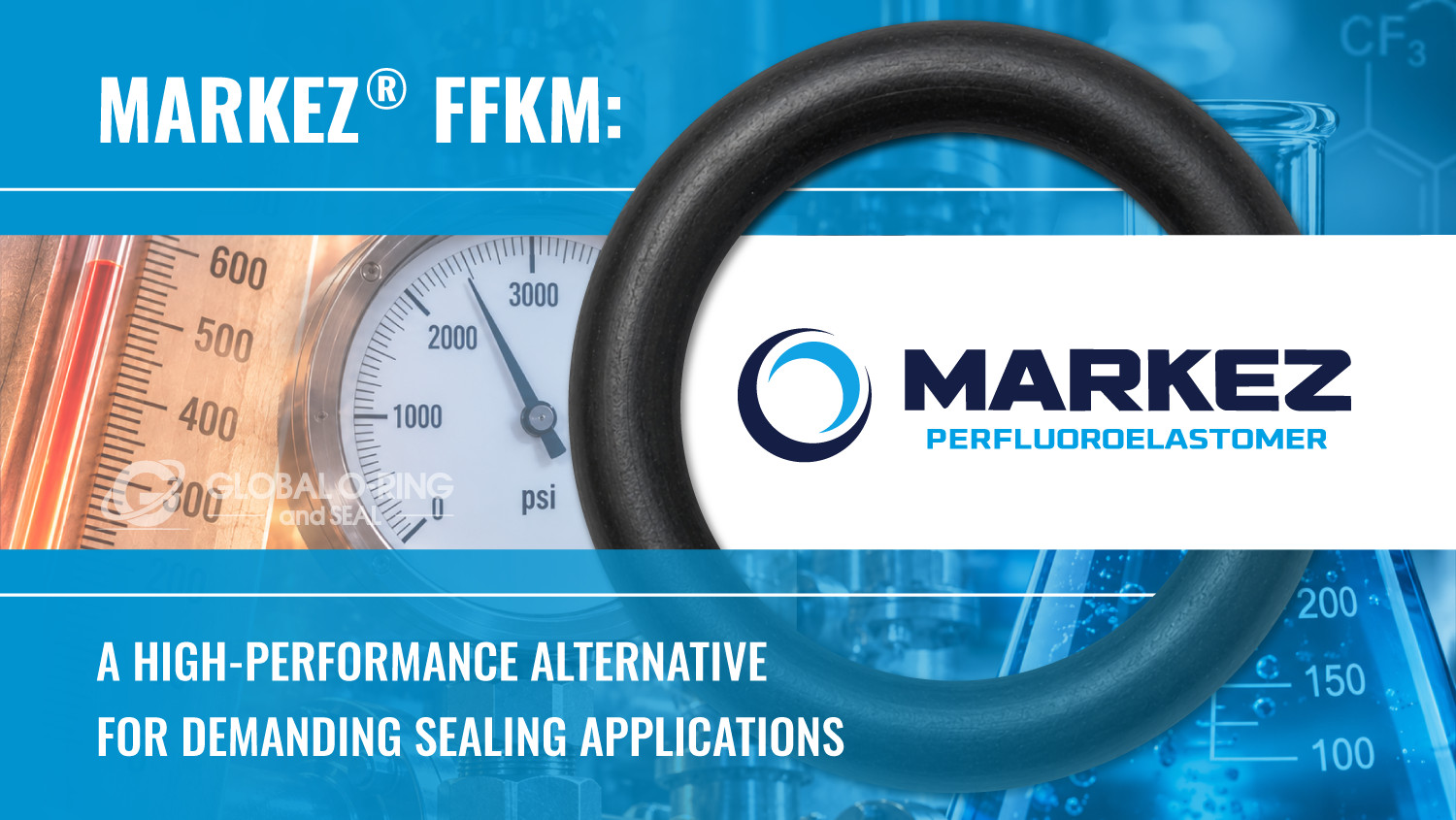
Some sealing applications leave no room for compromise. High temperatures, aggressive chemicals, and elevated pressures can quickly degrade standard elastomers, leading to leaks, unplanned downtime, and costly repairs. Markez® FFKM was developed to meet these conditions head-on. As a perfluoroelastomer material available through Global O-Ring and Seal as part of Marco Sealing Solutions, Markez gives engineers a dependable option for applications where failure is not an option and where premium FFKM brands have traditionally been the only choice.
What Is Markez® FFKM?
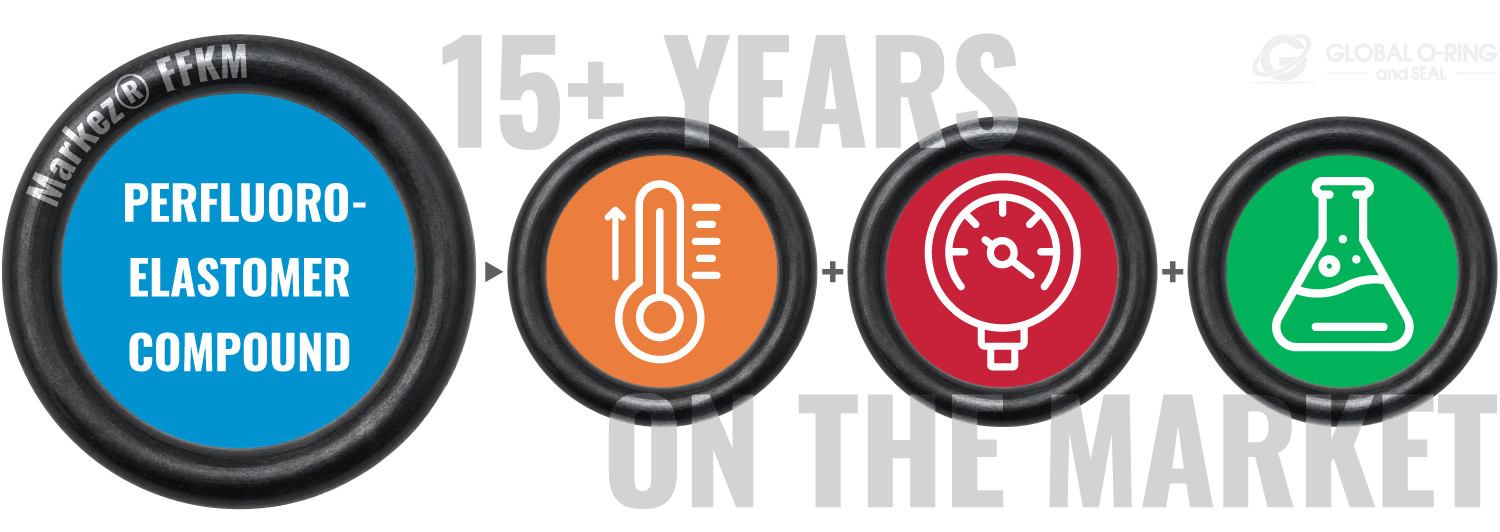
Markez is a perfluoroelastomer compound built to withstand the combined stresses of heat, pressure, and chemical exposure that standard elastomers cannot reliably handle. FFKM materials sit at the top of the elastomer performance spectrum, and Markez was formulated using ingredients nearly identical to those found in higher-priced branded FFKM materials, without sacrificing the performance characteristics engineers depend on.
Markez has been market tested for more than a decade, having first been introduced to sealing customers over 15 years ago. That track record, combined with its material composition, makes it a proven option rather than an unproven substitute.
Why Perfluoroelastomers Outperform Standard Elastomers
Unlike FKM, EPDM, or nitrile compounds, FFKM materials contain no hydrogen atoms in their polymer backbone. This chemical structure gives FFKM near-universal chemical resistance and allows the material to maintain elasticity and sealing force across a much wider temperature range. The tradeoff is cost, which is where Markez creates value by delivering FFKM-level performance without the premium price tag typically attached to it.
Featured Markez Compounds
Because Markez is proprietary, it can be engineered into a wide range of formulations depending on the application. Two of the most widely used compounds illustrate this flexibility:
- Z1028 Compound: A general-purpose FFKM formulation suited to a broad range of chemical processing and industrial sealing applications.
- Z1400 Compound: A formulation developed for more specialized performance requirements, including enhanced resistance characteristics for demanding process environments.
Additional Markez compounds are available with resistance tailored to explosive decompression, sour gas, and steam exposure, allowing the material to be matched closely to the operating environment rather than forcing a single formulation to cover every use case.
Chemical and Thermal Resistance Characteristics
Markez compounds are formulated to maintain sealing integrity under conditions that would compromise standard elastomers. Key performance characteristics include:
- Broad chemical resistance: Withstands exposure to a wide range of acids, solvents, and process chemicals.
- High temperature stability: Maintains sealing force and material integrity across extreme temperature swings.
- High pressure resistance: Retains mechanical performance in high-pressure process systems.
- Explosive decompression resistance: Select formulations resist damage from rapid pressure loss, a common failure mode in oil and gas applications.
- Sour gas and steam resistance: Specific compounds are engineered for environments with hydrogen sulfide exposure or sustained steam contact.
Markez vs. Kalrez® and Chemraz®
Markez was developed as a direct answer to premium FFKM brands, and its formulation reflects that goal. Using nearly identical base ingredients to higher-priced alternatives, Markez is engineered to match or exceed the performance of Kalrez® and Chemraz® in comparable applications.
The primary difference is not performance but access. Markez is more readily available and priced more competitively, which shortens lead times and reduces the total cost of ownership over the life of the seal. Fewer seal changes, fewer failures, and less unplanned downtime translate directly into a productivity gain for operations running in demanding environments.
Applications
Markez is used across a wide range of industries where chemical exposure, temperature, and pressure exceed what standard elastomers can reliably handle:
- Chemical processing
- Pumps and valves
- Petrochemical, oil, and gas
- Semiconductor manufacturing
- Medical and pharmaceutical equipment
- General industrial equipment
- Food and beverage processing
- High-temperature systems
Because Markez is proprietary, it can be molded into o-rings, gaskets, custom gaskets, and tri-clamp sanitary gaskets, giving engineers flexibility beyond standard catalog shapes when a specific geometry is required.
Certifications and Compliance
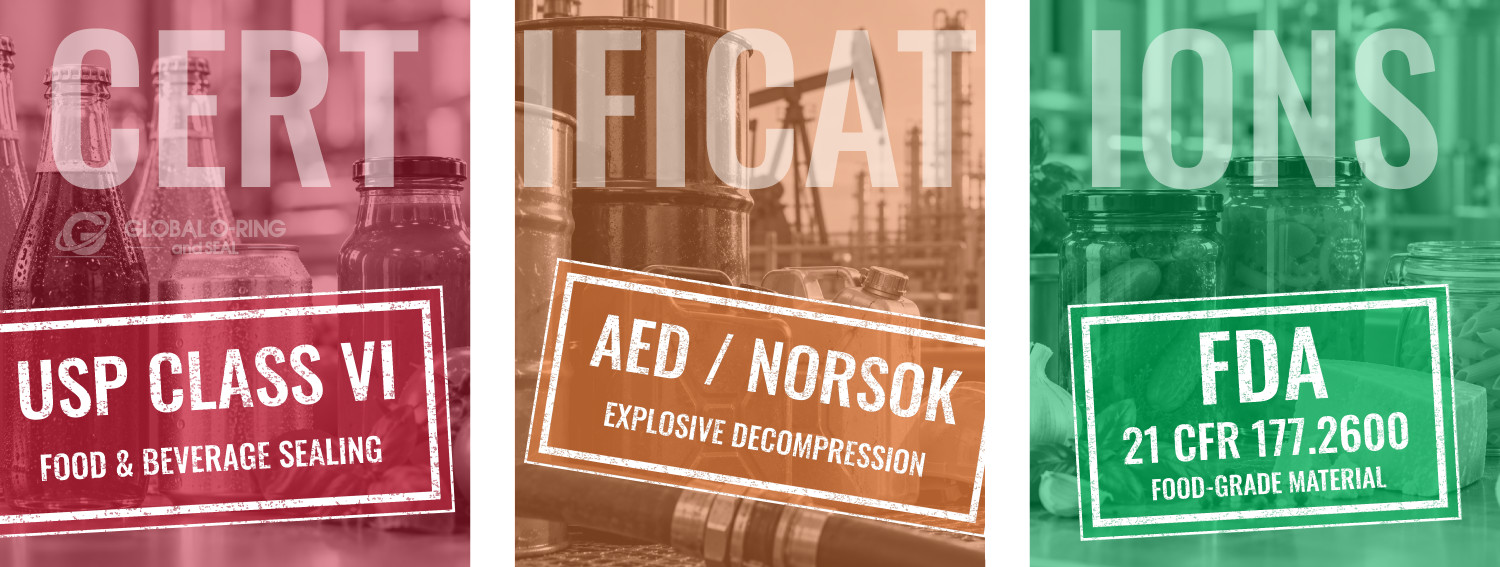
Depending on the specific compound selected, Markez materials are formulated to meet recognized industry standards, including:
- USP Class VI: Supports food and beverage sealing requirements.
- AED/NORSOK: Addresses explosive decompression standards common in oil and gas applications.
- FDA Compliance per CFR 21.177.2600: Confirms suitability for food-grade material requirements.
Matching the certification requirements of a given application to the correct Markez compound is an important step in the selection process, particularly in regulated industries like food, beverage, and pharmaceutical manufacturing.
Selecting the Right Markez Compound
Choosing the correct Markez formulation depends on matching the compound’s resistance characteristics to the specific demands of the application.
General-purpose compounds are typically selected when:
- The application involves standard chemical processing conditions
- Broad chemical compatibility is needed without a specialized resistance requirement
- Cost efficiency alongside FFKM-level performance is a priority
Explosive decompression resistant compounds are typically selected when:
- The system experiences rapid pressure changes
- The application operates in oil and gas or other high-pressure environments
- Seal integrity during pressure cycling is critical to system safety
Sour gas and steam resistant compounds are typically selected when:
- The process involves hydrogen sulfide exposure
- The system is subject to sustained or repeated steam contact
- Long-term chemical stability under harsh media exposure is required
Conclusion
Markez® FFKM gives engineers a way to solve difficult sealing challenges without defaulting to the highest-priced material on the market. Its chemical resistance, temperature stability, and pressure performance make it suitable for some of the most demanding applications across chemical processing, oil and gas, semiconductor, and medical industries, while its availability and price point make it a practical choice for teams that need dependable performance without long lead times.
Matching the right Markez compound to the application, whether general-purpose, decompression resistant, or formulated for sour gas and steam exposure, helps ensure long-term sealing reliability and fewer unplanned failures.
Frequently Asked Questions About Markez® FFKM
What makes Markez FFKM different from standard elastomers like FKM or EPDM?
Markez is a perfluoroelastomer, meaning it contains no hydrogen atoms in its polymer backbone. This structure gives it far broader chemical resistance and a wider effective temperature range than FKM, EPDM, or nitrile materials, making it suitable for applications where those standard elastomers would degrade or fail.
How does Markez compare to Kalrez® or Chemraz® in terms of performance?
Markez uses nearly identical base ingredients to premium FFKM brands and is formulated to match or exceed their performance in comparable applications. The primary distinction is availability and cost, with Markez typically offering shorter lead times and a more competitive price point.
Which Markez compound should be used in oil and gas applications?
Applications involving rapid pressure changes typically call for a Markez compound formulated for explosive decompression resistance. For systems with hydrogen sulfide exposure, a sour gas resistant compound is generally the better fit. Matching the compound to the specific pressure and chemical conditions of the system helps prevent premature seal failure.
Is Markez FFKM suitable for food and pharmaceutical equipment?
Select Markez compounds meet USP Class VI and FDA compliance requirements under CFR 21.177.2600, making them suitable for food, beverage, and pharmaceutical applications where material compliance is required alongside chemical resistance.
What shapes and forms is Markez FFKM available in?
Because Markez is a proprietary material, it can be manufactured into o-rings, gaskets, custom die-cut or water-jet-cut gaskets, and tri-clamp sanitary gaskets, allowing it to be applied to both standard and custom sealing geometries.
Categories: FFKM, O-Rings | Tags: markez, ffkm, perfluoroelastomer, chemical resistance