 English
  Español
  Français
  Português
  Deutsch
  Italiano
  Русский
  中文
中文  日本語
日本語  العربية
  हिन्दी
Summary
- Standard o-rings provide reliable sealing for most industrial equipment where certification is not required, with selection based on operating conditions, material compatibility, and predictable system performance.
- UL-listed o-rings are specified when equipment must demonstrate verified performance against defined safety or certification requirements, supporting reliable operation in applications where failure could create elevated risk.
- Selecting the correct specification requires evaluating certification requirements, operating conditions, and system risk to ensure consistent sealing performance while avoiding unnecessary complexity, cost, or operational uncertainty.
Introduction
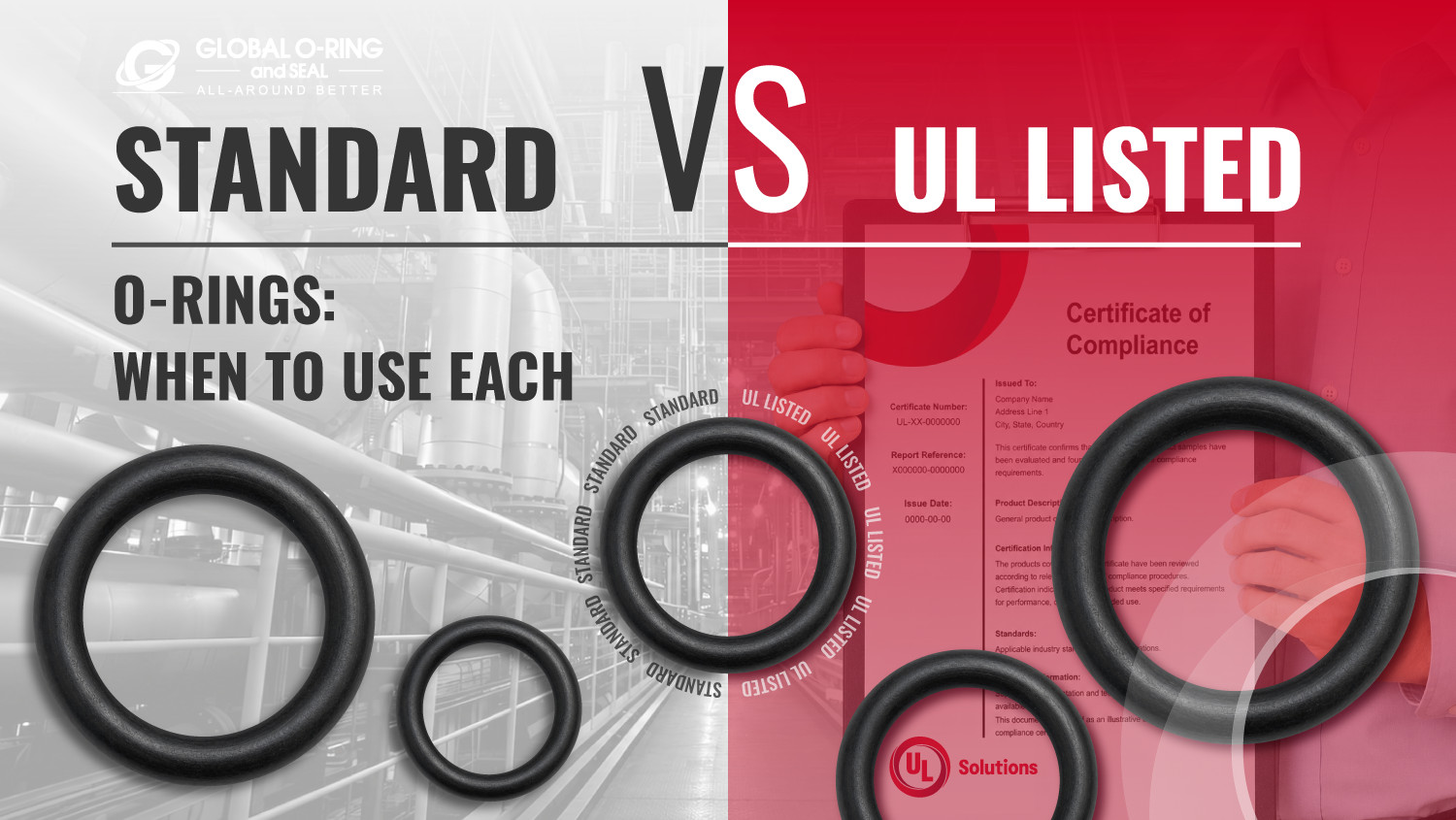
Standard and UL-listed o-rings often appear similar in size, material, and installation, yet the specification behind each designation can carry different performance and operational implications. In many systems, selecting the correct seal is a decision that must align with the equipment’s safety expectations, operating environment, and level of risk.
Understanding the difference between standard and UL-listed o-rings helps engineers and procurement teams apply the appropriate specification with confidence. By matching the seal designation to the equipment’s requirements, organizations can support reliable performance while avoiding unnecessary complexity or cost.
Understanding the Functional Role of Standard and UL Listed O-Rings
Standard and UL-listed o-rings serve the same sealing purpose by containing fluids, maintaining pressure, and protecting equipment from environmental exposure. In most installations, the geometry, installation methods, and sealing behavior are identical. Both types depend on proper material selection, controlled compression, and consistent gland conditions to deliver reliable performance.
The difference comes from the requirements placed on the equipment in which the seal is used. For routine industrial service, a standard o-ring selected for compatibility and operating conditions is typically sufficient. When equipment must meet defined safety or reliability requirements, a UL-listed o-ring may be specified to support those conditions.
What Defines a Standard O-Ring in Industrial Applications
A standard o-ring is defined by its adherence to established dimensional and material specifications used across general industrial sealing systems. Selection typically focuses on matching material compatibility, temperature range, pressure conditions, and environmental exposure to the equipment’s operating requirements.
In practice, standard o-rings serve as the baseline sealing solution for most industrial applications. They are widely used in machinery, fluid handling systems, pneumatic and hydraulic equipment, and general processing environments where formal certification is not required. When operating conditions are well understood and system risk is manageable, a properly selected standard o-ring can deliver consistent performance throughout the equipment lifecycle.
What Defines a UL Listed O-Ring in Safety-Critical Equipment
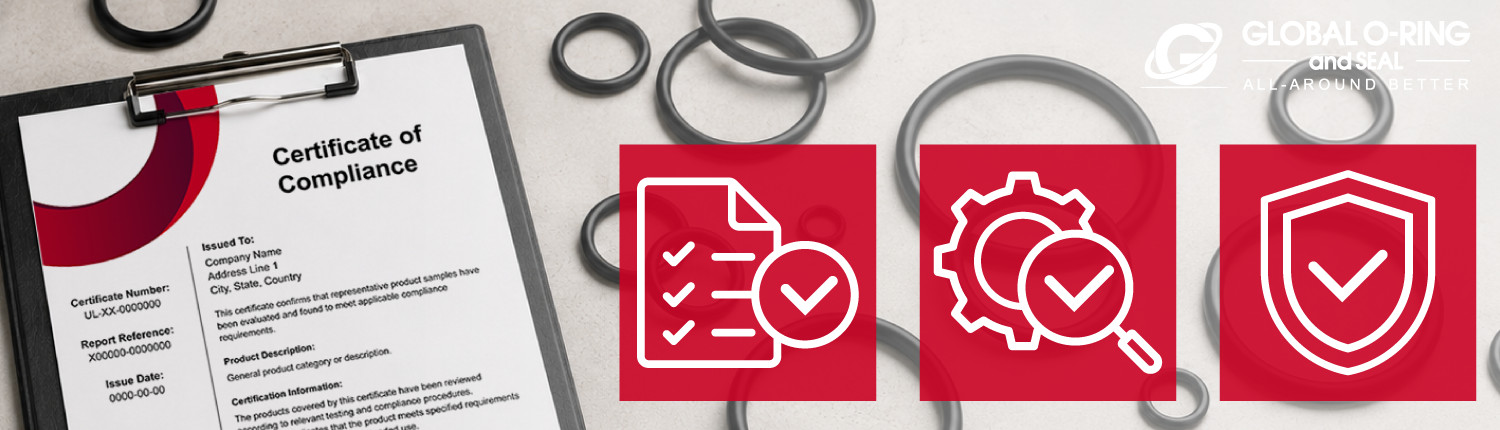
A UL-listed o-ring is defined by its verified performance under controlled manufacturing and testing conditions intended to support equipment safety and reliability. These seals are produced using materials and processes that meet documented requirements and enable consistent performance across production runs. Identification, documentation, and traceability are maintained so the seal can be verified as meeting the specified criteria for the equipment in which it is installed.
In practice, UL-listed o-rings are specified when equipment must demonstrate consistent sealing performance within defined safety or certification frameworks. They are commonly used in systems where containment, ignition control, or environmental protection is critical to safe operation. In these environments, the designation helps ensure that the sealing component aligns with the equipment’s reliability requirements and supports predictable performance over time.
The Difference Between Standard and UL Listed O-Rings
Standard and UL-listed o-rings both provide reliable sealing when properly selected and installed. The distinction lies in whether the seal has been evaluated against specific performance criteria established for safety-critical equipment.
Performance Verification
Performance verification is the defining technical difference between standard and UL-listed o-rings. UL-listed seals are evaluated by a third party against defined testing requirements to confirm they can perform reliably under the conditions associated with safety-critical equipment.
Standard o-rings may be manufactured from the same materials and produced using similar processes, but they are typically selected based on compatibility and operating conditions rather than formal evaluation to a specific performance standard.
Documentation
Documentation establishes the material identity, dimensional consistency, and production controls associated with the sealing component. It provides a record of the specifications and manufacturing conditions used to produce the seal, helping ensure that each unit meets the intended design requirements.
While documentation may exist for both standard and UL-listed o-rings, UL-listed components are produced within defined documentation frameworks that support consistent verification and repeatability across production runs.
Traceability
Traceability links each seal to its manufacturing history, enabling the identification of materials, processes, and lot information if questions arise during operation, maintenance, or inspection. This capability helps maintain consistency across replacement cycles and supports reliable system performance over time.
In safety-critical equipment, traceability provides confidence that replacement components match the original specification and continue to meet the performance expectations established during equipment design.
When UL Listed O-Rings Become Necessary
UL-listed o-rings are necessary when equipment must demonstrate consistent sealing performance to meet defined safety or certification requirements. In these situations, the seal is not evaluated solely on its ability to function under normal operating conditions. It must also meet documented performance criteria that support the equipment’s safety, reliability, and regulatory compliance.
Common situations where UL-listed o-rings may be necessary include:
- Equipment subject to safety certification or inspection requirements
- Systems handling fuels, gases, or flammable fluids
- Equipment operating in regulated industrial or commercial environments
- Applications where failure could create safety, reliability, or environmental risk
Selecting a UL-listed o-ring in these scenarios helps reduce uncertainty during equipment design, certification, and maintenance. It provides confidence that the sealing component has been evaluated to defined performance criteria and is appropriate for use in applications where consistent, documented performance is required.
When Standard O-Rings Are the Appropriate Choice
Standard o-rings are the appropriate choice when equipment requires reliable sealing performance but is not subject to defined safety or certification requirements. In these applications, selection is driven by operating conditions such as fluid compatibility, temperature range, pressure, and environmental exposure. When these factors are well understood and controlled, a properly selected standard o-ring can provide consistent and dependable service.
Common situations where standard o-rings are the appropriate choice include:
- General industrial machinery and processing equipment
- Hydraulic and pneumatic systems operating under established conditions
- Maintenance and replacement applications where certification is not specified
- Equipment operating in controlled environments with predictable service demands
Selecting a standard o-ring in these scenarios supports efficient system design and maintenance while avoiding unnecessary complexity or cost. It allows engineers and procurement teams to focus on material compatibility and performance requirements without introducing additional documentation or verification requirements beyond what the application demands.
Selecting the Right Specification for Reliable Equipment Performance
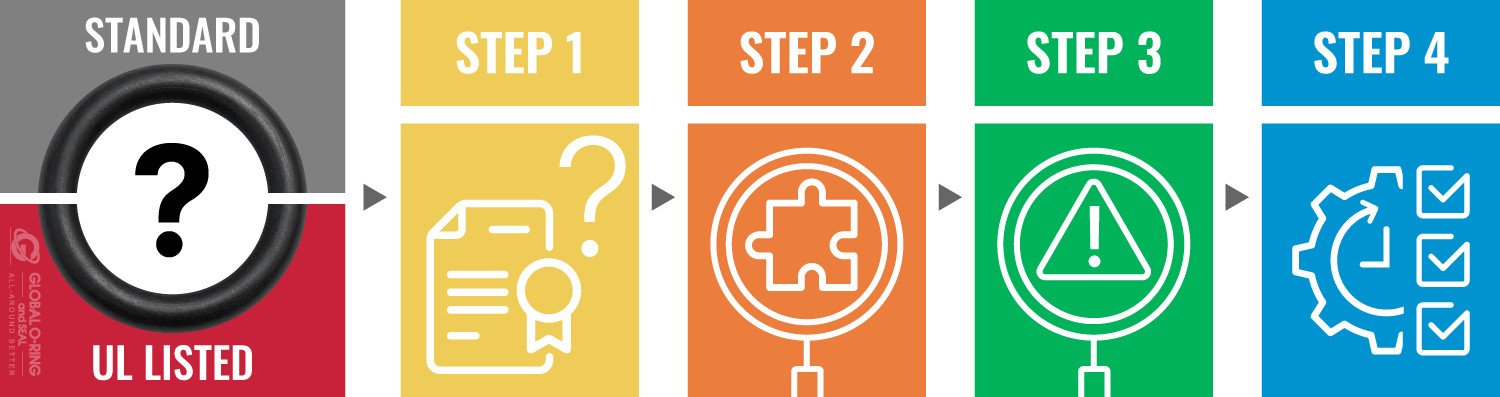
Selecting between a standard and a UL-listed o-ring is a decision driven by equipment requirements, operating conditions, and system risk. The goal is to select a specification that aligns with the equipment’s expected performance and the level of assurance required for safe and reliable operation.
A structured decision-making process helps ensure that the selected specification supports both performance and operational consistency.
Step 1: Determine Whether Certification or Inspection Requirements Apply
Start by identifying whether the equipment must meet defined safety, certification, or inspection requirements. If the system is subject to regulatory oversight or must demonstrate verified performance to a recognized standard, a UL-listed o-ring is typically required to support those conditions.
Step 2: Evaluate Operating Conditions and Material Compatibility
Next, confirm that the sealing material is compatible with the system’s operating environment. Consider fluid exposure, temperature range, pressure conditions, and environmental factors that may affect long-term performance. Proper material selection remains essential regardless of whether a standard or UL-listed designation is required.
Step 3: Assess the Consequences of Seal Failure
Consider the potential impact of leakage or seal degradation on equipment safety, reliability, and maintenance operations. Systems where failure could pose safety hazards, environmental exposure risks, or operational disruption may warrant the additional assurance provided by verified performance against defined standards.
Step 4: Maintain Specification Consistency Across the Equipment Lifecycle
Once a specification is established, apply it consistently across production, maintenance, and replacement activities. Using the same designation throughout the equipment lifecycle helps maintain predictable performance, simplifies inventory management, and reduces the risk of unintended substitutions.
Conclusion
Selecting between a standard and a UL-listed o-ring ultimately comes down to aligning the seal specification with the demands placed on the equipment. Both types can provide reliable sealing performance when properly selected and installed, but the required level of performance verification and documentation depends on the application.
By evaluating certification requirements, operating conditions, and system risk, organizations can make informed decisions that support consistent performance across production, maintenance, and replacement activities. Applying the appropriate specification from the start helps maintain reliability, simplify lifecycle management, and reduce uncertainty in long-term equipment operation.
Q&A: Standard vs. UL Listed O-Rings
What problem does using a standard o-ring in a certified system create?
Using a standard o-ring in equipment subject to safety or certification requirements can create uncertainty during inspection or approval processes because the seal may not meet the required performance standard. Specifying a UL-listed o-ring resolves this issue by providing documented performance verification, helping the equipment pass inspection and operate with confidence.
When does a system require a UL-listed o-ring instead of a standard o-ring?
A system requires a UL-listed o-ring when equipment must demonstrate consistent sealing performance to meet defined safety or certification requirements. Selecting a UL-listed seal ensures the component has been evaluated against recognized performance criteria, supporting reliable operation and reducing the risk of compliance delays or equipment rework.
When should an engineer choose a standard o-ring instead of a UL-listed o-ring?
An engineer may choose a standard o-ring when equipment operates in general industrial service without defined certification requirements. Selecting a standard seal in these conditions maintains reliable sealing performance while avoiding unnecessary documentation requirements, extended lead times, or additional costs associated with verified testing.
How does verified performance testing improve equipment reliability?
Verified performance testing confirms that the sealing component can operate reliably under defined conditions associated with safety-critical equipment. Specifying a seal that has been evaluated to established performance criteria reduces uncertainty, supports consistent sealing behavior, and helps maintain confidence in long-term equipment reliability.
What problem can arise when the consequences of seal failure are underestimated?
Underestimating the consequences of seal failure can lead to selecting a component that performs adequately under normal conditions but cannot support higher-risk operating environments. Evaluating the potential safety, environmental, or operational impact of failure helps determine whether verified performance to defined standards is necessary.