 English
  Español
  Français
  Português
  Deutsch
  Italiano
  Русский
  中文
中文  日本語
日本語  العربية
  हिन्दी
Summary
- Proper o-ring installation plays a critical role in sealing performance, with many failures originating during installation rather than operation.
- Lubrication reduces installation-related damage when properly selected and applied with material compatibility in mind.
- Following best practices for preparation, lubrication, and installation helps extend seal life and improve system reliability.
Introduction
O-Ring performance is often evaluated based on material selection, chemical compatibility, and operating conditions. However, installation is just as critical in determining whether a seal performs as intended.
Some sealing issues attributed to material failure or poor design can result from improper handling, inadequate preparation, or incorrect installation techniques. Even a correctly specified o-ring can fail prematurely if it is damaged, twisted, or improperly seated during assembly.
By focusing on proper preparation, controlled lubrication, and correct installation methods, it is possible to significantly reduce failure rates and improve long-term sealing reliability.
Why Proper O-Ring Installation Matters
Role of Installation in Seal Performance
Installation establishes the initial conditions that define how an o-ring will perform in service. When installed correctly, the o-ring achieves the necessary compression and contact stress to create an effective seal. This initial sealing force is what prevents leakage and maintains system integrity under pressure.
Proper installation also influences how the material responds over time. Even distribution of stress reduces the likelihood of localized wear, deformation, or early failure. In both static and dynamic applications, these initial conditions contribute to seal longevity.
Consequences of Poor Installation
Improper installation introduces damage and inconsistencies that are irreversible once the system is in operation. These issues often appear as material or design failures, but they can originate during installation.
- Cuts, nicks, and abrasions caused by sharp edges or excessive friction during assembly.
- Twisting or rolling leads to uneven stress distribution and increased risk of spiral failure.
- Overstretching or improper compression resulting in leakage or reduced service life.
Pre-Installation Preparation
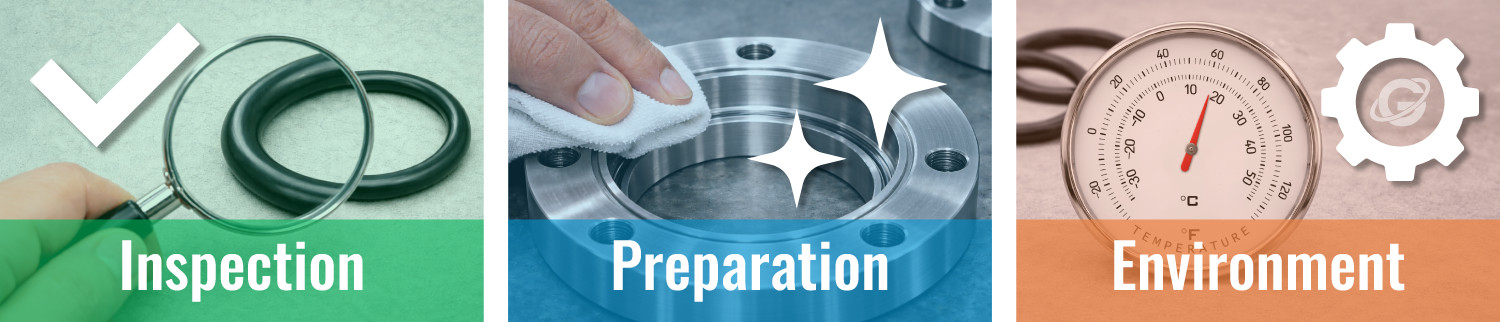
Inspecting the O-Ring
Before installation, inspect the o-ring for any visible defects such as surface irregularities, contamination, or deformation. Even minor imperfections can become failure points once the seal is under pressure.
Verifying the correct size and material is equally important. An incorrectly specified o-ring may not achieve proper compression or may be incompatible with the operating environment.
Preparing the Gland and Hardware
Cleanliness and surface condition are critical to successful installation. Grooves and mating surfaces should be free of debris, dust, or residual contaminants that could interfere with sealing.
Sharp edges, burrs, and threads should be addressed before installation, as these can cut or damage the o-ring during assembly. Ensuring appropriate surface finish and tolerances helps support proper seating and consistent sealing performance.
Environmental Considerations
Temperature and handling conditions can influence how an o-ring behaves during installation. At low temperatures, elastomers may become less flexible, increasing the risk of cracking or improper seating. At higher temperatures, materials may soften, making them more susceptible to deformation.
Maintaining a controlled environment and minimizing exposure to contaminants during handling helps preserve material integrity and improve installation outcomes.
O-Ring Lubrication: Types, Compatibility, and Best Practices
Why Lubrication Is Used
Lubrication reduces friction during installation, allowing the o-ring to slide into place without excessive force. This use helps prevent tearing, pinching, and abrasion, particularly when installing over tight tolerances or complex geometries.
In addition to reducing installation damage, lubrication can assist with proper seating by allowing the o-ring to settle evenly within the gland.
Common O-Ring Lubricant Types
Two commonly used lubricants for o-ring installation are silicone- and barium-based.
Silicone-based lubricants are compatible with many elastomers. They provide effective lubrication for general-purpose applications and stability over a wide temperature range.
Barium-based lubricants offer strong adhesion and resistance to water washout. These properties make them suitable for applications where longer-lasting lubrication is beneficial or where moisture exposure is a concern.
Material Compatibility Considerations
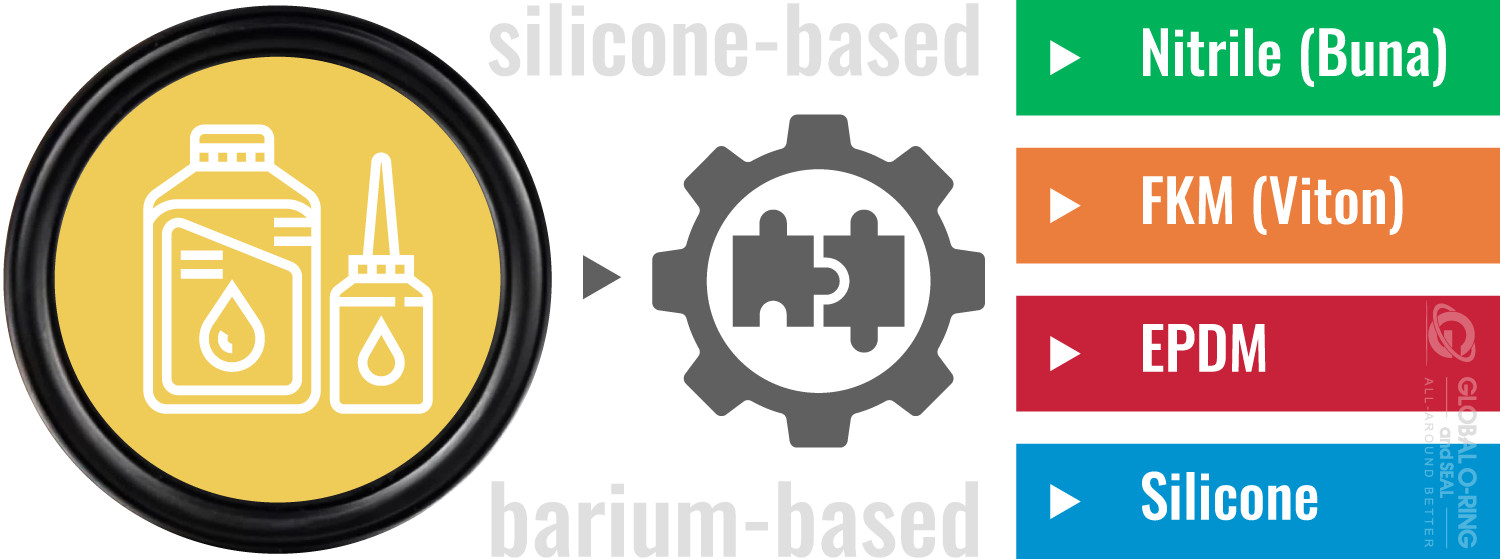
Lubrication selection must account for compatibility with the o-ring material.
- Nitrile (Buna) generally performs well with silicone-based lubricants and many greases.
- FKM (Viton) offers broad chemical resistance and is compatible with a wide range of lubricants.
- EPDM requires careful consideration, as EPDM o-rings should typically avoid petroleum-based lubricants.
- Silicone materials may also require compatibility checks depending on the application.
Selecting a compatible lubricant helps prevent issues such as swelling, softening, or degradation that can compromise sealing performance.
Application Best Practices
Apply lubricant as a thin, even film across the sealing surface. Excessive lubricant does not improve performance and can introduce risks such as contamination or seal displacement.
Maintaining clean application practices is essential to prevent debris from entering the system. The goal is to reduce friction during installation while preserving the integrity of both the o-ring and the surrounding components.
When Lubrication May Not Be Required
In some applications, lubrication may not be necessary or may even be undesirable. Systems that are sensitive to contamination or designed for dry assembly may require installation without lubrication.
In these cases, ensuring proper surface finish and careful handling becomes even more critical to prevent installation-related damage.
Proper O-Ring Installation Techniques
Static Applications
In static applications, the o-ring should be placed evenly within the gland without twisting or rolling. Ensure the seal is fully seated and not pinched during assembly.
Consistent placement helps maintain uniform compression, which is essential for achieving a reliable seal.
Dynamic Applications
Dynamic applications require additional attention due to motion. Twisting and uneven stress can accelerate wear and lead to premature failure.
Lubrication plays a more critical role in these applications by reducing friction and supporting smoother operation. Proper alignment and installation help minimize uneven loading and extend seal life.
Stretch and Compression Considerations
Excessive stretching during installation can weaken the o-ring and reduce its ability to maintain sealing force. Similarly, improper compression can prevent the seal from functioning as intended.
Maintaining appropriate stretch and compression within recommended design limits helps ensure consistent performance and reduces the likelihood of early failure.
Common Installation Mistakes and How to Avoid Them
Even when the correct o-ring and material are selected, installation errors can introduce damage that leads to premature failure. Recognizing and avoiding these common mistakes helps ensure consistent sealing performance.
- Installing without lubrication when required: Increases friction during assembly, leading to tearing, abrasion, or surface damage. Applying a compatible lubricant reduces installation stress and supports proper seating.
- Over-lubrication: Causes the o-ring to shift or become displaced in dynamic applications. Applying a thin, controlled layer helps maintain stability.
- Twisting or rolling during installation: Introduces uneven stress across the seal and increases the risk of failure. Ensuring even placement prevents distortion and improves performance.
- Installing over sharp edges: Causes immediate cuts or abrasion, compromising sealing. Removing burrs or using installation tools helps protect the o-ring.
- Using incorrect size or material: Prevents proper fit and compression, leading to leakage or reduced service life. Verifying specifications before installation ensures proper sealing conditions.
Troubleshooting Installation-Related Failures
When a sealing issue appears early in operation, the root cause may be installation rather than material performance. Identifying these patterns helps isolate issues quickly and prevent repeat failures.
- Immediate leakage after installation: Often caused by damage, improper seating, or contamination introduced during assembly. Correcting installation practices helps ensure proper contact and sealing from startup.
- Premature wear or cracking: Typically indicates twisting, excessive stretch, or insufficient lubrication. Improving installation technique helps distribute stress evenly and extend seal life.
- Seal displacement or extrusion: Can result from over-lubrication or improper gland conditions. Controlling lubricant application and ensuring proper fit helps maintain seal position and integrity.
Conclusion
Proper o-ring installation is critical to achieving reliable sealing performance. While material selection and design influence long-term behavior, installation determines how effectively the seal performs from the start.
Attention to preparation, controlled lubrication, and correct installation techniques helps reduce failure rates, extend service life, and maintain consistent system performance.
Q&A: O-Ring Installation and Lubrication Challenges
Why do o-rings leak immediately after installation?
Leakage immediately after installation is generally from damage during assembly, such as cuts from sharp edges or improper seating in the gland. Ensuring clean hardware, removing sharp edges, and installing the o-ring evenly allows it to maintain proper contact pressure and achieve a reliable seal from startup.
How does installing an o-ring without lubrication affect its performance?
Installing an o-ring without lubrication in applications that require it increases friction during assembly, which can lead to tearing, abrasion, or pinching. Using a compatible lubricant reduces installation stress, allowing the o-ring to seat properly and maintain its integrity over time.
Can using the wrong lubricant cause seal failure?
Using an incompatible lubricant can alter the material properties of the o-ring, leading to swelling, degradation, or loss of sealing force. Selecting a lubricant that is compatible with both the elastomer and the application environment helps preserve performance and prevent premature failure.
Why do o-rings fail prematurely after installation?
Installation issues such as twisting, overstretching, or uneven compression often cause premature failure. Following proper installation techniques and using appropriate lubrication helps distribute stress evenly, reducing wear and extending seal life.
Can too much lubricant affect o-ring performance?
Excess lubricant can cause the o-ring to shift, become displaced, or introduce contamination into the system. Applying a controlled, even layer ensures reduced friction during installation while maintaining proper seal positioning and effectiveness.