 English
  Español
  Français
  Português
  Deutsch
  Italiano
  Русский
  中文
中文  日本語
日本語  العربية
  हिन्दी
Summary
- ISO 9001 has evolved from a documentation-focused standard into a strategic framework for managing risk, improving performance, and ensuring consistent product quality.
- The most significant shift occurred in 2000, when ISO introduced the process-based approach and positioned quality management as part of overall business performance.
- Today, ISO 9001 certification signals operational discipline, process control, and supply chain reliability, all factors that directly impact customer confidence and long-term partnerships.
The Role of ISO 9001 in Supplier Reliability and Supply Chain Performance
As supply chains become more complex, organizations rely on certified suppliers to maintain stability and reduce operational risk.
ISO 9001 supports supply chain performance by:
- Standardizing processes across locations
- Improving communication between suppliers and customers
- Reducing variability in production
- Strengthening traceability and accountability
- Supporting consistent delivery performance
For organizations sourcing components globally, these capabilities help maintain quality and reliability even when operating conditions change.
Why Understanding the Evolution of ISO 9001 Still Matters
ISO 9001 remains one of the most widely recognized quality management standards in the world. Many organizations pursue certification to meet customer requirements, but the standard’s real value lies in its ability to improve consistency, reduce risk, and strengthen operational control.
Understanding how ISO 9001 has evolved helps explain why modern quality systems focus on performance and risk management rather than documentation alone. It also clarifies what customers and auditors expect from certified suppliers today.
For manufacturers, distributors, and suppliers operating in global supply chains, ISO 9001 certification now represents an organization’s ability to deliver consistent results under changing conditions.
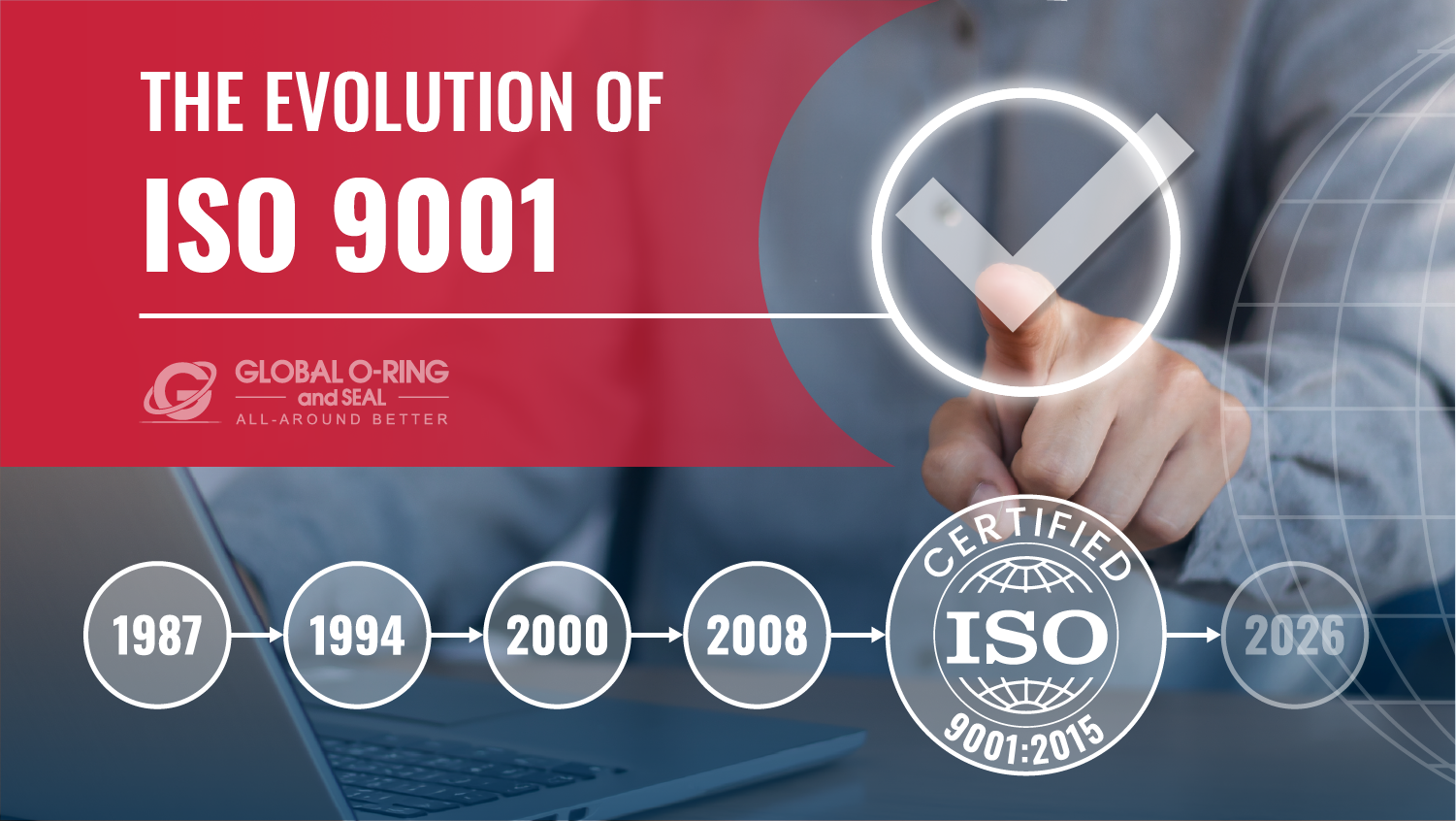
ISO 9001:1987 – Establishing Documentation and Consistency
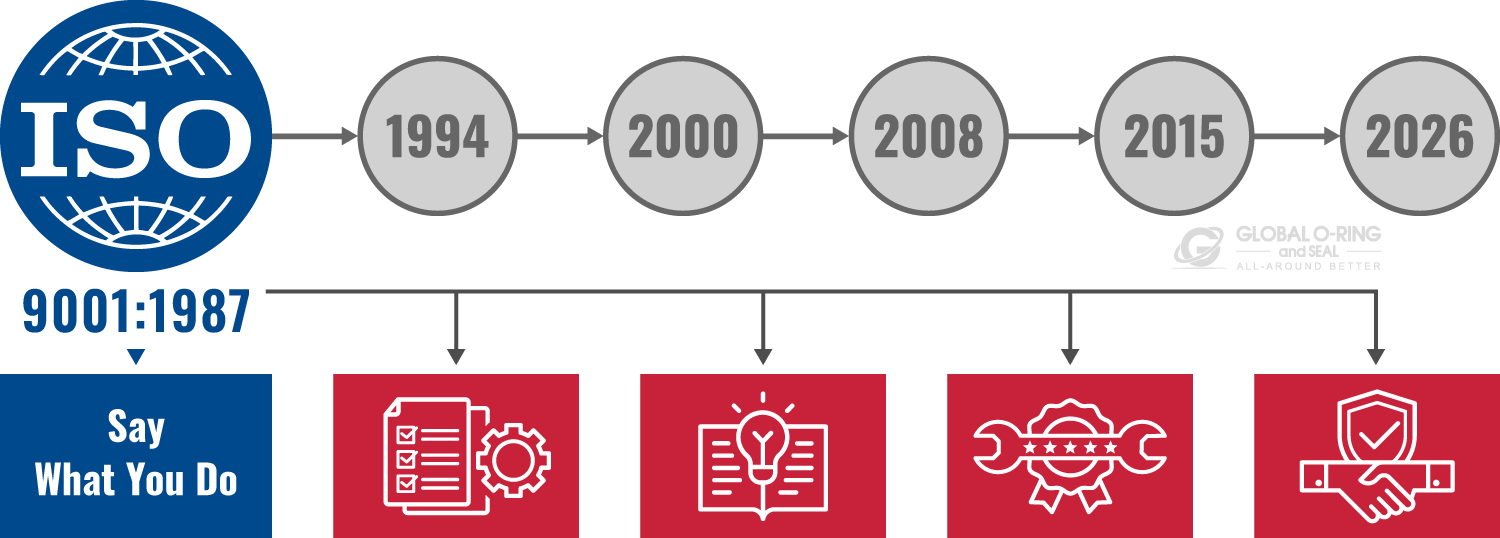
Say What You Do: The first edition of ISO 9001, released in 1987, established a structured approach to documenting processes and verifying that work was performed consistently.
Organizations were required to:
- Define procedures for critical activities
- Maintain records demonstrating compliance
- Follow documented instructions during production and inspection
This framework created repeatability in manufacturing and service operations, particularly in industries where consistency and traceability were essential.
ISO 9001:1987 Operational Impact
Companies moved from informal practices to standardized systems. Documented procedures made it easier to train employees, maintain product quality, and demonstrate reliability to customers.
ISO 9001:1994 – Strengthening Process Control and Preventive Action
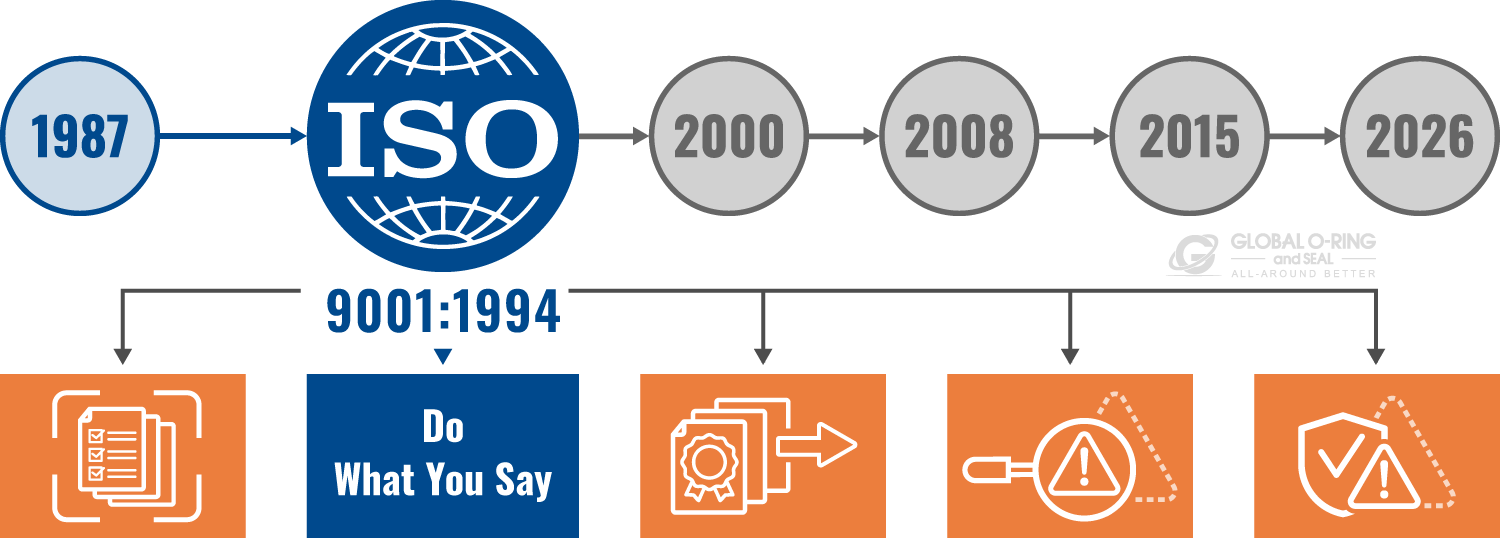
Do What You Say: The 1994 revision reinforced system discipline and introduced stronger requirements for preventive action. Organizations were expected to identify potential issues before they resulted in defects or failures.
Key changes included:
- Increased emphasis on compliance with documented procedures
- Formal preventive action requirements
- Expanded documentation of quality activities
These updates pushed organizations to monitor performance more closely and address risks earlier in the production process.
ISO 9001:1994 Operational Impact
Quality management shifted from reacting to problems to preventing them. Organizations began to treat quality as a controlled system rather than a set of isolated inspections.
ISO 9001:2000 – The Process-Based Quality Management System
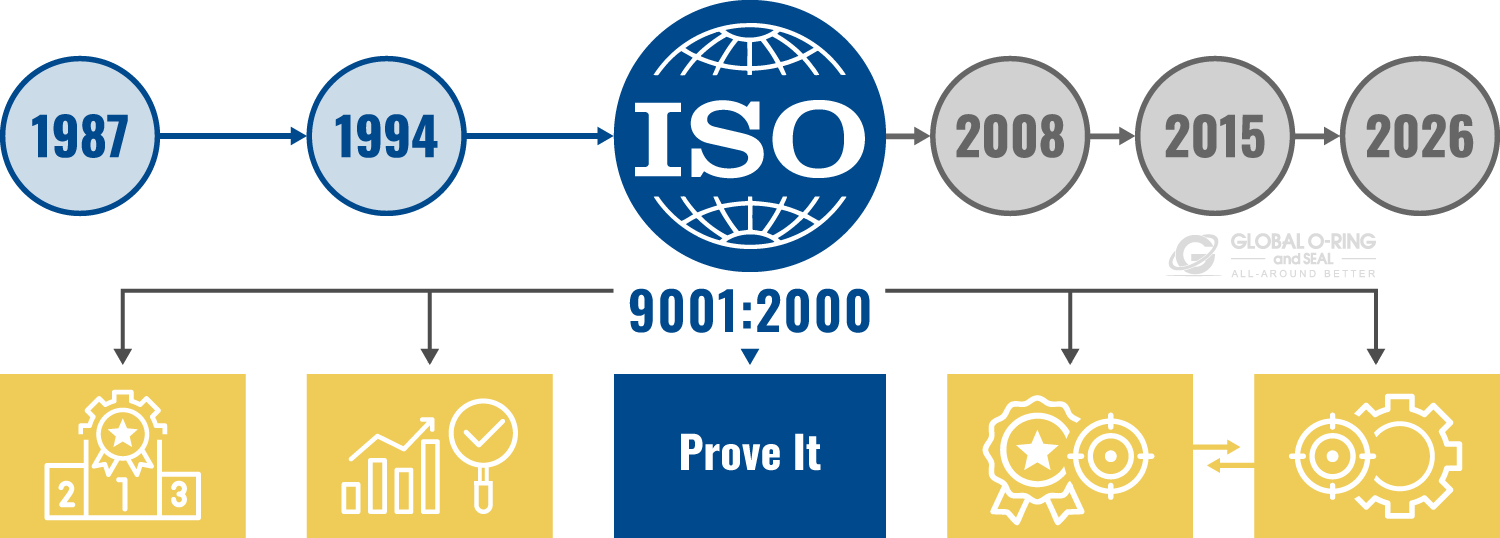
Prove It: The 2000 revision marked the most significant transformation in the history of ISO 9001. This update introduced the process-based approach and integrated quality management into everyday business operations.
Instead of focusing primarily on documentation, organizations were required to manage workflows as interconnected processes with measurable performance.
This revision also formalized the Plan–Do–Check–Act (PDCA) cycle as the operating model for managing and improving processes. PDCA provides a structured method for planning activities, executing work, evaluating performance, and implementing improvements based on results.
Key changes included:
- Introduction of the process approach
- Integration of multiple ISO standards into a single framework
- Emphasis on performance measurement and continuous improvement
- Increased involvement of leadership in quality management
This shift redefined ISO 9001 as a system for managing operations rather than documenting them.
ISO 9001:2000 Operational Impact
Quality management became a core business function. Organizations began monitoring performance metrics, improving workflows, and aligning quality objectives with operational goals.
ISO 9001:2008 – Clarification and Global Consistency
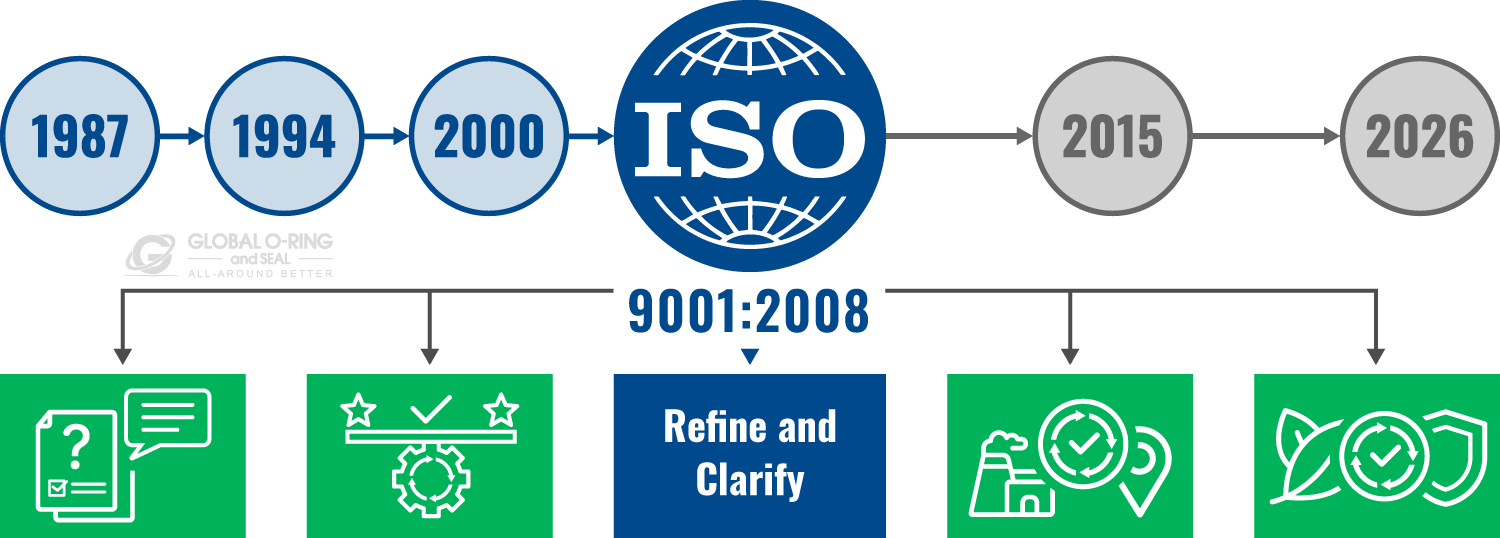
Refine and Clarify: The 2008 revision refined existing requirements and improved consistency in how organizations interpreted the standard. It did not introduce major new concepts, but it strengthened alignment across industries and geographic regions.
Key updates included:
- Clarification of terminology and requirements
- Improved consistency with environmental and safety standards
- Reinforcement of existing quality management practices
ISO 9001:2008 Operational Impact
Organizations gained stability in their quality systems. Auditors and customers could apply the standard more consistently across suppliers and locations.
ISO 9001:2015 – Risk-Based Thinking and Strategic Integration
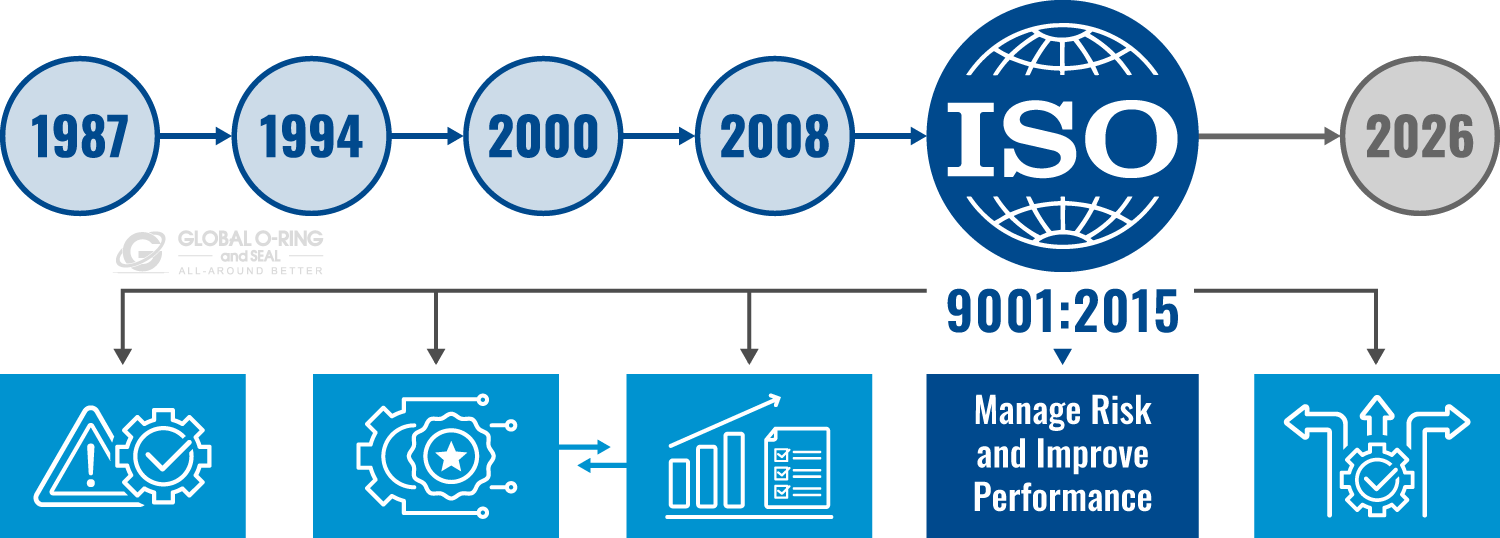
Manage Risk and Improve Performance: The 2015 revision elevated ISO 9001 from an operational framework to a strategic management tool. It introduced risk-based thinking and required organizations to align quality management with business objectives.
This update recognized that modern supply chains face complex risks, including supplier variability, production disruptions, and changing customer requirements.
Key additions included:
- Risk-based thinking replacing traditional preventive action
- Consideration of organizational context and stakeholder expectations
- Stronger leadership accountability
- Integration with other management systems through a unified structure
These changes positioned quality management as a driver of operational stability and long-term performance.
ISO 9001:2015 Operational Impact
Organizations began managing risk proactively, improving decision-making, and aligning quality systems with strategic planning.
ISO 9001:2026 – The Future Direction
ISO standards continue to evolve to reflect changes in technology, supply chains, and business risk. The next revision, ISO 9001:2026, is expected to build on the current framework while refining requirements to better support modern operations and global supply chains. Final publication of the new standard is anticipated in September 2026, followed by a three-year transition period for certified organizations.
Likely areas of focus include:
- Supply chain resilience and continuity planning
- Digital documentation, data integrity, and system reliability
- Stronger leadership accountability and quality culture
- Clearer expectations for risk management and change control
- Integration of sustainability and climate-related considerations into organizational planning
These updates reflect a continued progression toward practical, performance-driven quality management systems. While the core structure of ISO 9001 will remain familiar, the emphasis is shifting toward resilience, accountability, and data-informed decision-making in increasingly complex operating environments.
What ISO 9001 Certification Signals Today
Modern ISO 9001 certification communicates more than adherence to documented procedures. It demonstrates that an organization operates with discipline, consistency, and accountability.
For customers and supply chain partners, certification signals:
- Controlled and repeatable processes
- Reliable product quality
- Documented traceability
- Continuous improvement capability
- Risk awareness in operations
In industries where downtime, product failure, or delivery delays carry high costs, these capabilities directly affect supplier selection and long-term partnerships.
Our Commitment to Quality Management at Global O-Ring and Seal
Global O-Ring and Seal obtained ISO 9001:2015 certification in August 2018 and continues to maintain compliance with all requirements of the standard. Our quality management system supports consistent processes, traceability, and continuous improvement across daily operations.
For our team, ISO 9001 provides a structured framework for understanding customer requirements, controlling processes, and maintaining reliable performance. These practices help ensure consistent product quality, dependable delivery, and operational accountability.
As ISO 9001 continues to evolve, Global O-Ring and Seal will continue strengthening its systems alongside it, using disciplined processes to support long-term customer confidence.
Conclusion
ISO 9001 has evolved from a documentation standard into a framework for managing performance, risk, and operational consistency.
Each revision strengthened the connection between quality management and business success. Organizations that treat ISO 9001 as an operational system gain better process control, reduce variability, and build stronger customer relationships.
In today’s environment, ISO 9001 certification represents reliability, discipline, and the ability to deliver consistent results.