 English
  Español
  Français
  Português
  Deutsch
  Italiano
  Русский
  中文
中文  日本語
日本語  العربية
  हिन्दी
Summary
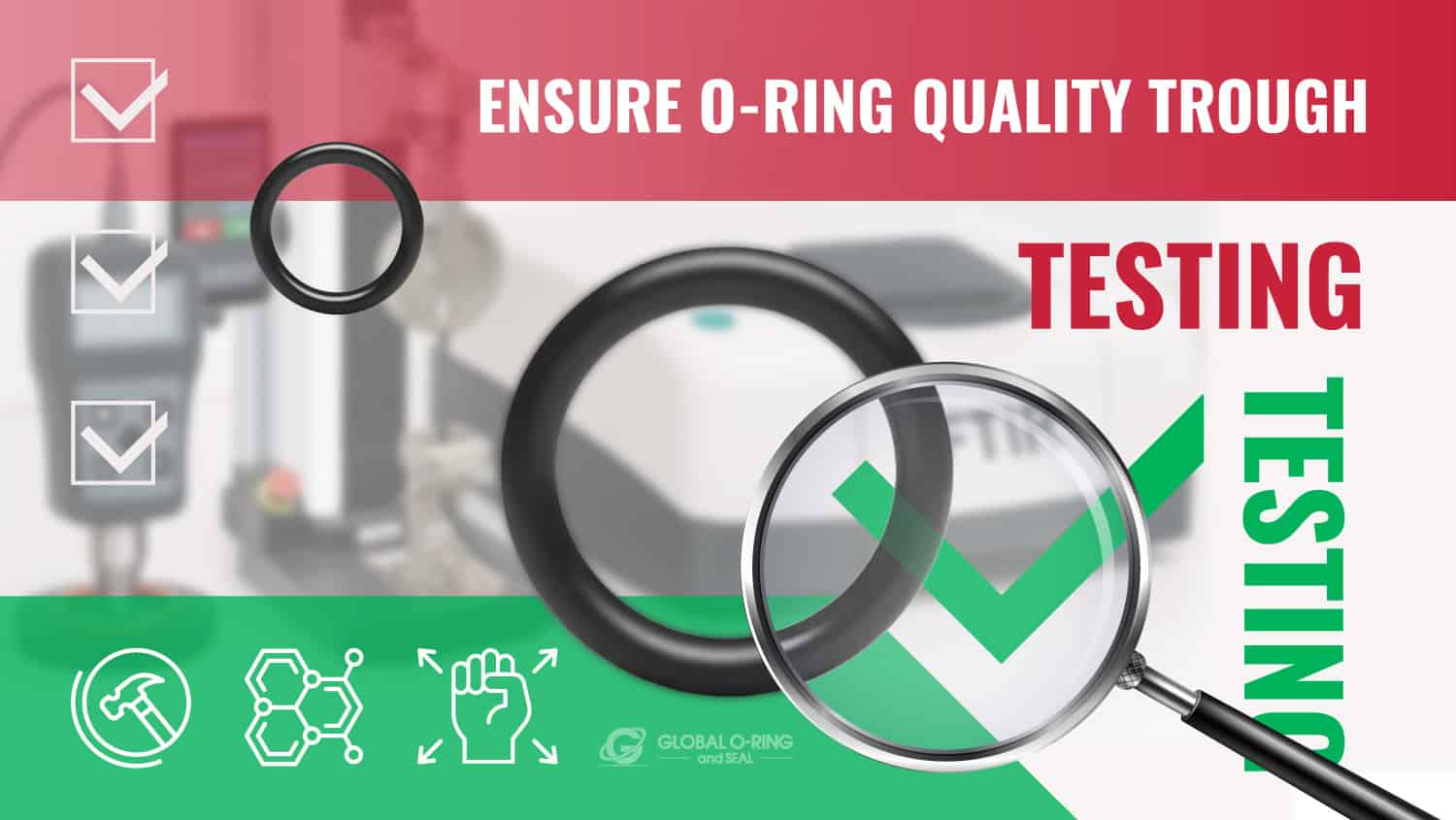
- Our Quality Lab verifies seals with FTIR, tensile, and durometer testing, confirming material accuracy, durability, and hardness before products ever reach the customer.
- Testing methods are based on recognized ASTM and ISO standards. This ensures consistency and compliance. It also provides reliable results.
- Global O-Ring and Seal provides easy, fast, and dependable seals by combining lab equipment with our Quality Management System.
Why O-Ring Quality Testing Matters for Reliability and Safety
Seals and o-rings that fail in the field can cause costly downtime, safety risks, and lost productivity. That’s why o-ring quality testing is critical.
At Global O-Ring and Seal, our Quality Lab uses advanced testing tools. We have FTIR, tensile strength, and durometer machines. These tools help us check material integrity, durability, and hardness. This investment ensures our seals meet the highest standards for reliability and consistency.
FTIR Testing for O-Rings: Verify Material Integrity
Inconsistent or incorrect elastomer materials are one of the leading causes of seal failure. We start our o-ring quality testing in our lab with Fourier Transform Infrared (FTIR) spectroscopy. Unlike older methods like KEVN testing, which have limited accuracy, FTIR identifies rubber compounds by their unique chemical “fingerprint”.
This process allows us to check if an o-ring consists of Viton®, Nitrile, EPDM, Silicone, or another elastomer. This ensures that seals meet the right specification. All testing follows recognized ASTM standards, reinforcing compliance and giving customers assurance of material integrity.
Global O-Ring uses FTIR testing to eliminate the risk of fake or mislabeled materials. This testing also ensures the accuracy and traceability that customers expect from a quality supplier.
Tensile Strength, Elongation, and Modulus Testing for O-Rings
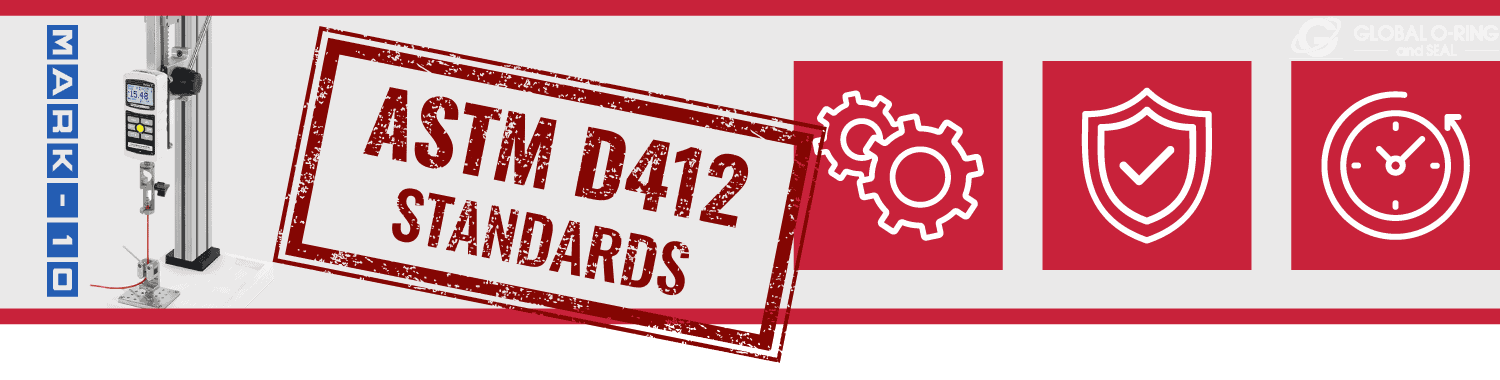
In our Quality Lab, we use a Mark-10 universal testing machine for tensile testing. This machine measures In our Quality Lab, we use a Mark-10 universal testing machine for tensile testing. This machine measures tensile strength, elongation, and modulus of elastomer samples. These three properties give a complete picture of how a sealing material will perform under stress.
- Tensile strength is the most stress a material can handle before it breaks. This is important for predicting how long it will last in tough conditions.
- Elongation at break indicates how much the material can stretch before failure, a key factor in flexibility and resilience.
- Modulus shows how stiff a material is at certain strain levels. This keeps the right balance between strength and flexibility for good sealing performance.
We run these tests using ASTM D412 standards. This ensures that materials meet strict performance criteria.
For customers, this means they can trust that manufacturers make seals from strong materials. These materials resist cracking, tearing, and early failure. This leads to a stronger service life and better reliability in the field.
Durometer Hardness Testing for O-Rings
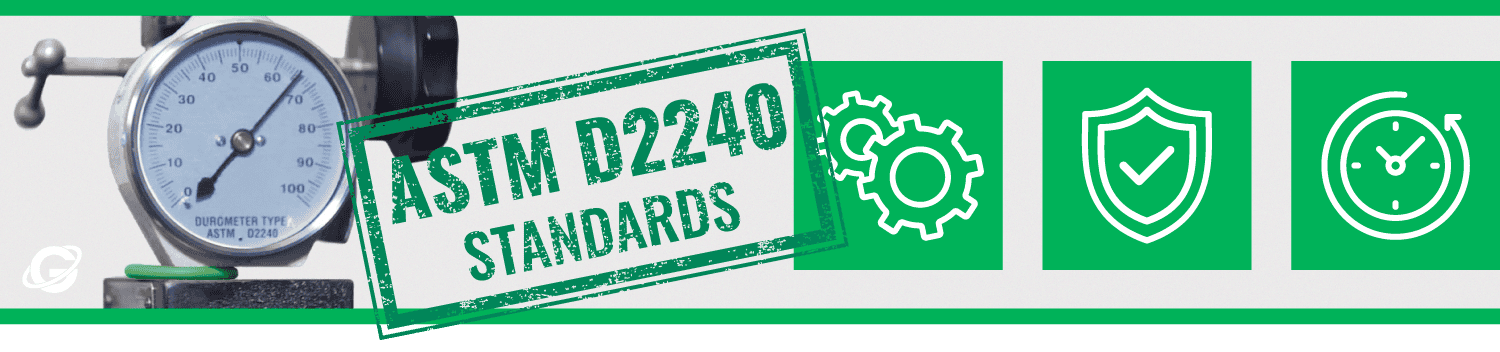
Hardness is a key property in o-ring quality testing. It directly affects how well a seal fits and works. In our Quality Lab, we use a durometer hardness tester to measure elastomer hardness according to ASTM D2240 standards.
This test provides a reliable check that each batch of material meets the specified hardness range. If an o-ring becomes too soft, it may leak or get pushed out under pressure. If it is too hard, it can crack, wear out early, or not fit the sealing surface well.
Global O-Ring checks hardness by testing batches. This ensures consistency in different lots. Customers can trust that their seals will work well in both static and dynamic situations. This attention to hardness verification reduces risk, improves reliability, and supports long-term equipment uptime.
O-Ring Quality Management System (QMS)
Advanced testing equipment is only as valuable as the system behind it. At Global O-Ring, our Quality Management System (QMS) is supported by material performance testing and verification. This is all part of a clear and documented process.
- Incoming Inspection: The team validates shipments from suppliers, confirming that the delivered materials match the required specifications.
- Batch Checks: Technicians perform FTIR, tensile, and durometer tests systematically to verify consistency across production lots.
- Final Verification: Before products ship, we confirm that seals meet hardness, strength, and material integrity standards.
Our QMS follows recognized ASTM and ISO standards. Customers can trust that orders have passed strict, standard checks. This approach minimizes risk, prevents nonconforming products from reaching the field, and maximizes confidence.
Global O-Ring and Seal: A Quality Partner
The introduction of our Quality Lab has taken our commitment to customers a step further. Using FTIR, tensile, and durometer testing in a structured QMS helps us confirm material accuracy. This ensures performance consistency before products reach the field.
For Global O-Ring, these tools make sure that when a customer orders, they receive the right product with proven reliability.
Frequently Asked Questions
Why do o-rings fail when the wrong elastomer material is used?
O-Rings fail when the elastomer does not match the application’s chemical or environmental requirements, leading to swelling, degradation, or loss of sealing force. This risk is addressed by verifying material composition using FTIR spectroscopy before release.
What problem does FTIR testing solve in o-ring quality assurance?
FTIR testing prevents counterfeit or mislabeled o-rings by chemically identifying the elastomer rather than relying on documentation alone. This eliminates uncertainty in material verification and ensures compliance with specified compounds.
Why is tensile testing necessary for o-ring reliability?
Tensile testing identifies whether an elastomer can withstand stress, stretching, and repeated loading without cracking or tearing. Without this data, seals may fail early under normal operating conditions.
How does incorrect hardness lead to o-ring sealing problems?
Incorrect durometer hardness causes extrusion, leakage, or surface damage by preventing proper sealing deformation. Hardness testing ensures each batch meets the required balance between flexibility and strength.
What risk does a lack of structured quality testing create?
Without a structured quality system, nonconforming seals can pass through inspection and fail in service. Integrating material testing into a documented Quality Management System ensures consistent verification at every stage.